Case Report: Pediatric chylous ascites beyond congenital malformations—infectious causes and nutritional management with a literature review
Teresa Capriati, Annalisa Carciofi, Chiara Grimaldi, Andrzej Krzysztofiak, Simona Gatti, Maria Elena Lionetti, Michela Caprarelli, Annalisa Morelli, Lucia Tulli, Antonella Diamanti

TL;DR
This case report describes a 5-month-old infant with chylous ascites caused by a CMV infection and highlights the importance of nutritional management and antiviral therapy for recovery.
Contribution
The paper presents a rare case of infectious chylous ascites in an infant and emphasizes the role of nutritional strategies in managing such cases.
Findings
CMV infection was identified as the cause of chylous ascites in a 5-month-old infant.
Nutritional management with TPN and MCT-enriched formulas supported recovery alongside antiviral therapy.
Infectious etiologies should be considered in pediatric chylous ascites beyond congenital malformations.
Abstract
Chylous ascites (CA) is a condition characterized by the accumulation of lymphatic fluid in the peritoneal cavity. Although congenital malformations are the most common cause in newborns, infectious agents represent a clinically significant, potentially reversible etiology that benefits from specific therapy. Various pathogens, including bacteria, viruses, fungi, and parasites, can alter the lymphatic system and lead to the leakage of chyle into the peritoneal cavity, resulting in nutritional, immunological, and metabolic deficiencies. We describe the case of a 5-month-old infant presenting with acute abdomen (vomiting, irritability, and abdominal distension) associated with elevated lipase levels. He underwent emergency laparotomy, which revealed chylous ascites in the absence of structural abnormalities. Initial empiric management, centered on the diagnosis of CA, included fasting and…
Genes, proteins, chemicals, diseases, species, mutations and cell lines named across the full text — each resolved to its canonical identifier and authoritative record.
Click any figure to enlarge with its caption.
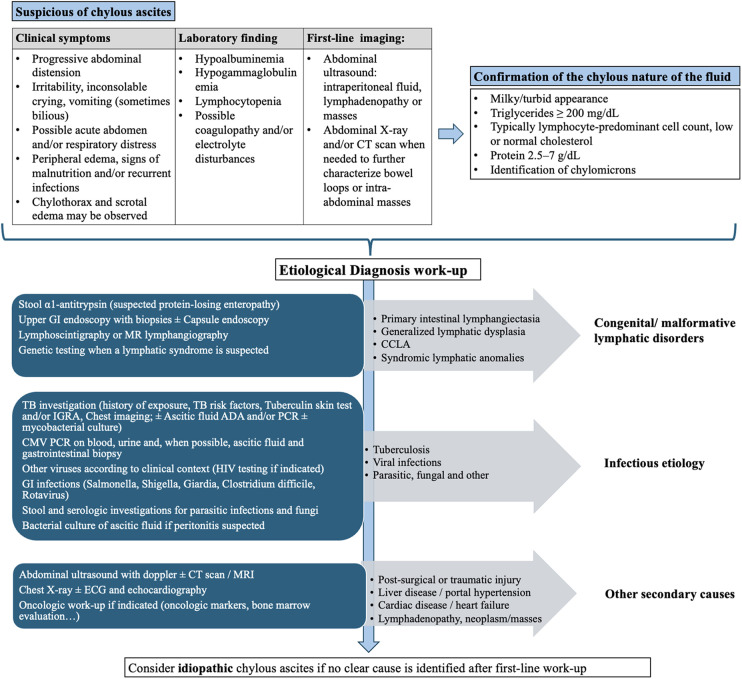 Figure 1
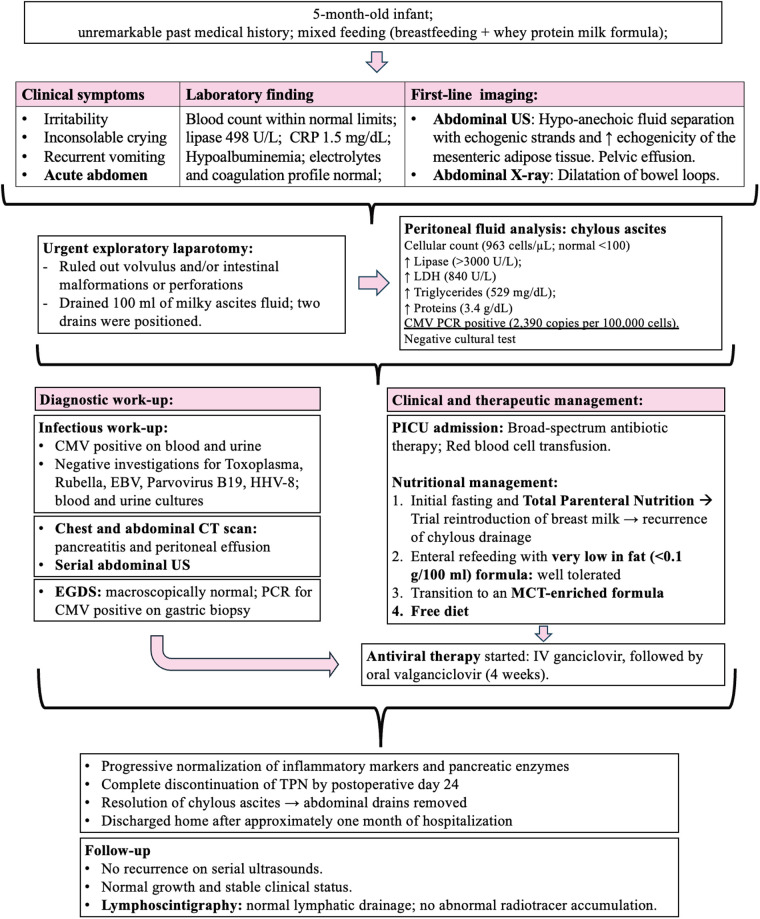 Figure 2
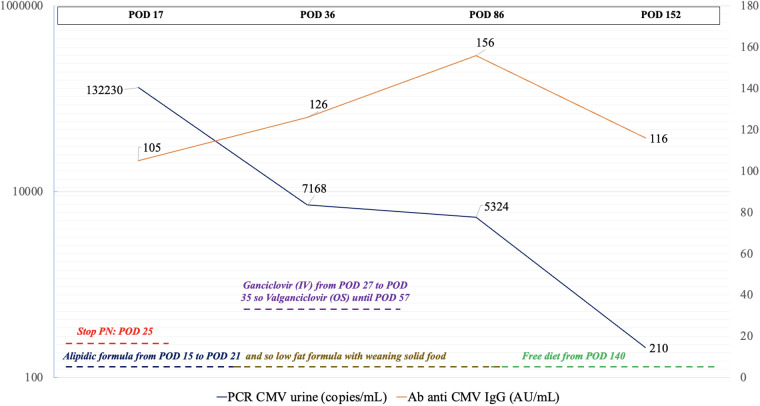 Figure 3
Peer Reviews
No public reviews on file for this paper yet. If you reviewed it on a platform where reviews are public (OpenReview, ICLR, NeurIPS, ICML), you can paste yours below so the community can read it here.
Videos
No videos yet. Explain this paper in a talk, walkthrough, or lecture? Add one.
Taxonomy
TopicsLymphatic Disorders and Treatments · Vascular Malformations and Hemangiomas · Intestinal Malrotation and Obstruction Disorders