Stellate Ganglion Block for Post-traumatic Stress Disorder: A Comprehensive Review of Evidence, Technique Considerations and Symptom Outcomes in Military and Non-Military Patients
Thomas Bielawiec, Brittany Melvin, Bhuvaneswari Sandeep Ram, Magdalena Anitescu

TL;DR
This review explores the effectiveness of stellate ganglion blocks for treating PTSD in both military and non-military patients, highlighting symptom improvements and treatment considerations.
Contribution
The paper provides a comprehensive synthesis of evidence on stellate ganglion blocks for PTSD, identifying patient profiles and technique variations that may optimize outcomes.
Findings
Hyperarousal symptoms show the most improvement with stellate ganglion blocks.
Severe PTSD cases may benefit more from the treatment than mild-moderate cases.
Bilateral or combined blocks are safe but not necessarily more effective than a single right-sided block.
Abstract
Post-traumatic stress disorder (PTSD) is a psychiatric disorder which is defined by four symptom clusters of intrusive re-experiencing, avoidance, negative mood/cognitive changes, and hyperarousal. This pathway is mediated by a dysregulation in the amygdala-hippocampus-medial prefrontal cortex circuit resulting in an abnormal threat processing and other symptoms. Stellate ganglion blocks (SGB) are largely supported in a review of the current literature. The objective of this review is to synthesize available evidence and extrapolate findings to identify patient and symptom profiles most likely to benefit, as well as technique variations that may optimize clinical outcomes. Bilateral SGBs or blocks in conjunction with a superior cervical ganglion block (SCGB) have been studied and appear safe and effective but may not necessarily offer superior efficacy or durability of response,…
Genes, proteins, chemicals, diseases, species, mutations and cell lines named across the full text — each resolved to its canonical identifier and authoritative record.
Click any figure to enlarge with its caption.
 Figure 1
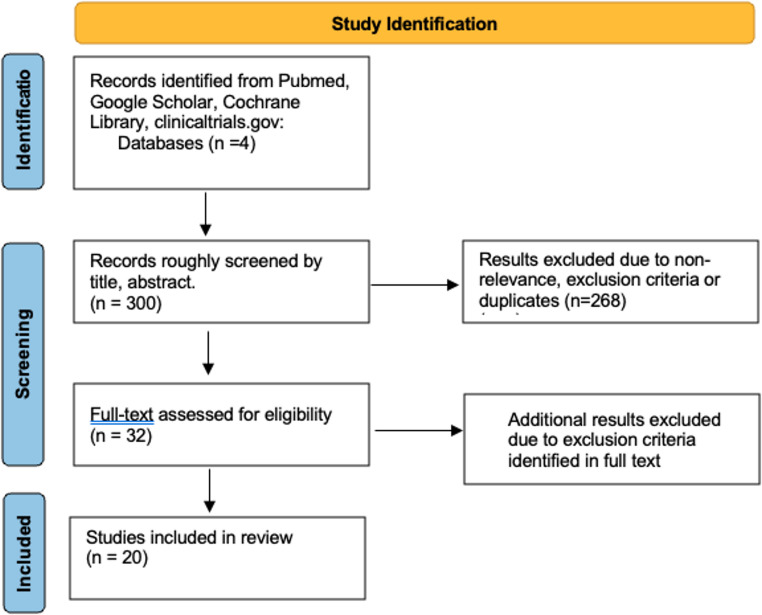 Figure 2
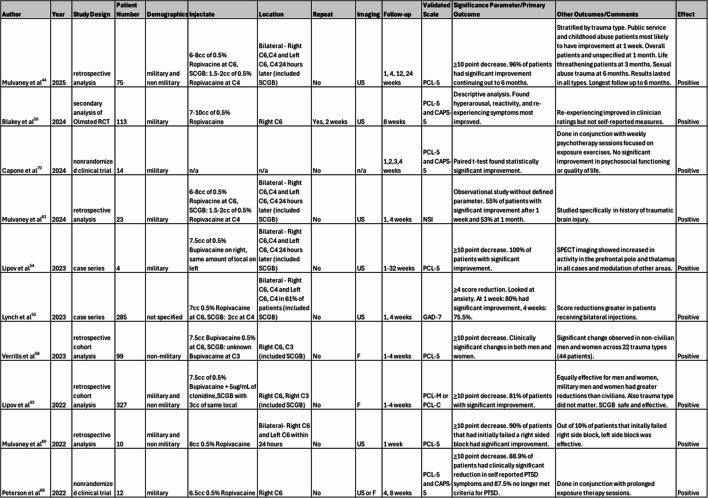 Figure 3
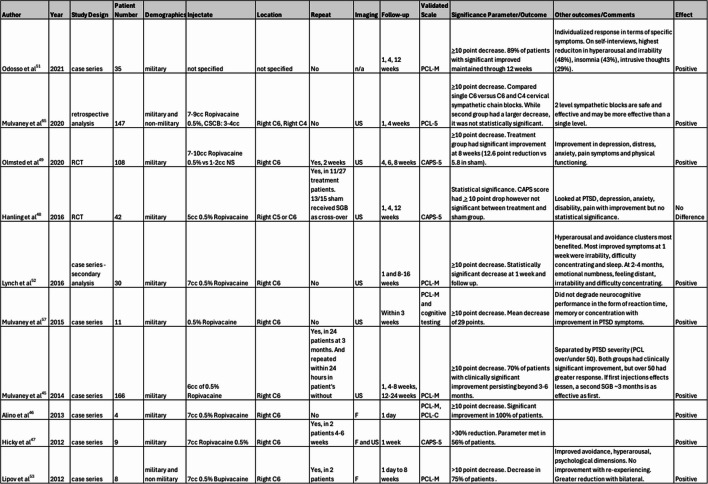 Figure 4
Peer Reviews
No public reviews on file for this paper yet. If you reviewed it on a platform where reviews are public (OpenReview, ICLR, NeurIPS, ICML), you can paste yours below so the community can read it here.
Videos
No videos yet. Explain this paper in a talk, walkthrough, or lecture? Add one.
Taxonomy
TopicsPain Management and Treatment · Acupuncture Treatment Research Studies · Myofascial pain diagnosis and treatment