Plasma sterol profiling in autism spectrum disorder: insights from cerebrotendinous xanthomatosis screening and beyond
Kagan Calisgan, Tanyel Zubarioglu, Esra İsat, Hanim Babazade, Sedanur Akca-Yesil, Selin Akbulut, Esma Uygur, Vildan Keskin, Busra Cirkin, Gizem Durcan, Burak Dogangun, Mehmet Serif Cansever, Ayse Cigdem Aktuglu-Zeybek, Ertugrul Kiykim

TL;DR
This study found that children with autism have higher levels of certain cholesterol-related compounds in their blood, but no cases of a rare metabolic disorder were identified.
Contribution
The study provides new insights into sterol metabolism in autism and evaluates the effectiveness of CTX screening in unselected ASD populations.
Findings
26.2% of children with ASD had elevated cholestanol levels, while none of the controls did.
Plasma sterol levels were significantly higher in ASD patients compared to controls.
No cases of CTX were identified, suggesting limited yield of cholestanol-based screening in unselected ASD populations.
Abstract
Cerebrotendinous xanthomatosis (CTX) is a rare, treatable bile acid synthesis disorder characterized by increased levels of cholestanol. Studies indicate that autism spectrum disorder (ASD) may be an early manifestation of CTX. Independent of CTX, disturbances in sterol and bile acid metabolism are observed in ASD. Therefore, this study aimed to estimate the prevalence of CTX in a pediatric ASD cohort using cholestanol-based screening with reflex CYP27A1 sequencing and to compare plasma sterol profiles among children with ASD. We conducted a single-center, cross-sectional study including 103 patients with ASD and 70 age-matched, normally developed children. Fasting plasma cholestanol, campesterol, stigmasterol and sitosterol were quantified by gas chromatography/mass spectrometry. Participants with cholestanol ≥ 7 µg/ml underwent CYP27A1 sequencing, and five-day dietary recalls were…
Genes, proteins, chemicals, diseases, species, mutations and cell lines named across the full text — each resolved to its canonical identifier and authoritative record.
Click any figure to enlarge with its caption.
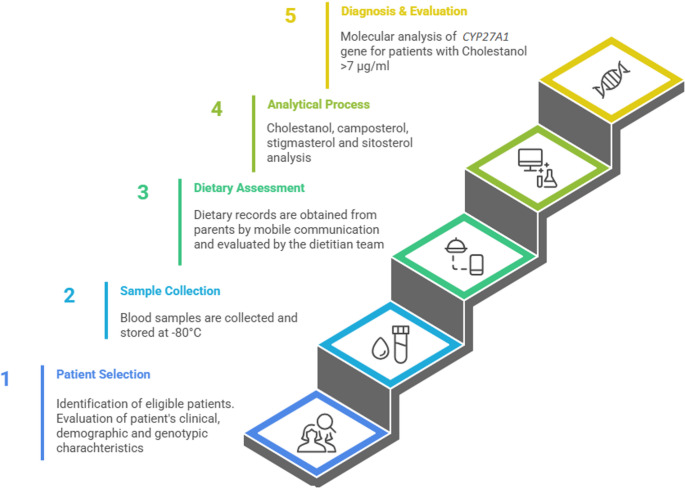 Figure 1
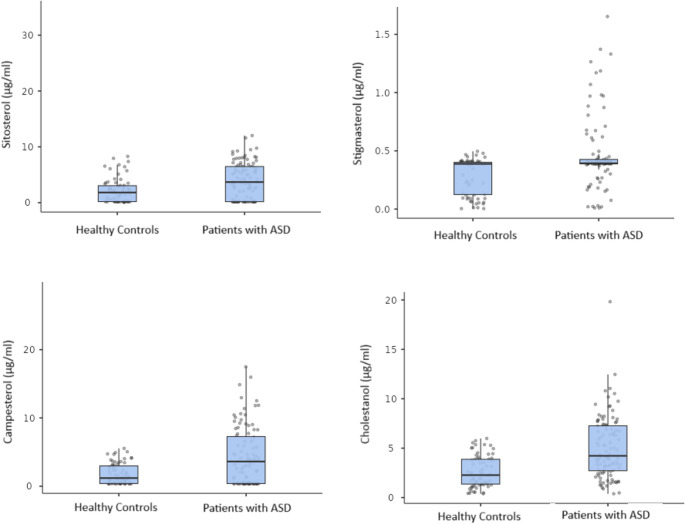 Figure 2
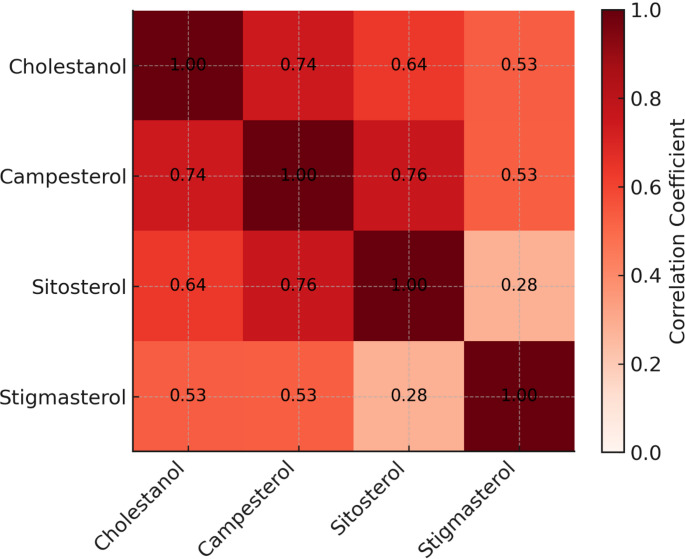 Figure 3
Peer Reviews
No public reviews on file for this paper yet. If you reviewed it on a platform where reviews are public (OpenReview, ICLR, NeurIPS, ICML), you can paste yours below so the community can read it here.
Videos
No videos yet. Explain this paper in a talk, walkthrough, or lecture? Add one.
Taxonomy
TopicsCholesterol and Lipid Metabolism · Drug Transport and Resistance Mechanisms · Peroxisome Proliferator-Activated Receptors