Global distribution of Neorickettsia risticii, the causative agent of potomac horse fever: a systematic review
ThankGod Emmanuel Onyiche, Tan Li Peng

TL;DR
This paper reviews the global distribution of Neorickettsia risticii, the bacterium causing Potomac Horse Fever, and highlights gaps in its surveillance and understanding.
Contribution
The first systematic review consolidating global evidence on the distribution and host range of Neorickettsia risticii.
Findings
N. risticii prevalence in horses varies widely, with serological surveys showing 5.45%–26.6% and PCR positivity 0%–14.38%.
The bacterium has been detected in invertebrates and wildlife such as bats, snails, and aquatic insects.
Research is heavily concentrated in North America, with significant gaps in global surveillance.
Abstract
Potomac Horse Fever (PHF), also known as equine neorickettsiosis (EN) or equine monocytic ehrlichiosis is an acute, potentially fatal infectious disease in horses caused by the monocytotropic rickettsia bacterium Neorickettsia risticii. This obligate intracellular bacterium is maintained throughout the life cycle of digenetic trematodes which utilize multiple intermediate and definitive hosts. Research on N. risticii is scattered across multiple continents, with most studies originating from North and South America. Therefore, a systematic review is needed to consolidate global evidence, clarify the geographic distribution and host range of this pathogen, and identify knowledge gaps to guide future surveillance, diagnosis, and control strategies. Therefore, we conducted the first systematic review of the distribution of Neorickettsia risticii in horses and invertebrates. A comprehensive…
Genes, proteins, chemicals, diseases, species, mutations and cell lines named across the full text — each resolved to its canonical identifier and authoritative record.
Click any figure to enlarge with its caption.
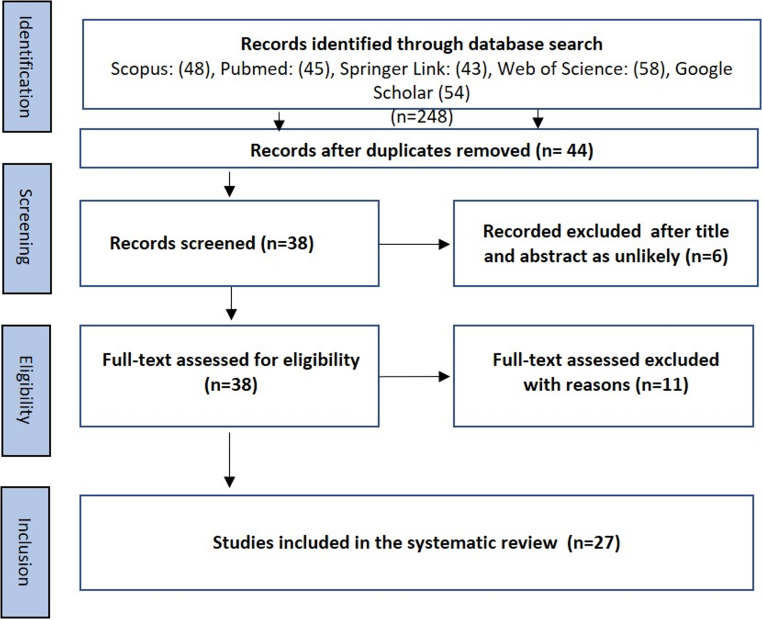 Figure 1
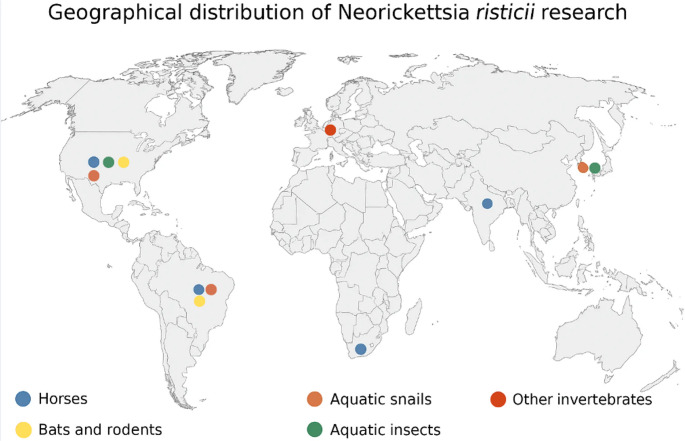 Figure 2
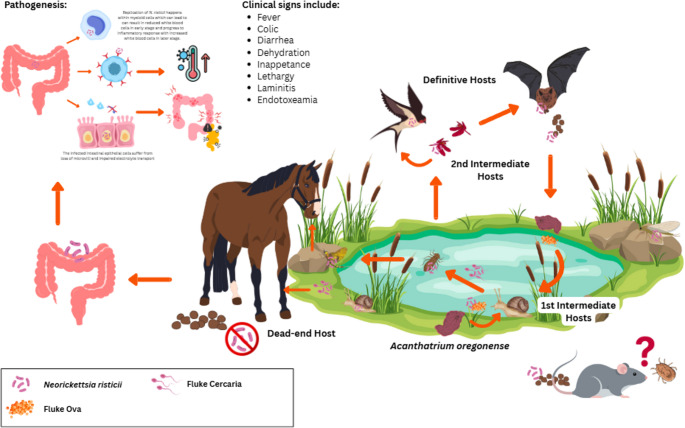 Figure 3
Peer Reviews
No public reviews on file for this paper yet. If you reviewed it on a platform where reviews are public (OpenReview, ICLR, NeurIPS, ICML), you can paste yours below so the community can read it here.
Videos
No videos yet. Explain this paper in a talk, walkthrough, or lecture? Add one.
Taxonomy
TopicsVector-borne infectious diseases · Bartonella species infections research · Parasitic Infections and Diagnostics