CaMKII as a Multimodal Signalling Hub in Neural Connectivity and Vulnerability
Stephanie Olliff, Vinod Sundaramoorthy

TL;DR
This paper explores how CaMKII, a key brain protein, functions as a complex signaling hub that influences neural connectivity and disease through multiple regulatory states.
Contribution
The paper introduces a new conceptual framework for CaMKII as a multistate signaling hub rather than a simple bistable switch.
Findings
CaMKII integrates catalytic, structural, and scaffolding roles influenced by phosphatases and spatial confinement.
Disrupted CaMKII regulation contributes to neurodevelopmental and neurodegenerative disorders.
CaMKII's isoform diversity allows specialized functions in different neuronal compartments.
Abstract
Calcium/calmodulin-dependent protein kinase II (CaMKII) is one of the most abundant and versatile signalling molecules in the brain, uniquely positioned to convert transient signals into durable structural and functional changes. Classical models cast CaMKII as a Ca2+/calmodulin-activated kinase that, once phosphorylated, persists autonomously to encode synaptic memory. Recent work has reframed this view, revealing CaMKII as a state and context-dependent signalling hub that integrates catalytic activity with structural and scaffolding functions. Its activity and persistence are shaped by partner protein interactions, higher-order assembly, redox and metabolic modifications, and confinement within nanoscale domains. Isoform and splice diversity further distribute CaMKII into specialised pools across dendritic spines, growth cones, axons, and nuclei, enabling it to regulate synaptic…
Genes, proteins, chemicals, diseases, species, mutations and cell lines named across the full text — each resolved to its canonical identifier and authoritative record.
Click any figure to enlarge with its caption.
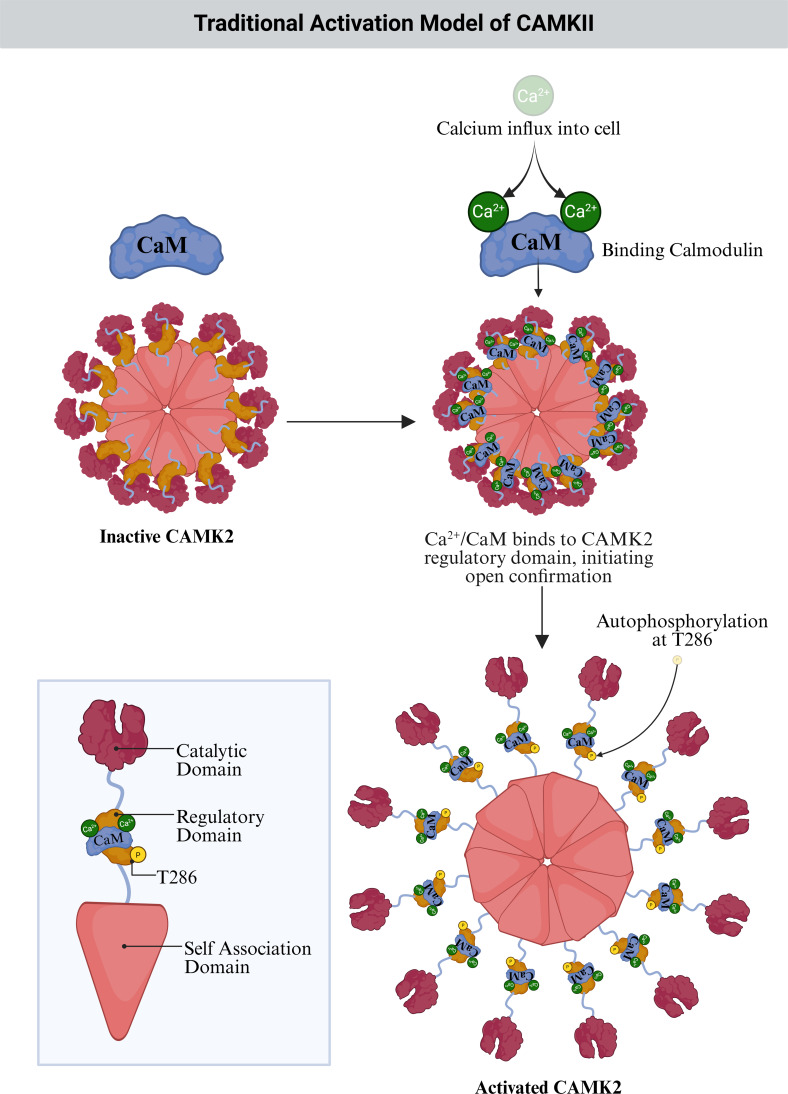 Figure 1
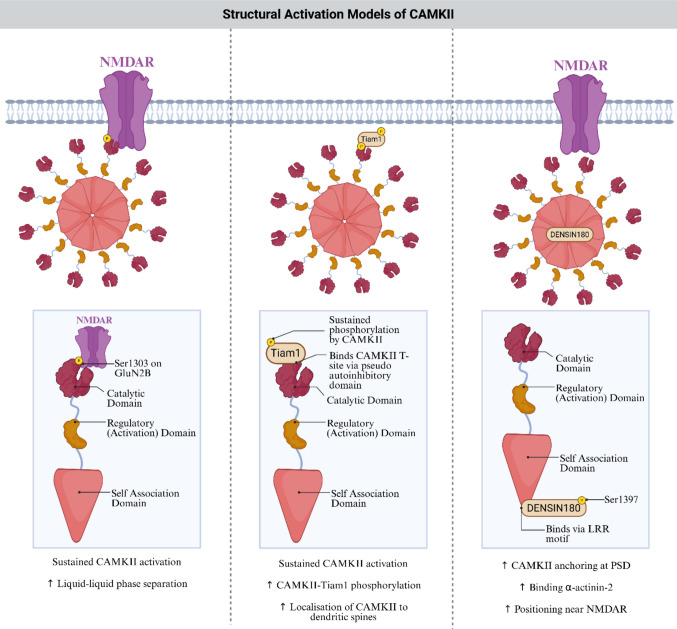 Figure 2
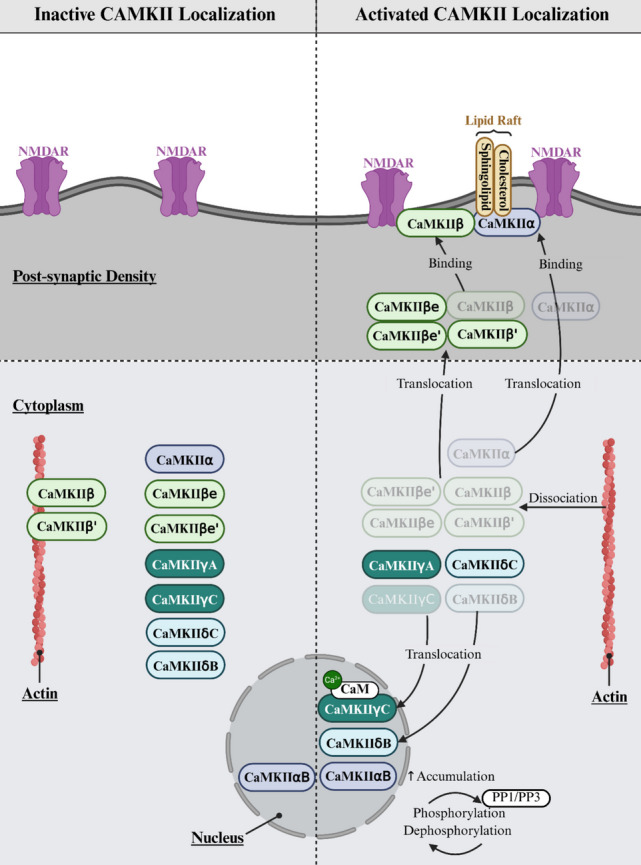 Figure 3
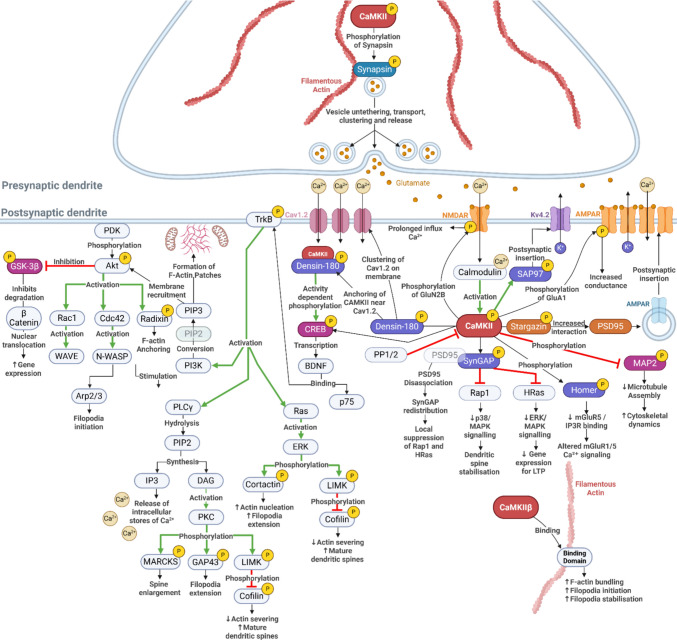 Figure 4
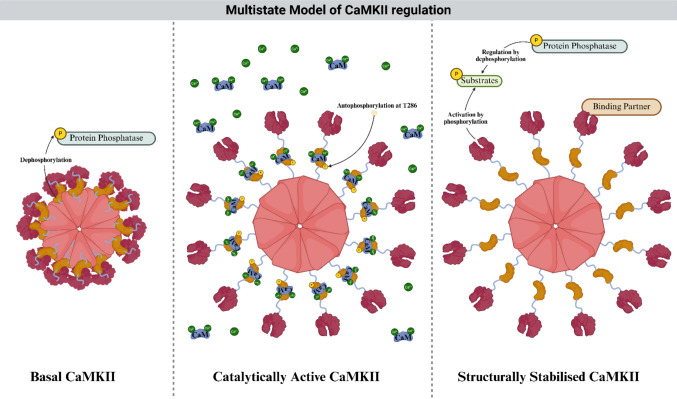 Figure 5
Peer Reviews
No public reviews on file for this paper yet. If you reviewed it on a platform where reviews are public (OpenReview, ICLR, NeurIPS, ICML), you can paste yours below so the community can read it here.
Videos
No videos yet. Explain this paper in a talk, walkthrough, or lecture? Add one.
Taxonomy
TopicsNeuroscience and Neuropharmacology Research · Neurogenesis and neuroplasticity mechanisms · Alzheimer's disease research and treatments