Spatially resolved lipids in a mouse brain model of globoid cell leukodystrophy via IR-MALDESI MSI and parallel reaction monitoring MSI
Sierra N. Hunter, Mary F. Wang, Brittany N. Thomas, Anthony J. Filiano, David C. Muddiman

TL;DR
This study uses advanced imaging techniques to map lipid distributions in a mouse model of a neurodegenerative disease, focusing on a toxic lipid linked to the condition.
Contribution
The study introduces ammonium fluoride electrospray doping in positive ion mode for improved lipid detection in IR-MALDESI MSI.
Findings
Psychosine accumulates in brain regions associated with GLD-related impairments, such as the cerebellum and brain stem.
Ammonium fluoride doping enhances lipid detection in IR-MALDESI MSI, though with limited success for sphingolipids.
IR-MALDESI and parallel reaction monitoring confirm the spatial distribution of psychosine in GALC-deficient mouse brains.
Abstract
Globoid cell leukodystrophy (GLD) is a genetic neurodegenerative disease caused by mutations in galactosylceramide β-galactosidase (GALC) that results in the accumulation of the cytotoxic sphingolipid, psychosine. As psychosine is a biomarker specific to GLD, identifying the most afflicted regions of the nervous system can assist in better understanding the disease mechanism. Infrared matrix-assisted laser desorption electrospray ionization (IR-MALDESI) mass spectrometry imaging (MSI) and parallel reaction monitoring were utilized to elucidate the spatial distribution of the psychosine analyte and confirm the identity of the ion in a sagittal section of a GALC-deficient mouse brain. The presence of the psychosine was increased in specific anatomical regions of the brain responsible for the bodily functions that are impaired by GLD (cerebellum and brain stem). Several electrospray…
Genes, proteins, chemicals, diseases, species, mutations and cell lines named across the full text — each resolved to its canonical identifier and authoritative record.
Click any figure to enlarge with its caption.
 Figure 1
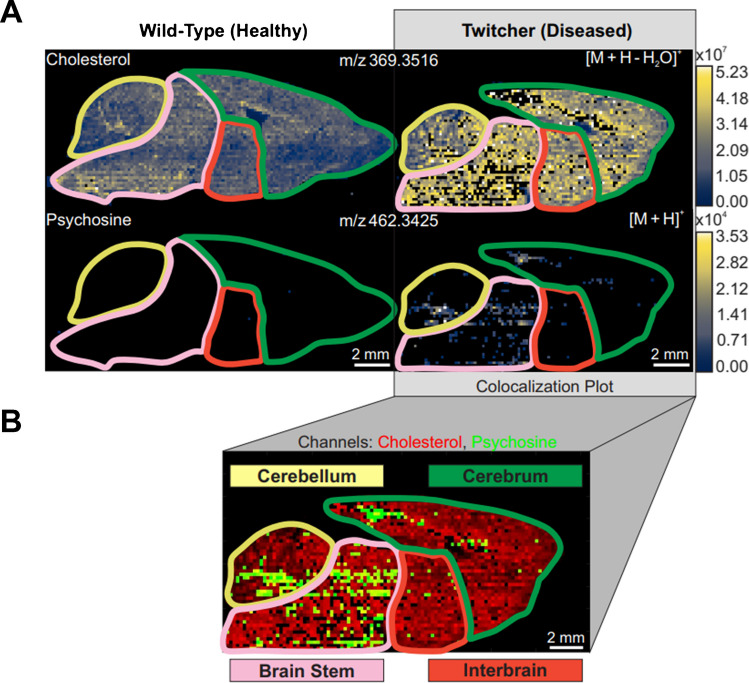 Figure 2
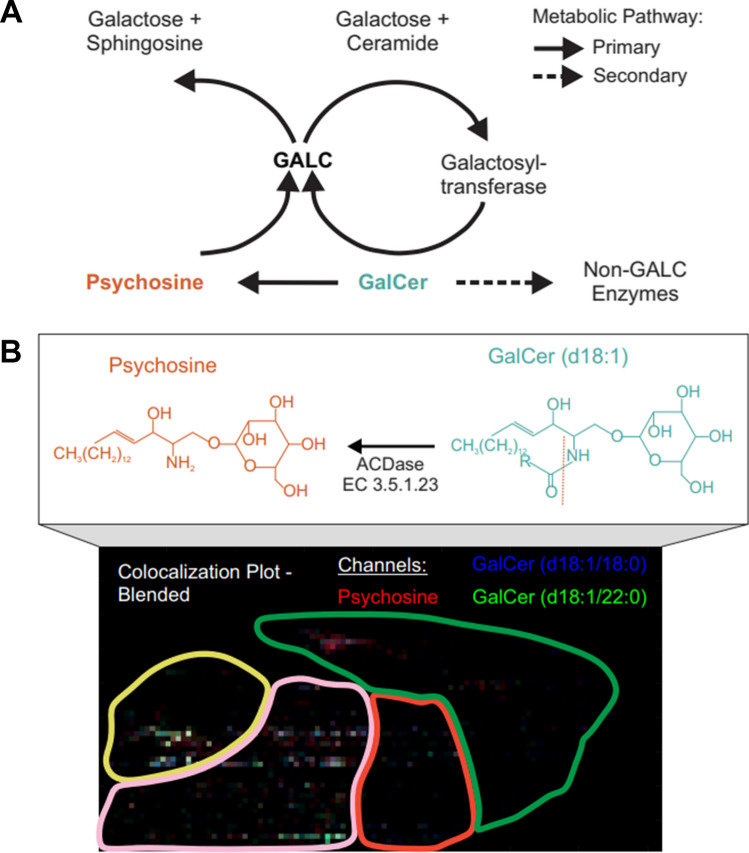 Figure 3
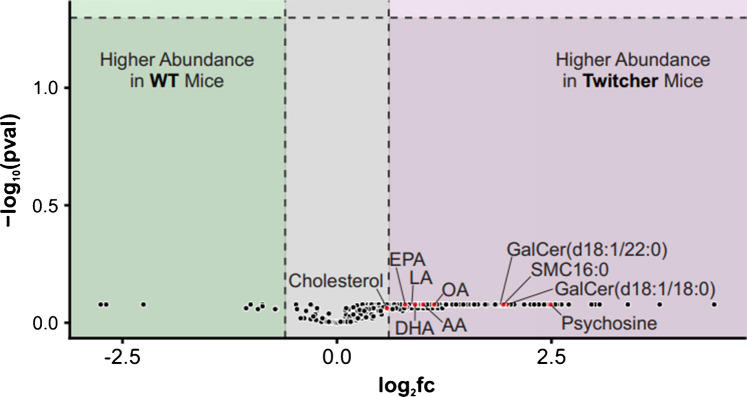 Figure 4
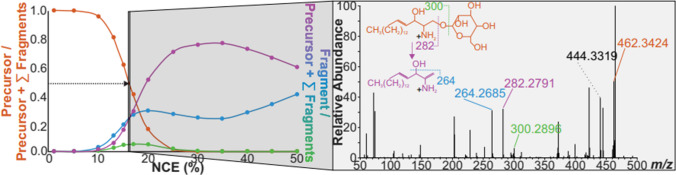 Figure 5
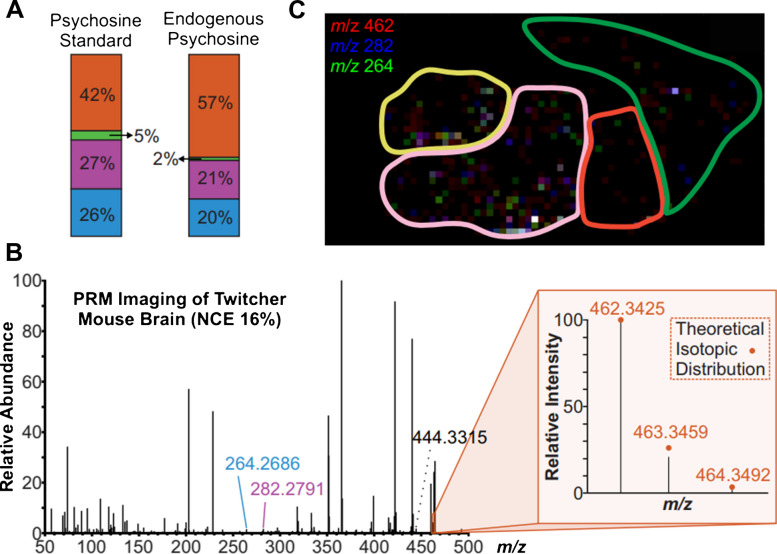 Figure 6
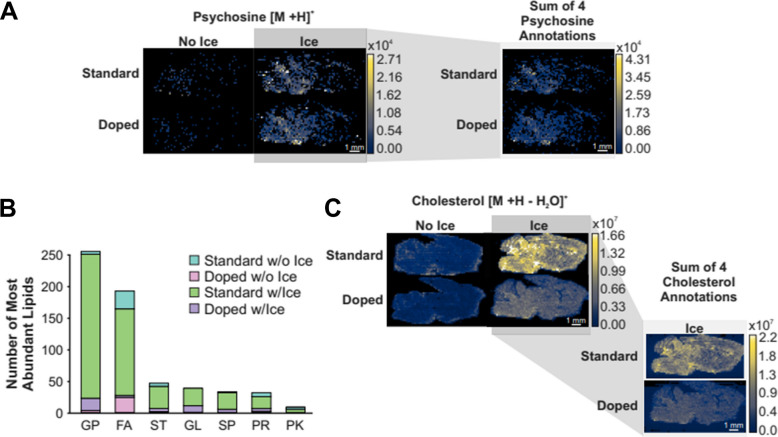 Figure 7
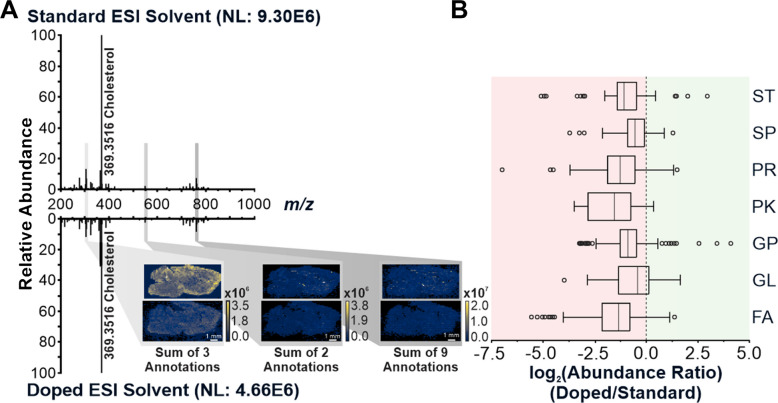 Figure 8
 Figure 9
 Figure 10
 Figure 11
 Figure 12
 Figure 13
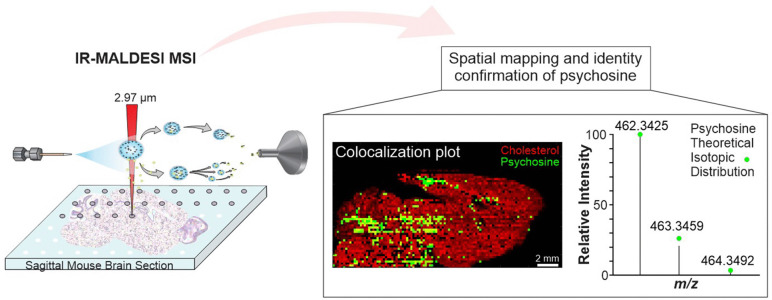 Figure 14
Peer Reviews
No public reviews on file for this paper yet. If you reviewed it on a platform where reviews are public (OpenReview, ICLR, NeurIPS, ICML), you can paste yours below so the community can read it here.
Videos
No videos yet. Explain this paper in a talk, walkthrough, or lecture? Add one.
Taxonomy
TopicsMass Spectrometry Techniques and Applications · Lysosomal Storage Disorders Research · Metabolomics and Mass Spectrometry Studies