Determining the influence of variable additive, filler, and dye concentrations in plastics on their fluorescence behavior via spectrometry and FD-FLIM
Maximilian Wohlschläger, Markus Bonauer, Manuela List, Martin Versen, Martin G. J. Löder, Christian Laforsch

TL;DR
This study explores how additives, fillers, and dyes in plastics affect their fluorescence behavior, showing that these components complicate plastic identification using FD-FLIM.
Contribution
The paper introduces a logarithmic model to describe how varying concentrations of additives, fillers, and dyes influence plastic fluorescence lifetimes.
Findings
Additives, fillers, and dyes in plastics cause overlapping fluorescence lifetimes, making plastic identification difficult.
A logarithmic model accurately captures the concentration-dependent fluorescence lifetime behavior of plastics.
FD-FLIM's effectiveness for plastic analysis is limited without considering multiple excitation/emission states.
Abstract
Microplastic (MP) pollutes our terrestrial and aquatic ecosystems due to their uncontrolled discharge into our environment. The analysis of MP contamination is still a challenge, although significant improvements are made for different environmental matrices. Using mass-based particle analysis methods such as thermal extraction and desorption-gas chromatography/mass spectroscopy (GC/MS) or pyrolysis GC/MS, essential parameters such as the MP’s morphology, size, and shape cannot be obtained, which are indispensable to assess the hazard of the respective particles. Raman, micro-Fourier transform infrared, and attenuated total reflectance spectroscopy are particle-based analysis methods, which are time-consuming due to the high purification effort. Thus, novel, reliable, and time-efficient methods for MP analysis are required. Previously, studies showed the potential of frequency domain…
Genes, proteins, chemicals, diseases, species, mutations and cell lines named across the full text — each resolved to its canonical identifier and authoritative record.
Click any figure to enlarge with its caption.
 Figure 1
 Figure 2
 Figure 3
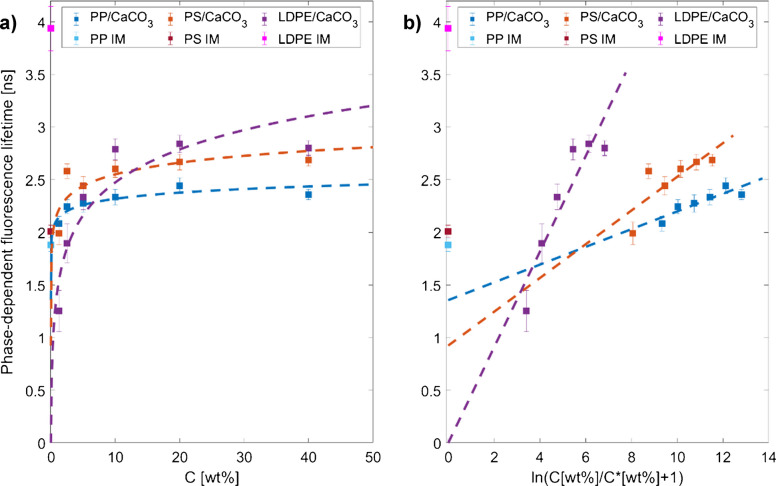 Figure 4
Peer Reviews
No public reviews on file for this paper yet. If you reviewed it on a platform where reviews are public (OpenReview, ICLR, NeurIPS, ICML), you can paste yours below so the community can read it here.
Videos
No videos yet. Explain this paper in a talk, walkthrough, or lecture? Add one.
Taxonomy
TopicsMicroplastics and Plastic Pollution · Recycling and Waste Management Techniques · biodegradable polymer synthesis and properties