Relationship between Hg accumulation and diet in bats from Atlantic forest reserves
Cristiane dos Santos Vergilio, Diego Borges de Aguiar, Lucas Damásio, Diego Lacerda, Pedro Vianna Gatts, Eduardo de Sá Mendonça, Marcelo Gomes de Almeida, Beatriz Ferreira Araújo, Aureo Banhos, Carlos Eduardo de Rezende

TL;DR
Bats in the Atlantic Forest show mercury levels linked to their diet, with insect-eating bats most affected, suggesting they can help track mercury pollution in ecosystems.
Contribution
This study demonstrates how bat feeding habits influence mercury accumulation and stable isotope signatures in a tropical forest ecosystem.
Findings
Mercury concentrations varied significantly among bat feeding guilds, with carnivorous bats having the highest levels.
Insectivorous bats showed higher δ¹⁵N and mercury concentrations, likely due to their diet of invertebrates.
Twenty-three percent of bats exceeded a mercury threshold linked to neurological effects, highlighting their role as pollution sentinels.
Abstract
Bats are valuable bioindicators of Hg contamination due to their wide representation across food webs, broad distribution, and high species richness worldwide. This study evaluated the influence of feeding habits and stable isotopes (δ¹³C and δ¹⁵N) on Hg concentrations in bats from a protected forest complex in southeastern Brazil. We collected road-killed bats (n = 100) along a highway crossing protected areas between 2012 and 2017. The mean Hg concentration (5.6 mg/kg; range: <0.003–71.3 mg/kg) found in the present study was higher than values reported for bats from reference sites, comparable to levels observed in the Peruvian Amazon (an area also affected by artisanal small-scale gold mining), and considerably lower than those measured in populations from highly contaminated regions. Hg concentrations did not vary with forearm length or sex but differed among feeding guilds,…
Genes, proteins, chemicals, diseases, species, mutations and cell lines named across the full text — each resolved to its canonical identifier and authoritative record.
Click any figure to enlarge with its caption.
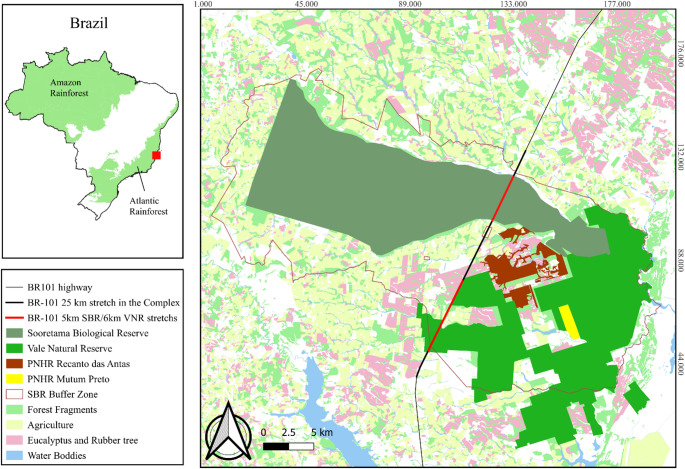 Figure 1
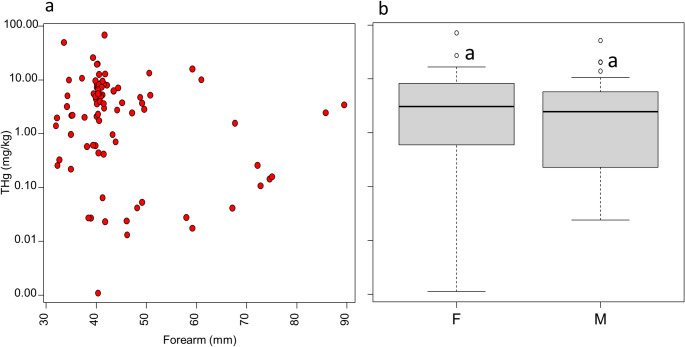 Figure 2
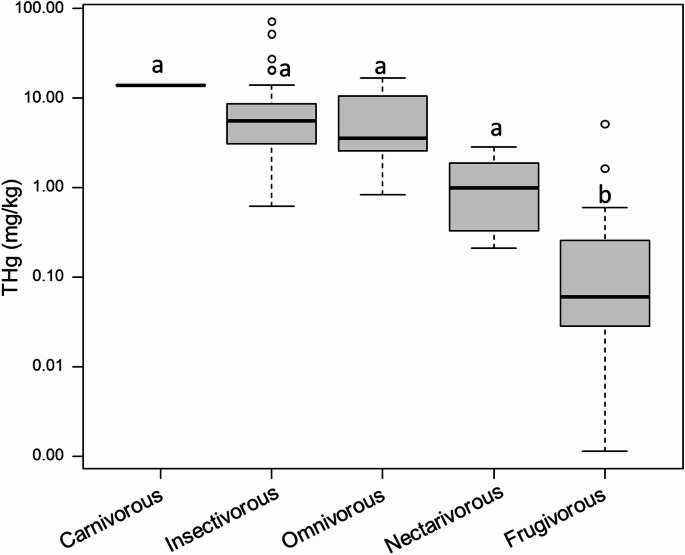 Figure 3
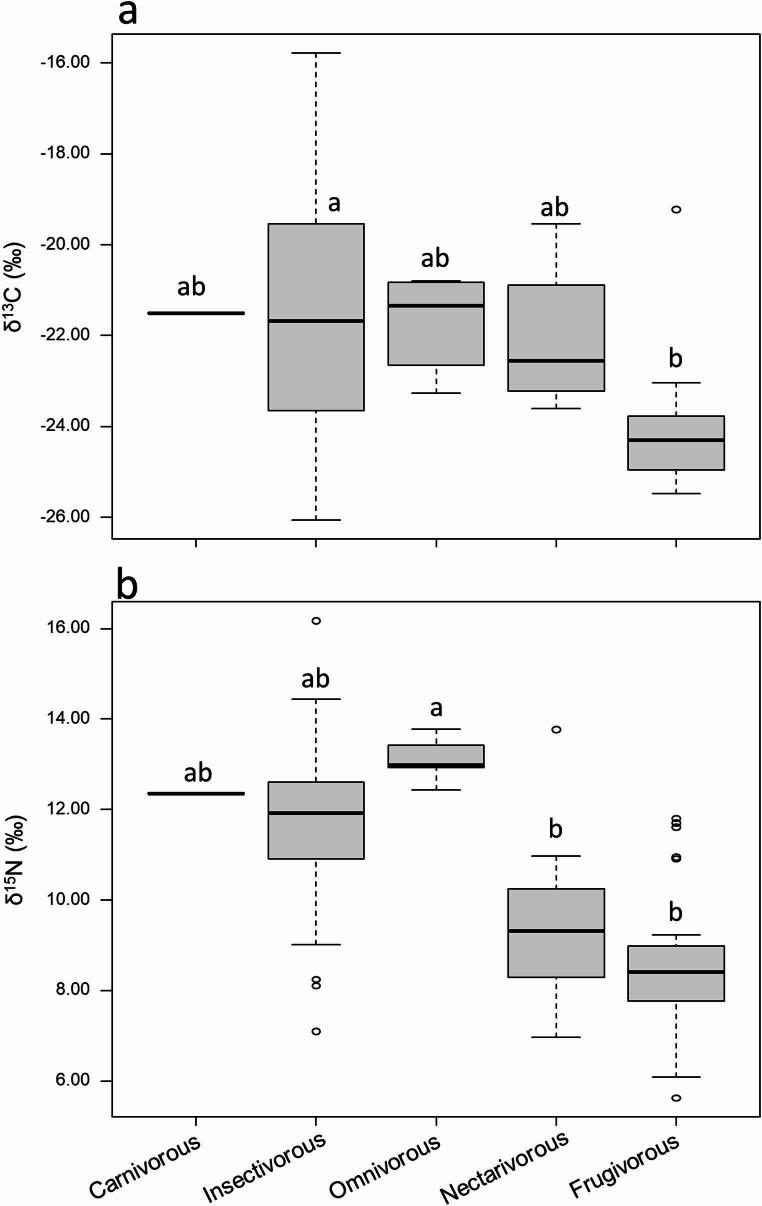 Figure 4
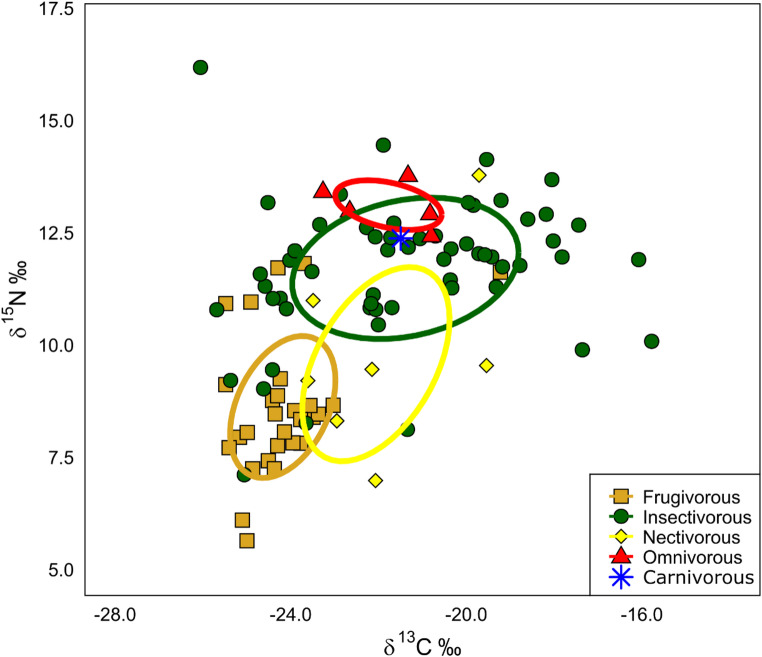 Figure 5
Peer Reviews
No public reviews on file for this paper yet. If you reviewed it on a platform where reviews are public (OpenReview, ICLR, NeurIPS, ICML), you can paste yours below so the community can read it here.
Videos
No videos yet. Explain this paper in a talk, walkthrough, or lecture? Add one.
Taxonomy
TopicsMercury impact and mitigation studies · Bat Biology and Ecology Studies · Marine animal studies overview