Overcoming the novelty effect on YouTube: visibility patterns in evidence-based psychotherapy videos—Findings of a long-term observational study in French-speaking countries
Amaury Durpoix, Amaury C. Mengin, Laurence Lalanne, Mario Speranza, Nader Perroud, Marie Riebel, Christophe Moog, Satchel Cohen, Lionel Cailhol, Martin Blay, Sébastien Weibel

TL;DR
This study shows that evidence-based psychotherapy videos on YouTube can maintain long-term visibility when used in real-life therapy, overcoming YouTube's novelty bias.
Contribution
The study introduces a hybrid model combining digital platforms and offline clinical networks to sustain video engagement on YouTube.
Findings
Average monthly views on the GREMO HUS channel increased significantly from 2019–2020 to 2021–2022.
Viewer retention improved with role-play scenes in videos, particularly in 'Meditation & Relaxation' content.
User comments highlighted the videos' utility in face-to-face therapy and professional training.
Abstract
As the second most visited website globally, YouTube offers a major opportunity for disseminating mental health knowledge and reducing stigma around psychotherapy. However, visibility remains a key challenge, particularly in the long-term because YouTube algorithm favors novelty over relevance. This novelty effect may discourage scientifically trained psychotherapists from publishing high-quality content due to its limited lifespan. Yet, videos created by clinicians can be directly recommended during in-person therapy or professional exchanges, potentially bypassing algorithmic limitations and maintaining long-term visibility. This study investigated whether such videos maintain long-term viewership and explored the factors influencing their engagement. We analyzed viewership data automatically collected by YouTube for 51 videos posted between 2018 and 2022 on the GREMO HUS channel.…
Genes, proteins, chemicals, diseases, species, mutations and cell lines named across the full text — each resolved to its canonical identifier and authoritative record.
Click any figure to enlarge with its caption.
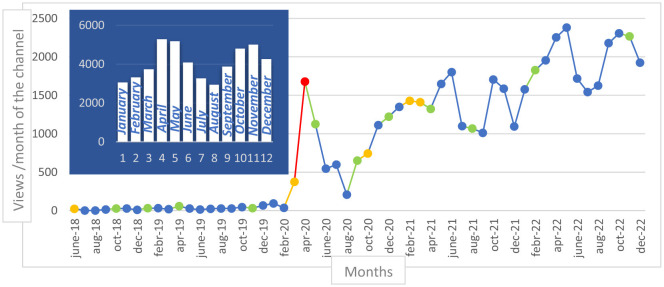 Figure 1
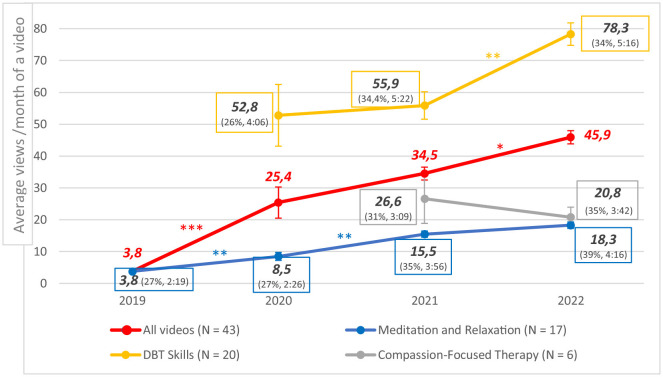 Figure 2
 Figure 3
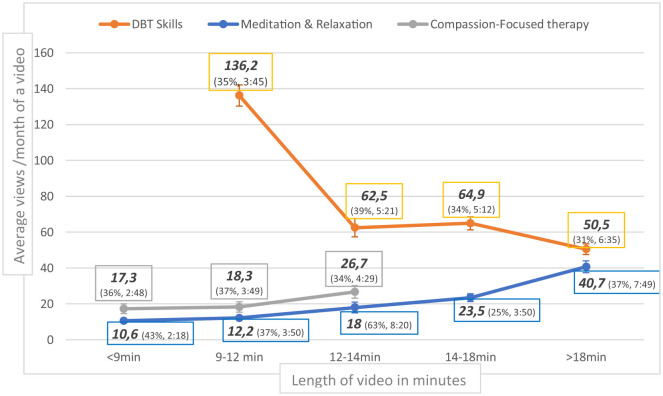 Figure 4
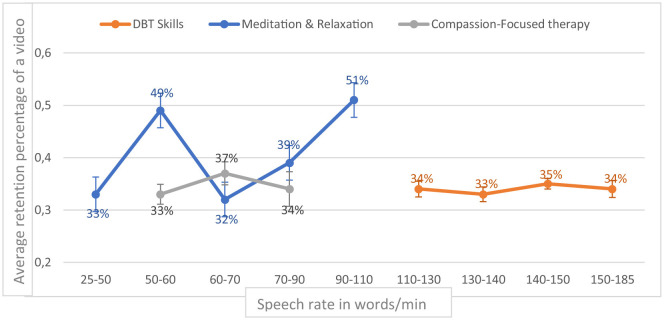 Figure 5
Peer Reviews
No public reviews on file for this paper yet. If you reviewed it on a platform where reviews are public (OpenReview, ICLR, NeurIPS, ICML), you can paste yours below so the community can read it here.
Videos
No videos yet. Explain this paper in a talk, walkthrough, or lecture? Add one.
Taxonomy
TopicsDigital Mental Health Interventions · Mental Health via Writing · Media Influence and Health