Case Report: Retrospective discovery of Theileria orientalis Ikeda in Haemaphysalis longicornis Neumann ticks on a cow-calf farm in Tennessee (US)
Rebecca A. Butler, Lisa I. Muller, Karen C. Poh, Mitzi Aguilar, Kyra S. Hokkanen-Harmon, Jennifer G. Chandler, Daniel Grove, Rebecca T. Trout Fryxell

TL;DR
Theileria orientalis Ikeda was found in ticks on a Tennessee farm, highlighting the role of multiple hosts in its transmission.
Contribution
This case report identifies new host associations for Theileria orientalis Ikeda in the US.
Findings
T. orientalis Ikeda was detected in nymphal H. longicornis ticks from cattle, cats, raccoons, and opossums.
Protozoan DNA was not found in the blood of these hosts, suggesting alternative transmission routes.
Acaricide treatment and biosecurity measures are recommended to reduce tick populations and pathogen spread.
Abstract
Theileria orientalis Ikeda is a protozoan parasite that has recently been detected in Haemaphysalis longicornis Neumann ticks and bovine serum samples in the United States (US). This parasite is known to cause theileriosis in bovine hosts and has negatively impacted the cattle industry worldwide. The transmission of this pathogen at the livestock–wildlife interface in the US is not fully understood. Theileria orientalis Ikeda was reported by producers on a cow-calf farm in eastern Tennessee. A retrospective analysis of field- and host-collected H. longicornis resulted in the detection of T. orientalis Ikeda in nymphal H. longicornis ticks collected from cattle (Bos taurus), domestic cats (Felis catus), raccoons (Procyon lotor), and Virginia opossums (Didelphis virginiana). Notably, the protozoan DNA was not found in the blood of these hosts. Multiple hosts (cattle, raccoons, Virginia…
Genes, proteins, chemicals, diseases, species, mutations and cell lines named across the full text — each resolved to its canonical identifier and authoritative record.
Click any figure to enlarge with its caption.
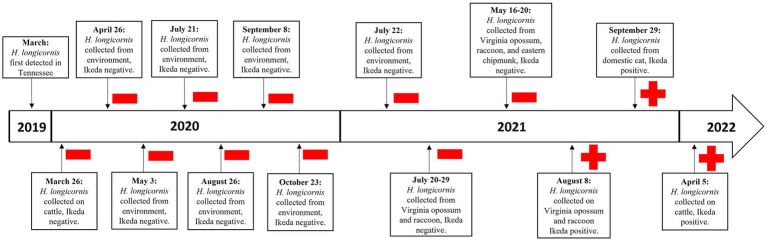 Figure 1
Peer Reviews
No public reviews on file for this paper yet. If you reviewed it on a platform where reviews are public (OpenReview, ICLR, NeurIPS, ICML), you can paste yours below so the community can read it here.
Videos
No videos yet. Explain this paper in a talk, walkthrough, or lecture? Add one.
Taxonomy
TopicsVector-borne infectious diseases · Insects and Parasite Interactions · Parasitic Infections and Diagnostics