From soluble uric acid to sodium urate crystal: immune metabolic inflammation driven by uric acid morphological transformation and mechanism-oriented therapy
Qianqian Yang, Yundong Xu, Jian Zhang, Niqin Xiao, Hongting Lu, Bingbing Chen, Bo Yang, Zhaohu Xie, Zhaofu Li

TL;DR
This review explores how uric acid changes from a soluble form to crystals and how these changes drive inflammation and disease, offering insights into targeted therapies.
Contribution
The paper introduces the concept of amorphous monosodium urate as a transitional state linking soluble and crystalline uric acid, influencing immune-metabolic inflammation.
Findings
Amorphous monosodium urate may act as a buffering stage between urate solubility and crystallization.
Sustained hyperuricemia causes chronic organ damage through impaired autophagy and metabolic inflammation.
MSU crystals trigger acute inflammation via the TLR–NLRP3 pathway, leading to chronic tissue remodeling.
Abstract
Uric acid has complex bidirectional effects on human physiology and disease, influenced by its antioxidant capacity, metabolic regulatory roles, and pro-inflammatory properties, all of which are highly context-dependent. In this review, we synthesize recent advancements related to the continuum from soluble uric acid (SUA) to amorphous monosodium urate (AMSU) and, ultimately, to crystalline monosodium urate (MSU). We propose that AMSU may act as a transitional intermediate that connects the soluble and crystalline states. Notably, AMSU may serve as a buffering stage between crystallization and inflammatory activation, providing a conceptual bridge between urate phase transitions and immune–metabolic signaling. Building on this idea, we establish a framework that links urate state dynamics with immune-metabolic pathways and disease progression. We systematically summarize the…
Genes, proteins, chemicals, diseases, species, mutations and cell lines named across the full text — each resolved to its canonical identifier and authoritative record.
Click any figure to enlarge with its caption.
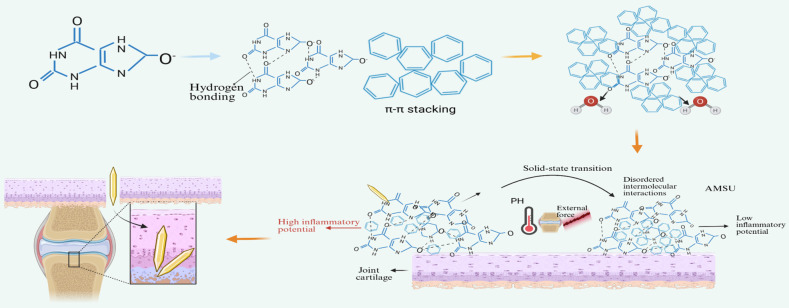 Figure 1
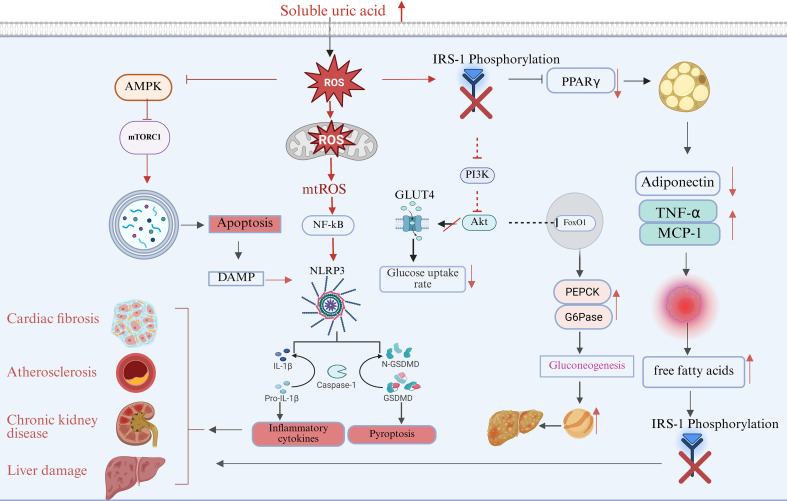 Figure 2
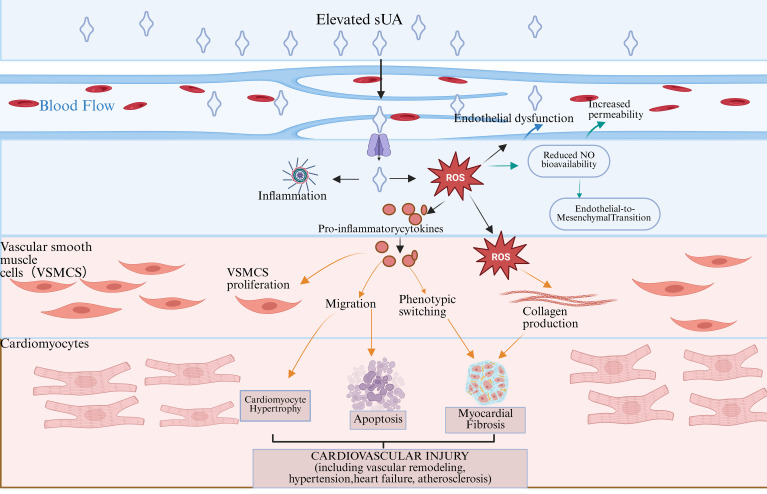 Figure 3
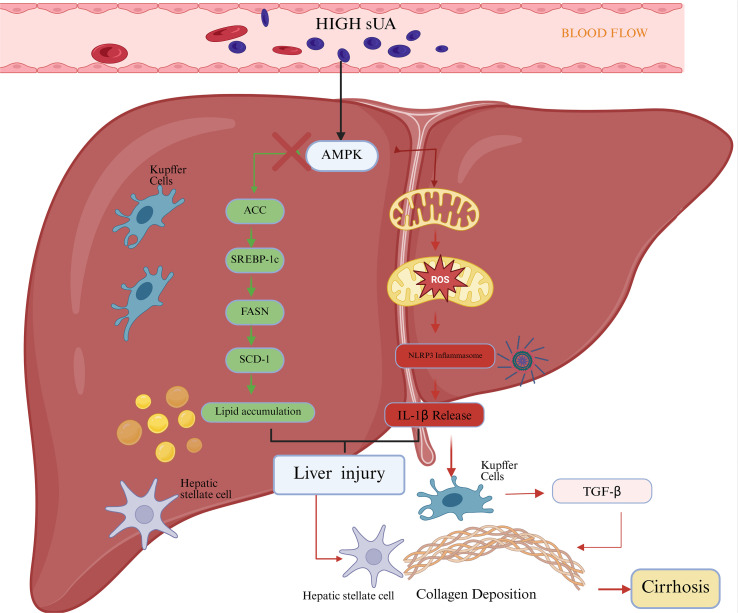 Figure 4
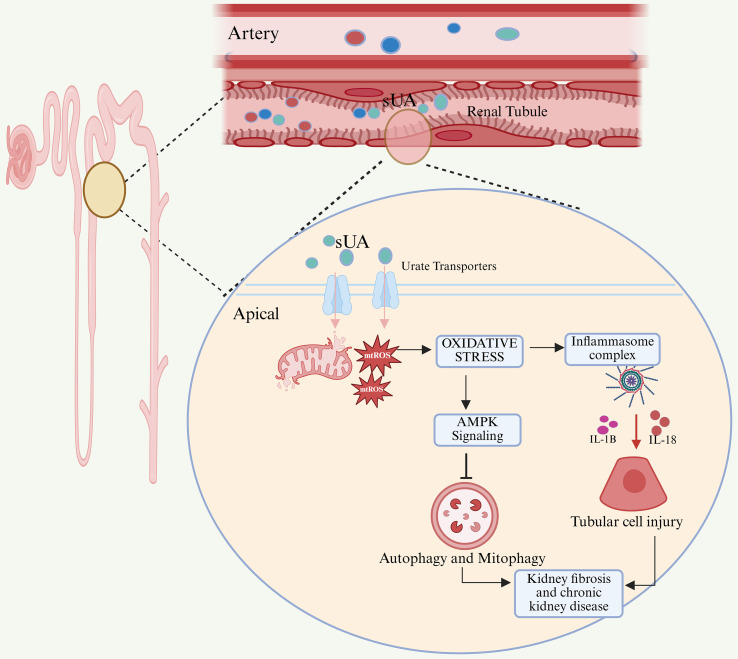 Figure 5
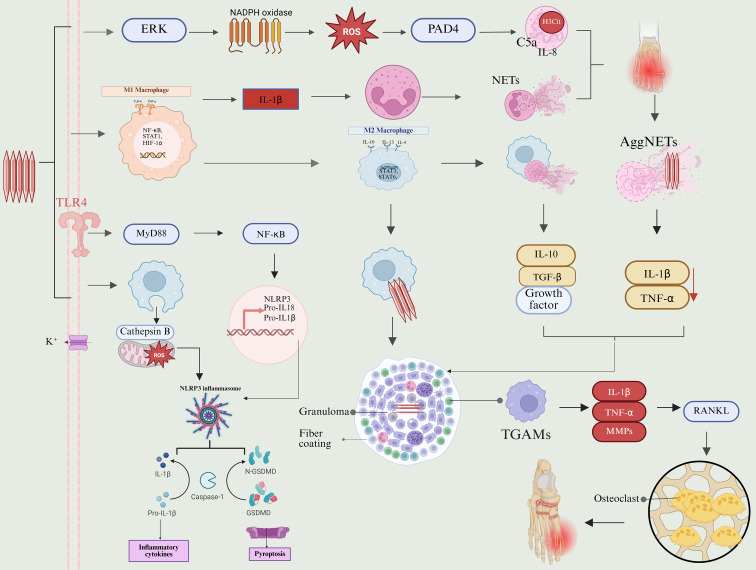 Figure 6
Peer Reviews
No public reviews on file for this paper yet. If you reviewed it on a platform where reviews are public (OpenReview, ICLR, NeurIPS, ICML), you can paste yours below so the community can read it here.
Videos
No videos yet. Explain this paper in a talk, walkthrough, or lecture? Add one.
Taxonomy
TopicsGout, Hyperuricemia, Uric Acid · Kidney Stones and Urolithiasis Treatments · Sodium Intake and Health