Disease burden, treatment experiences and preferences in patients with acromegaly: a qualitative study
Jennifer Quinn, Andrea De Palma, Rebecca McKeown, Rocco Adiutori, Charlotte E. Kosmas, Isabelle Petit

TL;DR
This study explores how acromegaly affects patients' lives and their treatment preferences, finding that patients prefer less frequent treatments and prioritize efficacy and safety.
Contribution
The study provides new insights into patient-reported treatment burdens and preferences in acromegaly, highlighting a preference for less frequent treatment options.
Findings
Patients reported symptoms like swelling, fatigue, and excessive sweating, impacting social life and causing anxiety.
Monthly injectable treatments caused burdens like unpleasant injections and travel, with over half preferring daily oral treatments.
Patients preferred hypothetical 3-monthly injections over monthly ones if equally effective and recommended by doctors.
Abstract
Acromegaly is a rare disease with limited treatment options. Understanding treatment burden and patient preferences is important for evaluating new treatments and optimizing adherence. Patients with acromegaly (≥18 years) from the United States (US) participated in qualitative semi-structured interviews to explore: 1) the impact of acromegaly on quality of life, 2) patients’ experiences with current treatment, 3) preferences for new treatments. Fifteen US patients with acromegaly participated, reporting a range of symptoms; physical changes/swelling, fatigue/tiredness and excessive sweating. Frequently reported impacts included limited socializing (n = 6), anxiety (n = 4), embarrassment due to sweating/odor (n = 4) and clothing adaptations due to swelling (n = 4). Frequently reported impacts associated with monthly injectable treatment included unpleasantness of injections/blood tests…
Genes, proteins, chemicals, diseases, species, mutations and cell lines named across the full text — each resolved to its canonical identifier and authoritative record.
Click any figure to enlarge with its caption.
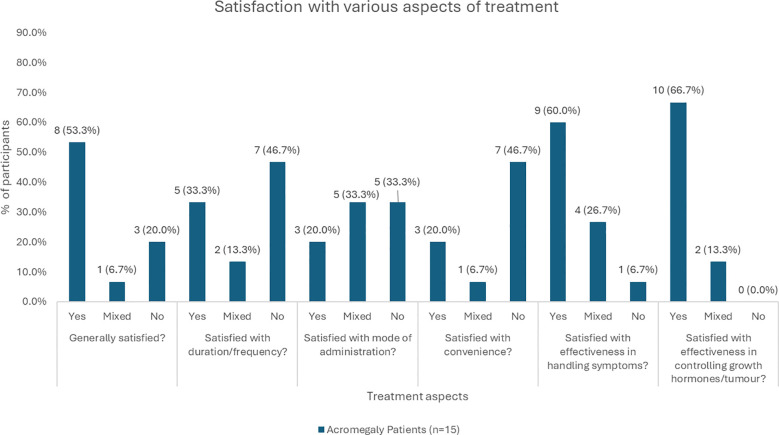 Figure 1
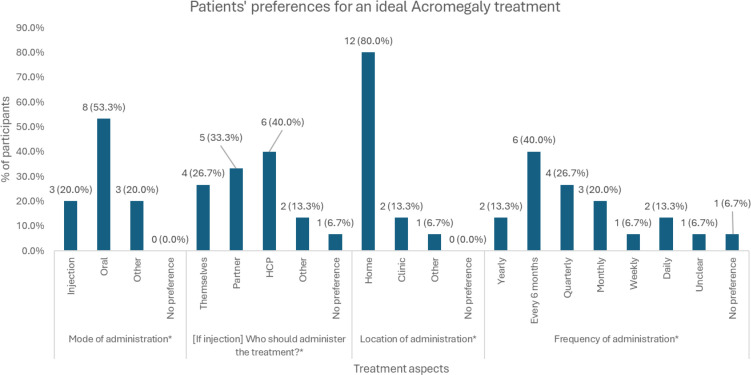 Figure 2
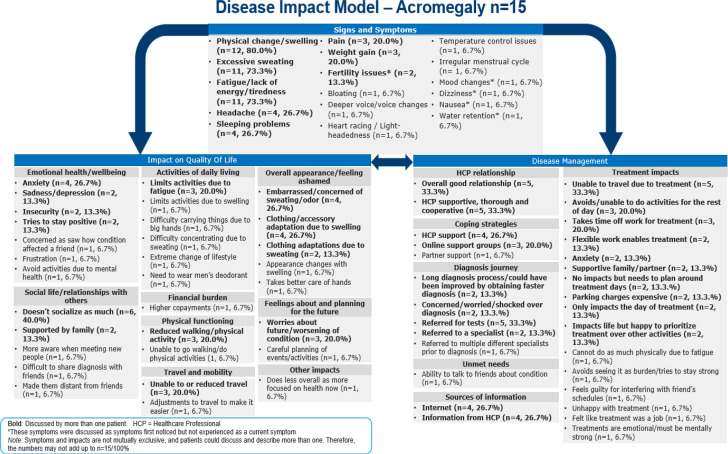 Figure 3
Peer Reviews
No public reviews on file for this paper yet. If you reviewed it on a platform where reviews are public (OpenReview, ICLR, NeurIPS, ICML), you can paste yours below so the community can read it here.
Videos
No videos yet. Explain this paper in a talk, walkthrough, or lecture? Add one.
Taxonomy
TopicsPituitary Gland Disorders and Treatments · Autoimmune Neurological Disorders and Treatments · Cerebrovascular and genetic disorders