Traditional physical exercise and depression in older adults: the mediating role of interoceptive awareness and the moderating effect of perceived stress
Yafei Zheng, Yuanzheng Lin, Qiuhong Zheng

TL;DR
Traditional physical exercise is linked to fewer depressive symptoms in older adults, partly due to increased awareness of bodily sensations and influenced by stress levels.
Contribution
This study identifies interoceptive awareness as a mediator and perceived stress as a moderator in the exercise-depression relationship in older adults.
Findings
Traditional physical exercise is significantly associated with lower depressive symptoms in older adults.
Interoceptive awareness partially mediates the relationship between exercise and reduced depressive symptoms.
Perceived stress weakens the link between traditional physical exercise and interoceptive awareness.
Abstract
This study examined the associations between traditional physical exercise and depressive symptoms among older adults, with particular attention to the mediating role of interoceptive awareness and the moderating effect of perceived stress. A cross-sectional survey was conducted with 337 older adults who regularly participated in traditional physical exercise. Measures included the Physical Activity Rating Scale (PARS-3), the Multidimensional Assessment of Interoceptive Awareness (MAIA-2), the Perceived Stress Scale (PSS), and the Patient Health Questionnaire-9 (PHQ-9). Confirmatory factor analysis and model fit indices were examined using AMOS. Mediation and moderation analyses were conducted using SPSS, with bias-corrected bootstrap confidence intervals based on 5,000 resamples. Traditional physical exercise showed a significant association with lower depressive symptoms.…
Genes, proteins, chemicals, diseases, species, mutations and cell lines named across the full text — each resolved to its canonical identifier and authoritative record.
Click any figure to enlarge with its caption.
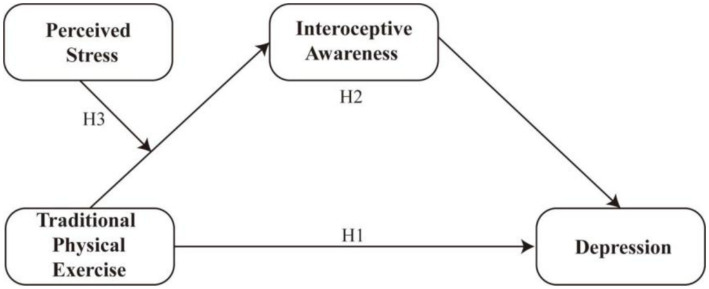 Figure 1
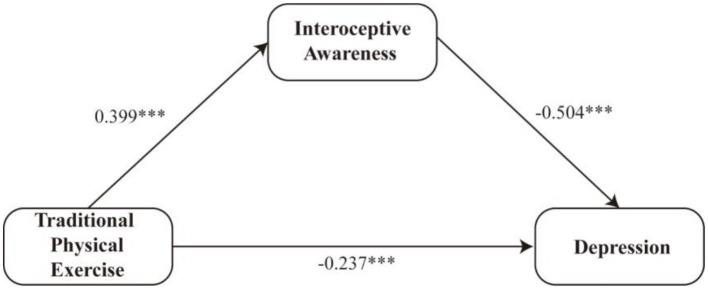 Figure 2
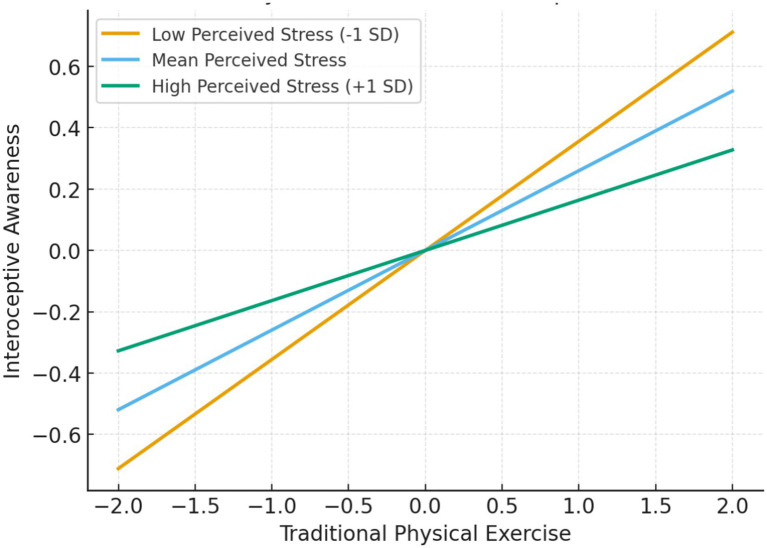 Figure 3
Peer Reviews
No public reviews on file for this paper yet. If you reviewed it on a platform where reviews are public (OpenReview, ICLR, NeurIPS, ICML), you can paste yours below so the community can read it here.
Videos
No videos yet. Explain this paper in a talk, walkthrough, or lecture? Add one.
Taxonomy
TopicsPsychosomatic Disorders and Their Treatments · Traumatic Brain Injury Research · Paranormal Experiences and Beliefs