Serum progesterone and vaginal gel dose in artificial-cycle frozen embryo transfer: association with pregnancy outcome
Hsiao-Chin Huang, Yu-Li Chuang, Chueh-Ko Yang, Horng-Der Tsai, Cheng-Hsuan Wu, Yu-Jing Chen, Hsin-Hung Wu

TL;DR
This study found that higher doses of vaginal progesterone gel improved pregnancy outcomes in frozen embryo transfers, while blood progesterone levels on the day of transfer were not predictive.
Contribution
The study demonstrates that vaginal progesterone gel dose, not serum levels, significantly affects pregnancy outcomes in artificial-cycle frozen embryo transfers.
Findings
Serum progesterone levels on the day of FET did not predict clinical pregnancy or live birth rates.
A higher Crinone dose (180 mg) was significantly associated with improved clinical pregnancy and live birth rates.
Adjusting for baseline differences confirmed the benefit of higher progesterone gel doses.
Abstract
To evaluate the clinical relevance of serum progesterone levels on the day of frozen embryo transfer (FET) and the dose of vaginal progesterone gel (Crinone) used for early luteal phase support (LPS) in artificial-cycle frozen embryo transfer (AC-FET). This single-center retrospective study analyzed 342 AC-FET cycles in patients aged 18–45 at Changhua Christian Hospital, Taiwan (April 2018–December 2022). Women aged 18–45 years undergoing AC-FET were included; cycles with >3 prior failed FETs, major comorbidities, donor oocytes, or missing outcome data were excluded. Pregnancy outcomes were assessed per cycle. Crinone (90 mg or 180 mg daily) was administered for 5 days after endometrial thickness ≥7 mm and progesterone <1.5 ng/mL. Serum progesterone was measured on the day of FET. Clinical pregnancy rates based on gestational sac (CPR-S), fetal heartbeat (CPR-H), and live birth rate…
Genes, proteins, chemicals, diseases, species, mutations and cell lines named across the full text — each resolved to its canonical identifier and authoritative record.
Click any figure to enlarge with its caption.
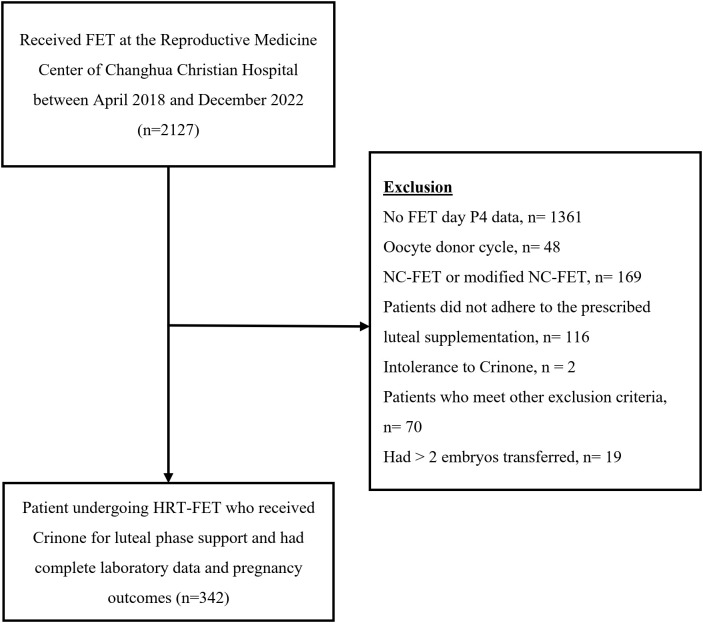 Figure 1
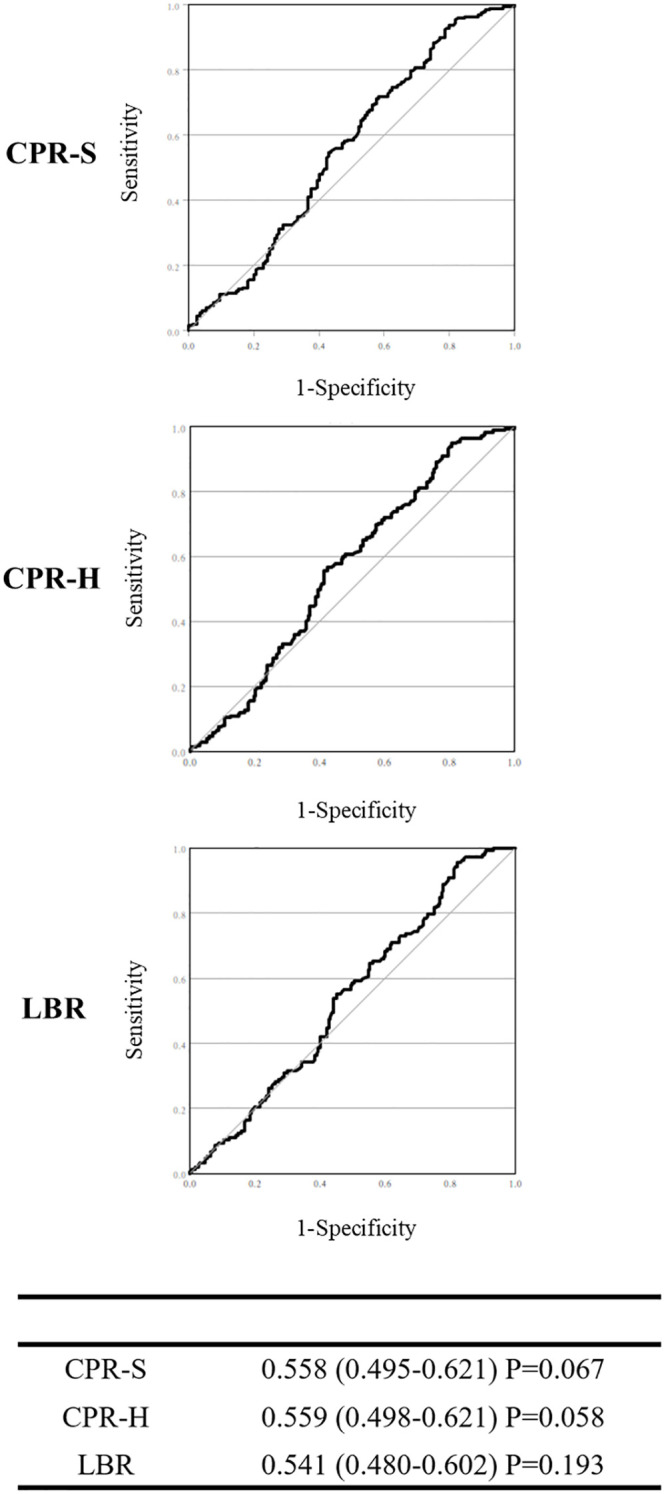 Figure 2
Peer Reviews
No public reviews on file for this paper yet. If you reviewed it on a platform where reviews are public (OpenReview, ICLR, NeurIPS, ICML), you can paste yours below so the community can read it here.
Videos
No videos yet. Explain this paper in a talk, walkthrough, or lecture? Add one.
Taxonomy
TopicsOvarian function and disorders · Reproductive System and Pregnancy · Reproductive Biology and Fertility