Association between fundus tessellated density and subfoveal choroidal thickness in children with different refractive statuses
Cong Zhang, Yue Yan, Lingli Zhang, Jie Wang, Xingye Wang, Xiyuan Zhou

TL;DR
This study finds a nonlinear link between fundus tessellated density and choroidal thickness in children with myopia, suggesting a potential non-invasive biomarker for tracking myopia progression.
Contribution
The study introduces a novel AI-based method to quantify fundus tessellated density as a potential biomarker for monitoring myopia progression in children.
Findings
Fundus tessellated density increases as subfoveal choroidal thickness decreases in myopic children.
A nonlinear threshold effect was identified when choroidal thickness dropped below 148.90 μm.
Combined assessment of fundus tessellated density and choroidal thickness may improve early detection of myopia progression.
Abstract
Present study aimed to quantitatively evaluate the association between fundus tessellated density (FTD) and subfoveal choroidal thickness (SFCT) in children with different refractive statuses and to explore the potential of FTD as a non-invasive biomarker for monitoring myopic progression. A cross-sectional study was conducted involving 619 eyes of 315 children aged 6–12 years. Participants were classified into four refractive groups: hyperopia, pre-myopia, low myopia, and moderate-to-high myopia. FTD was quantitatively assessed using artificial intelligence (AI)-based analysis of color fundus photographs. SFCT and central subfield thickness (CST) were measured using swept-source optical coherence tomography (SS-OCT). Correlation and threshold effect analyses were performed to examine the relationship between FTD and SFCT. SFCT decreased significantly with increasing myopic severity…
Genes, proteins, chemicals, diseases, species, mutations and cell lines named across the full text — each resolved to its canonical identifier and authoritative record.
Click any figure to enlarge with its caption.
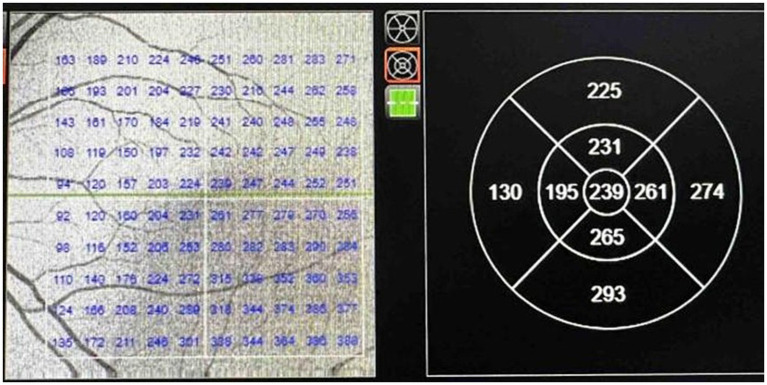 Figure 1
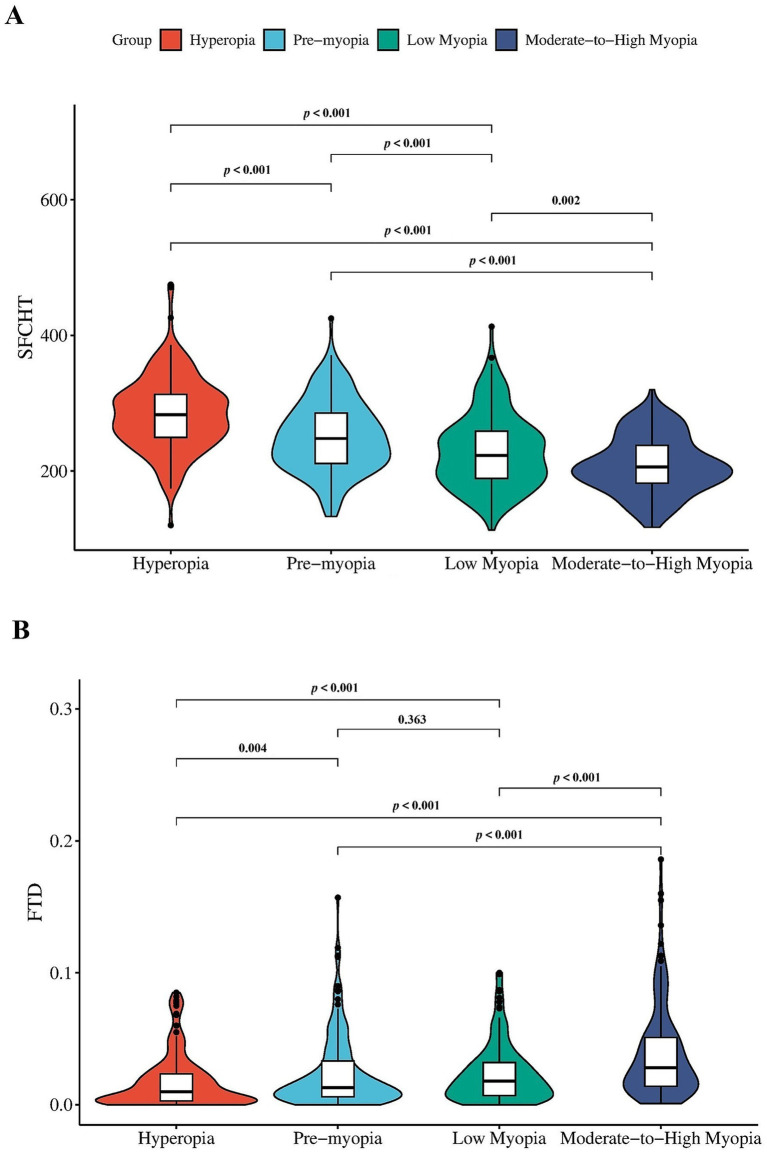 Figure 2
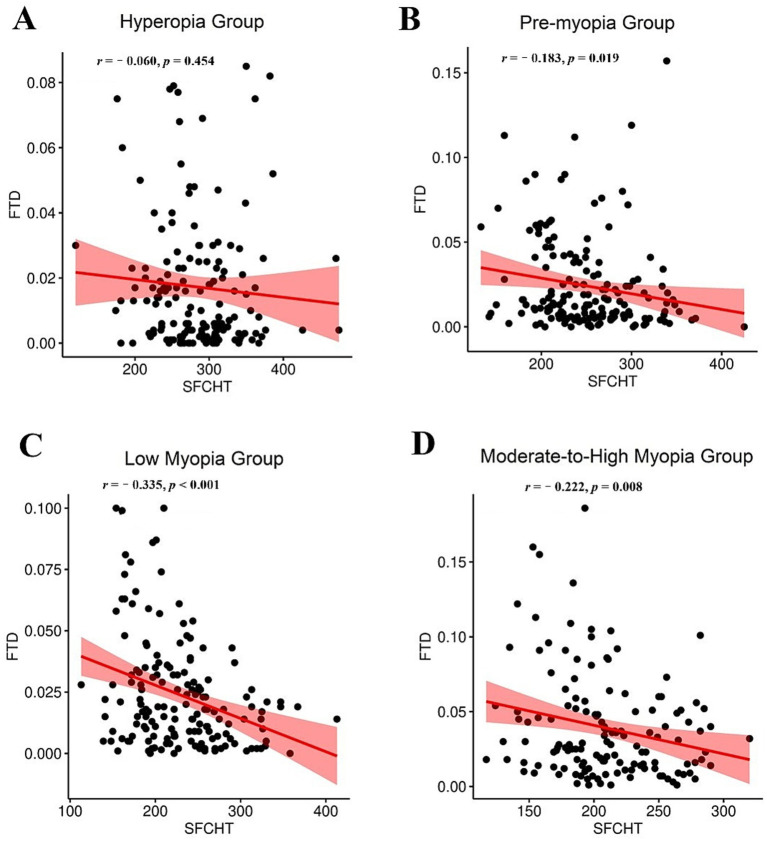 Figure 3
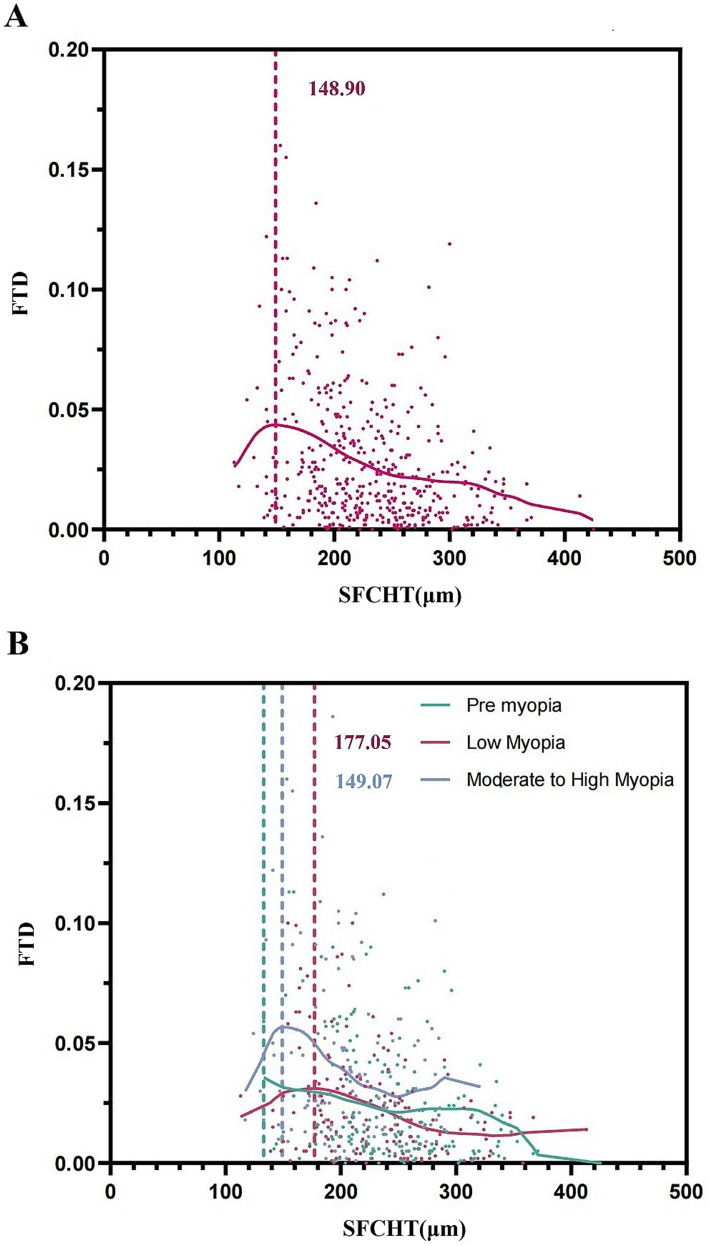 Figure 4
Peer Reviews
No public reviews on file for this paper yet. If you reviewed it on a platform where reviews are public (OpenReview, ICLR, NeurIPS, ICML), you can paste yours below so the community can read it here.
Videos
No videos yet. Explain this paper in a talk, walkthrough, or lecture? Add one.
Taxonomy
TopicsOphthalmology and Visual Impairment Studies · Glaucoma and retinal disorders · Retinal Diseases and Treatments