Social and physiological stress elicit divergent psycho-physiological dynamics and motor cortex activation
Maria Koriakina, Mikhail Lukov, Uliana Nikishkina, Aleksandr Kirsanov, Ekaterina Dmitrieva, Evgeny Blagovechtchenski

TL;DR
This study shows that social and physical stress cause different patterns of physical and emotional responses, with social stress having longer-lasting effects.
Contribution
The study reveals distinct psycho-physiological dynamics and motor cortex activation patterns in response to social versus physiological stress.
Findings
Social stress (TSST) caused prolonged increases in heart rate and tension with reduced positive emotions.
Physiological stress (CPT) led to transient responses followed by rapid normalization and even decreases in some measures.
Cortico-spinal excitability was directly linked to heart rate, showing functional coupling during physiological stress.
Abstract
The investigation of question whether a characteristic stress response pattern can be assessed through the level of motor cortex activation. This study compared the distinct effects of socio-psychological (Trier Social Stress Test, TSST) and physiological (Cold Pressor Test, CPT) stressors on the dynamics on heart rate (HR), blood pressure (BP), and subjective emotional state dynamics. The study had two primary objectives: (1) to assess the differential effects of these stressors by comparing the temporal dynamics of both physiological and psychological parameters; and (2) to estimate the relationship between corticospinal excitability and peripheral autonomic responses during stress. Motor evoked potentials from first dorsal interosseous were induced by stimulation of the primary motor cortex using transcranial magnetic stimulation (TMS), the temporal changes in all measures were…
Genes, proteins, chemicals, diseases, species, mutations and cell lines named across the full text — each resolved to its canonical identifier and authoritative record.
Click any figure to enlarge with its caption.
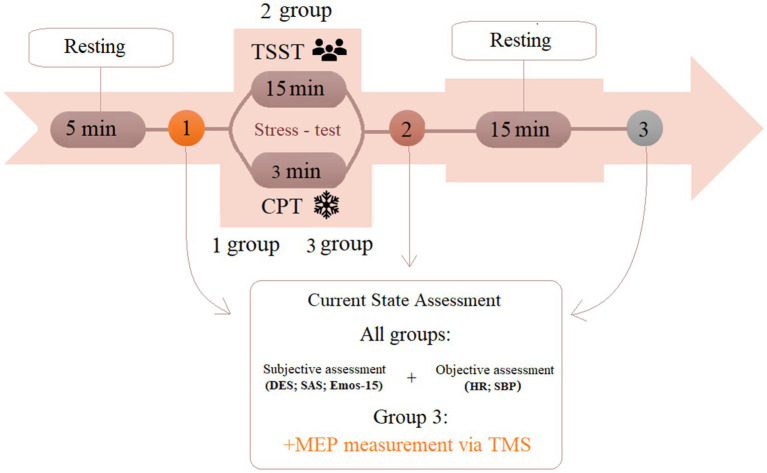 Figure 1
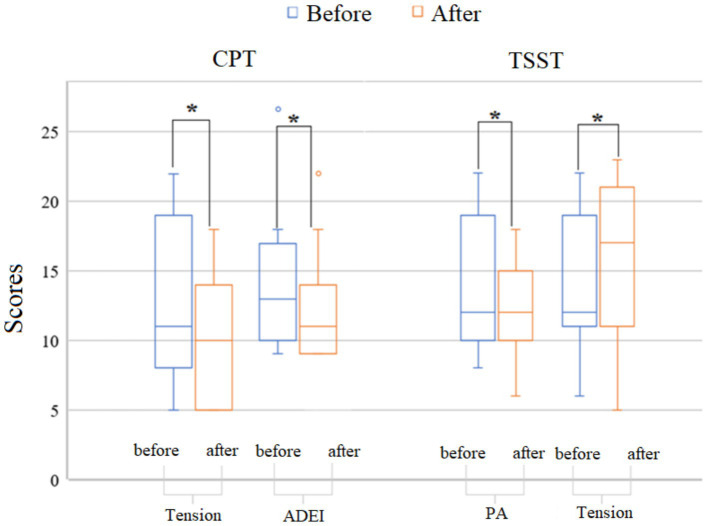 Figure 2
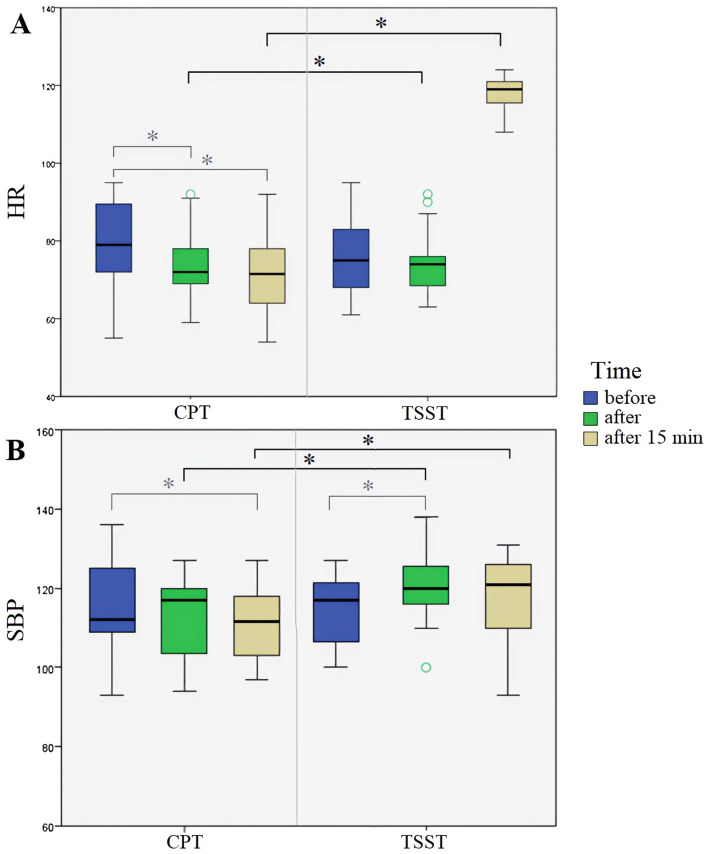 Figure 3
Peer Reviews
No public reviews on file for this paper yet. If you reviewed it on a platform where reviews are public (OpenReview, ICLR, NeurIPS, ICML), you can paste yours below so the community can read it here.
Videos
No videos yet. Explain this paper in a talk, walkthrough, or lecture? Add one.
Taxonomy
TopicsTranscranial Magnetic Stimulation Studies · Stress Responses and Cortisol · Heart Rate Variability and Autonomic Control