The Impact of Early Postoperative Urinary Incontinence on Presenteeism After Robot‐Assisted Radical Prostatectomy for Prostate Cancer: A Prospective Cohort Study
Noriko Nakayama, Tetsuya Tsuji, Akira Kumagai

TL;DR
This study finds that urinary incontinence after prostate cancer surgery significantly reduces work productivity in the first three months, with the biggest impact in the first month.
Contribution
The study quantifies the impact of early postoperative urinary incontinence on presenteeism after robot-assisted radical prostatectomy.
Findings
Median ICIQ-SF scores increased significantly post-surgery, indicating higher incontinence severity.
Presenteeism dropped to 64.9% at one month post-surgery and partially recovered to 75.3% at three months.
UI severity and impact on daily life were moderately correlated with lower presenteeism scores.
Abstract
Urinary incontinence (UI) in the first 3 months after robot‐assisted radical prostatectomy (RARP) frequently impairs work performance, yet its quantitative impact on presenteeism remains unclear. This prospective cohort study longitudinally evaluated how early postoperative UI influences presenteeism among employed Japanese men undergoing RARP. We consecutively enrolled 92 employed male patients scheduled for RARP and assessed them preoperatively, at discharge, and at 1‐ (PS‐1) and 3‐month (PS‐3) post‐surgery. Outcomes were the International Consultation on Incontinence Questionnaire‐Short Form (ICIQ‐SF), WHO Health and Work Performance Questionnaire (HPQ)‐Presenteeism Scale, King's Health Questionnaire (KHQ), and Kessler Psychological Distress Scale (K6). Of the 92 eligible participants, 85 (92.4%) completed the PS‐1 and 80 (87.0%) completed the PS‐3 assessment. Median ICIQ‐SF total…
Genes, proteins, chemicals, diseases, species, mutations and cell lines named across the full text — each resolved to its canonical identifier and authoritative record.
Click any figure to enlarge with its caption.
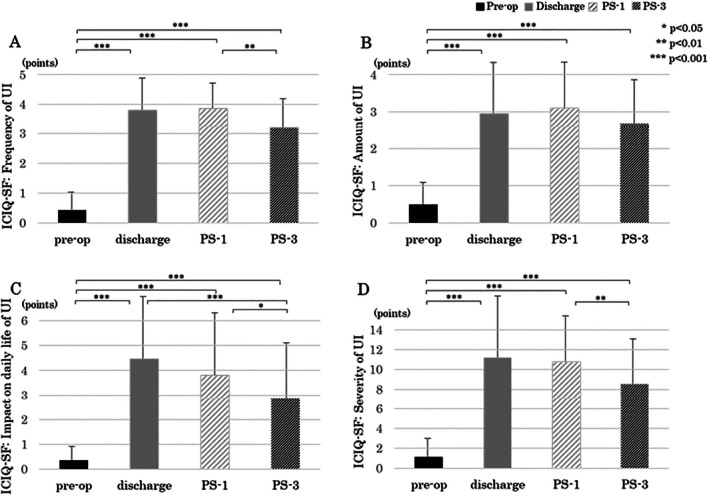 Figure 1
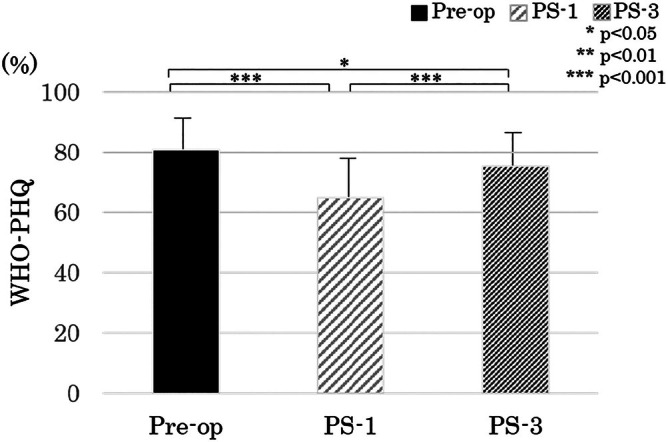 Figure 2
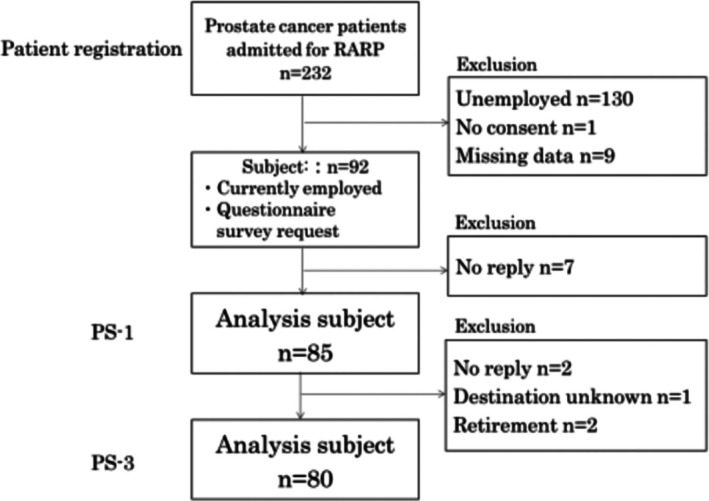 Figure 3
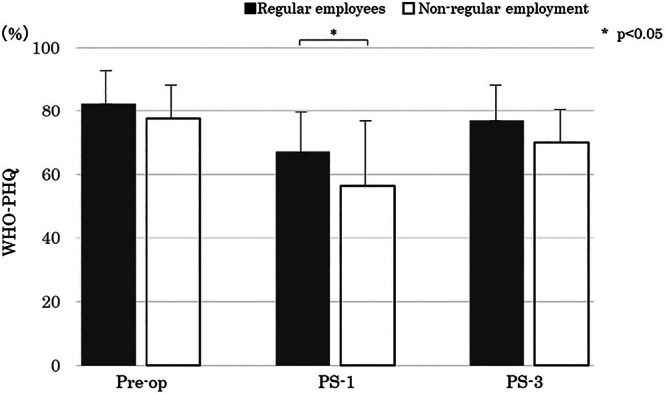 Figure 4
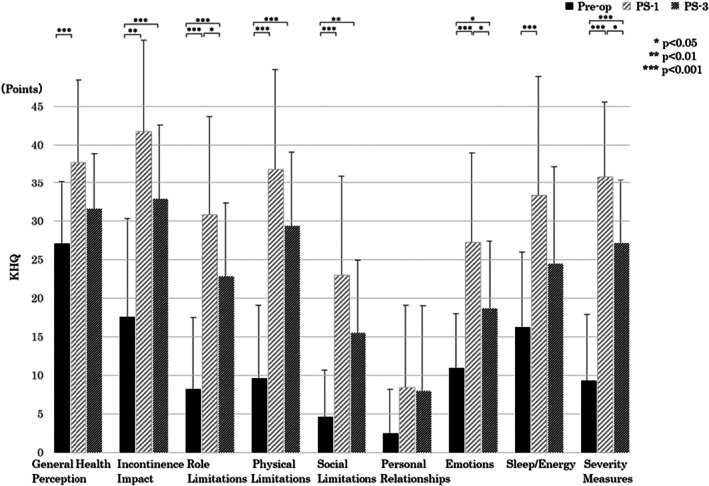 Figure 5
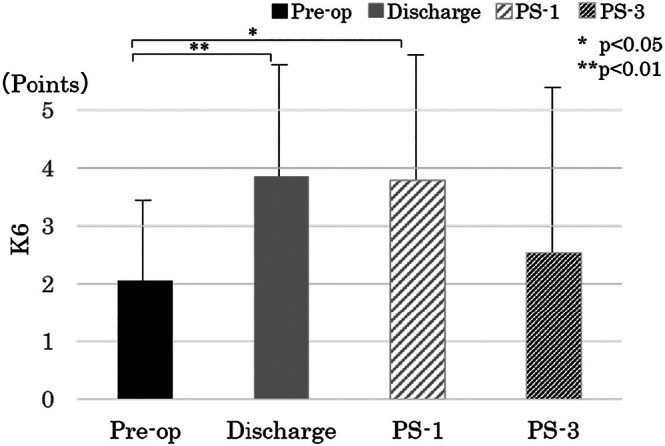 Figure 6
Peer Reviews
No public reviews on file for this paper yet. If you reviewed it on a platform where reviews are public (OpenReview, ICLR, NeurIPS, ICML), you can paste yours below so the community can read it here.
Videos
No videos yet. Explain this paper in a talk, walkthrough, or lecture? Add one.
Taxonomy
TopicsProstate Cancer Diagnosis and Treatment · Pelvic floor disorders treatments · Urinary Bladder and Prostate Research