Post-discharge opioid prescribing after surgery in the United States: a population-based analysis of specialty variation and prescribing intensity
Adriana C. Panayi, Dany Y. Matar, Thomas Schaschinger, Tobias Niederegger, Jule Brandt, Iman Ghanad, Dennis P. Orgill, Gabriel Hundeshagen

TL;DR
This study examines how opioid prescriptions vary by surgical specialty in the U.S., finding that most patients receive opioids after surgery, with differences linked to specialty and recovery patterns.
Contribution
The study identifies specialty-specific variation in post-discharge opioid prescribing and its association with early postoperative outcomes.
Findings
683,828 (72.3%) of 945,505 surgical patients received opioid prescriptions at discharge.
Orthopedic and neurosurgical procedures had the highest odds of high-intensity opioid prescribing.
Patients receiving opioids had shorter hospital stays and fewer complications, suggesting stable clinical status.
Abstract
The transition from hospital to home after surgery is a vulnerable period, yet post-discharge opioid prescribing varies widely across surgical specialties. This study aimed to characterize these prescribing patterns and evaluate their implications for early postoperative outcomes. We performed a retrospective cohort study using the 2024 American College of Surgeons National Surgical Quality Improvement Program (ACS-NSQIP) database. Adult surgical patients who survived to discharge and had complete discharge analgesic data were included. Opioid prescribing was characterized by daily morphine milligram equivalents (MME), cumulative dose, duration, route, dosing frequency, and renewals. Multivariable regression adjusted for demographics, comorbidities, specialty, operative characteristics, and outcomes. Among 945,505 surgical patients, 683,828 (72.3%) were discharged with an opioid…
Genes, proteins, chemicals, diseases, species, mutations and cell lines named across the full text — each resolved to its canonical identifier and authoritative record.
Click any figure to enlarge with its caption.
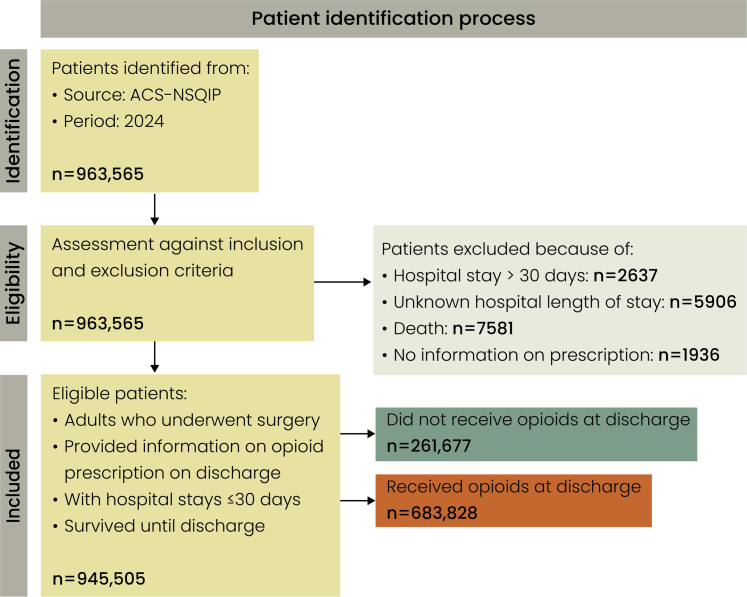 Figure 1
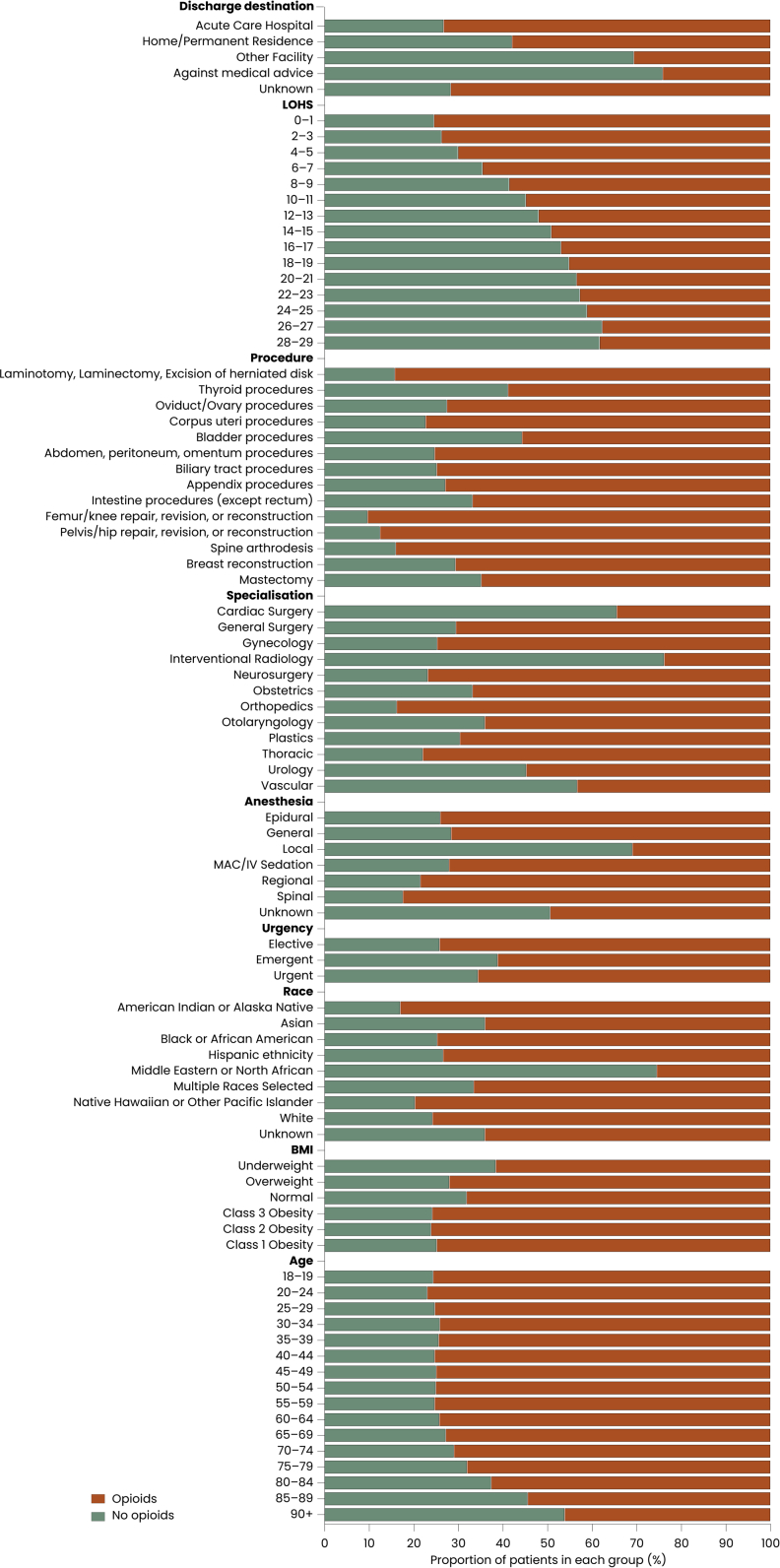 Figure 2
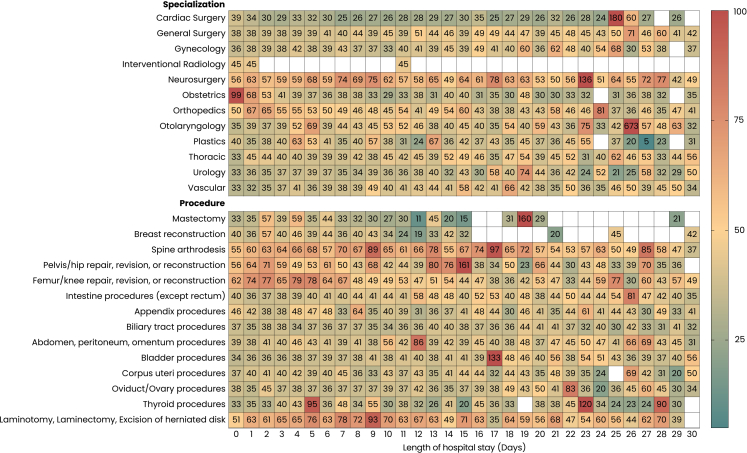 Figure 3
Peer Reviews
No public reviews on file for this paper yet. If you reviewed it on a platform where reviews are public (OpenReview, ICLR, NeurIPS, ICML), you can paste yours below so the community can read it here.
Videos
No videos yet. Explain this paper in a talk, walkthrough, or lecture? Add one.
Taxonomy
TopicsOpioid Use Disorder Treatment · Pain Management and Opioid Use · Anesthesia and Pain Management