Phylodynamic analysis of Salmonella Enteritidis ST183 in Aotearoa New Zealand finds no evidence for introduction via European hedgehogs (Erinaceus europaeus)
Hugo Strydom, Shevaun Paine, David Welch, Jackie Wright, Collette Bromhead, Chris N. Niebuhr, Ernest Williams, Jennie Fischer, Laura Uelze, Sandra Simon, Michael Pietsch, Becki Lawson, Marie Anne Chattaway, Sarah Jefferies, Joep de Ligt, Nigel French

TL;DR
This study finds that European hedgehogs in New Zealand are not the original source of a common Salmonella strain, ST183, which is now established in the rural environment.
Contribution
The study provides the first formal evaluation of hedgehogs as a reservoir for S. Enteritidis ST183 in New Zealand using phylodynamic analysis.
Findings
S. Enteritidis ST183 was isolated from three of 45 hedgehog carcasses, but phylogenetic analysis suggests it was not introduced with hedgehogs.
The most recent common ancestor of ST183 in New Zealand dates to the late 20th century, over 100 years after hedgehogs were introduced.
ST183 infections in New Zealand are more common in older adults and linked to rural living and farm animal contact.
Abstract
Salmonella enterica subsp. enterica serovar Enteritidis (S. Enteritidis) is the second most common serovar causing human salmonellosis in Aotearoa New Zealand (NZ). Sequence type (ST)183, which includes phage types 9a and 11, was the second most frequently isolated S. Enteritidis strain from human cases between 2020 and 2023. This ST is considered endemic in NZ as well as in mainland Europe and Great Britain, where the European hedgehog (Erinaceus europaeus) is a recognized wildlife reservoir. Hedgehogs were introduced to NZ in the late 19th century; however, their role in the ecology of ST183 in NZ has not been formally evaluated. The aim of this study was to investigate whether hedgehogs act as a reservoir for S. Enteritidis ST183 in NZ and to assess the evolutionary history and epidemiology of this strain across human, animal and environmental contexts. We analysed human, animal and…
Genes, proteins, chemicals, diseases, species, mutations and cell lines named across the full text — each resolved to its canonical identifier and authoritative record.
Click any figure to enlarge with its caption.
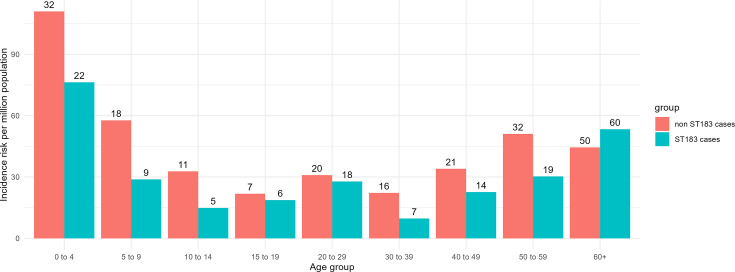 Figure 1
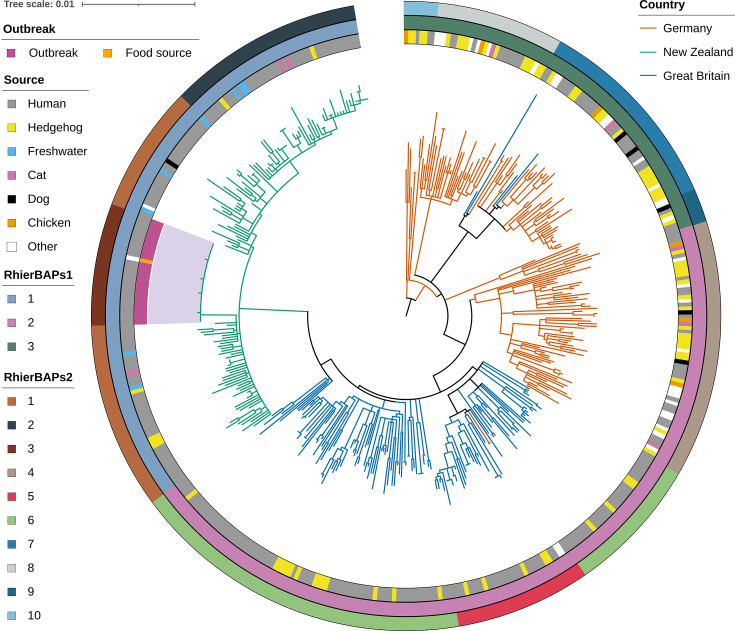 Figure 2
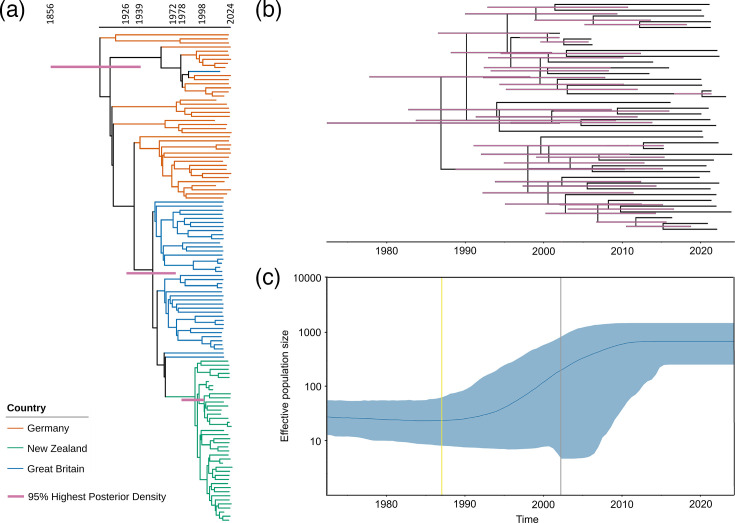 Figure 3
Peer Reviews
No public reviews on file for this paper yet. If you reviewed it on a platform where reviews are public (OpenReview, ICLR, NeurIPS, ICML), you can paste yours below so the community can read it here.
Videos
No videos yet. Explain this paper in a talk, walkthrough, or lecture? Add one.
Taxonomy
TopicsSalmonella and Campylobacter epidemiology · Prion Diseases and Protein Misfolding · Bacteriophages and microbial interactions