Nonequilibrium phases of a biomolecular condensate facilitated by enzyme activity
Sebastian Coupe, Nikta Fakhri

TL;DR
This paper shows how enzyme activity and RNA interactions create dynamic, nonequilibrium states in biomolecular condensates, which are important for cellular organization.
Contribution
The study reveals a new mechanism where DEAD-box helicase activity and RNA base-pairing drive nonequilibrium phases in condensates.
Findings
DEAD-box helicase activity continuously remodels RNA interactions in condensates.
RNA secondary structure and helicase activity have an antagonistic relationship that maintains condensate homogeneity.
Condensate properties like partitioning and morphology evolve over time due to enzyme activity.
Abstract
Biomolecular condensates represent a frontier in cellular organization, existing as dynamic macromolecular structures driven out of equilibrium by active cellular processes. Here we explore active mechanisms of condensate regulation by examining the interplay between DEAD-box helicase activity and RNA base-pairing interactions within a reconstituted ribonucleoprotein condensate. We demonstrate that the ATP-dependent activity of a DEAD-box helicase—a key class of enzymes in condensate regulation—acts as a nonequilibrium driver of condensate properties through the continuous remodeling of RNA interactions. By combining the LAF-1 DEAD-box helicase with a designer RNA hairpin concatemer, we unveil a complex landscape of dynamic behaviors, including time-dependent alterations in RNA partitioning, evolving condensate morphologies, and shifting condensate dynamics. Importantly, we reveal an…
Genes, proteins, chemicals, diseases, species, mutations and cell lines named across the full text — each resolved to its canonical identifier and authoritative record.
Click any figure to enlarge with its caption.
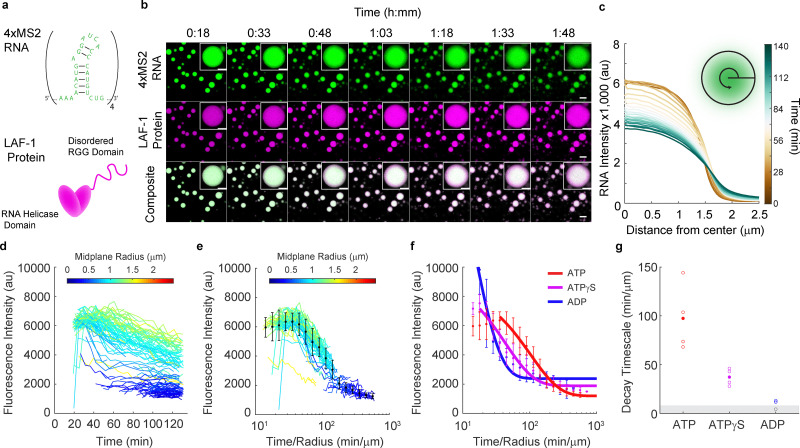 Figure 1
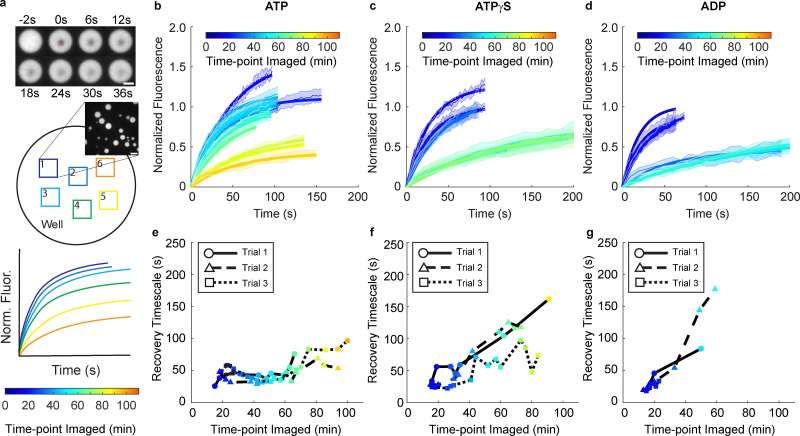 Figure 2
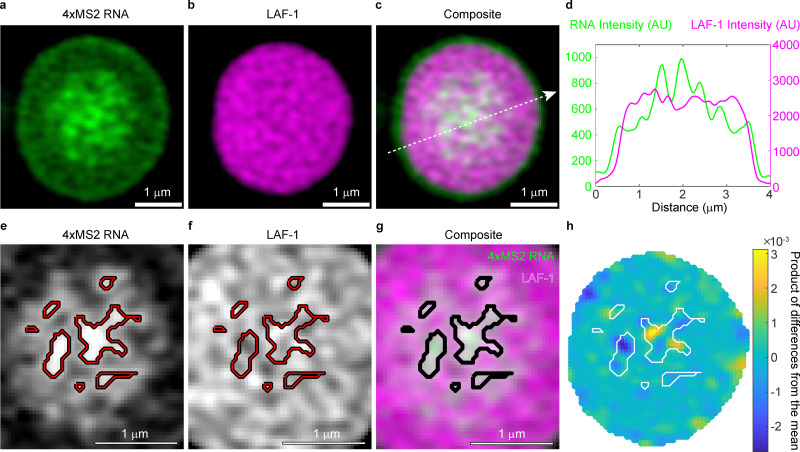 Figure 3
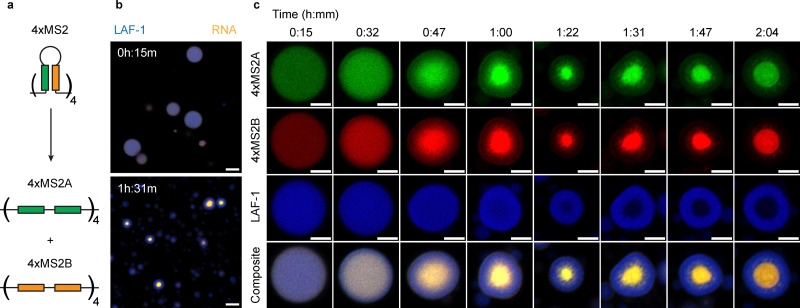 Figure 4
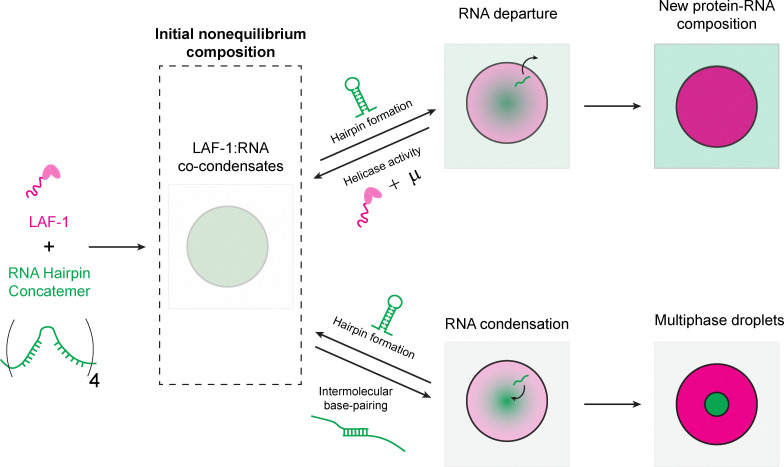 Figure 5
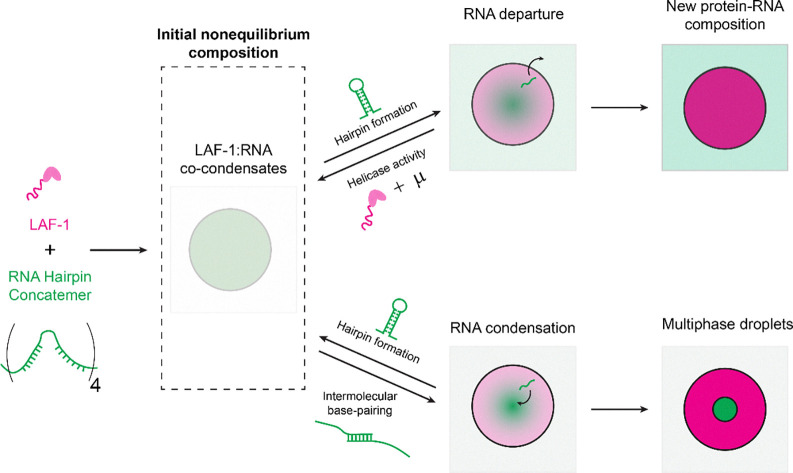 Figure 6
 Figure 7
 Figure 8
Peer Reviews
No public reviews on file for this paper yet. If you reviewed it on a platform where reviews are public (OpenReview, ICLR, NeurIPS, ICML), you can paste yours below so the community can read it here.
Videos
No videos yet. Explain this paper in a talk, walkthrough, or lecture? Add one.
Taxonomy
TopicsChemical and Physical Studies · Origins and Evolution of Life · Supramolecular Self-Assembly in Materials