Coevolution of host resistance and pathogen exploitation in a propagule-mediated infection model
Prerna Singh, Justin Sheen, Chadi M. Saad-Roy, Michael Z. Levy, C. Jessica E. Metcalf

TL;DR
This study models how host resistance and pathogen strategies coevolve when transmission happens through environmental propagules, showing how survival costs and infection pressure shape evolutionary outcomes.
Contribution
A novel population-level model using adaptive dynamics to explore coevolution of host resistance and pathogen exploitation in environmentally transmitted infections.
Findings
Maximal host resistance evolves at intermediate infection pressures due to survival costs.
Coevolution can lead to evolutionary branching, resulting in coexistence of host strains with different resistance levels.
Coevolution affects free pathogen propagule density, either amplifying or suppressing infection depending on transmission and mortality parameters.
Abstract
Host populations often face infection risk from pathogens that can persist in the environment as free-living propagules. We develop a population-level model to understand how host resistance - defined as reduced susceptibility to infection - evolves in response to the exploitation strategy of a pathogen where transmission occurs exclusively via environmental propagules. Using an adaptive dynamics framework, we analyze how the coevolution of host resistance and pathogen exploitation strategy unfolds under the following fitness costs: reduced survival associated with investment in resistance reflected by additional background mortality for the host; and reduced average lifespan represented by increased infected host mortality for the pathogen. Calculating individual host and pathogen invasion fitness expressions using standard invasion analysis, we track how stable levels of investment in…
Genes, proteins, chemicals, diseases, species, mutations and cell lines named across the full text — each resolved to its canonical identifier and authoritative record.
Click any figure to enlarge with its caption.
 Figure 1
 Figure 2
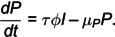 Figure 3
 Figure 4
 Figure 5
 Figure 6
 Figure 7
 Figure 8
 Figure 9
 Figure 10
 Figure 11
 Figure 12
 Figure 13
 Figure 14
 Figure 15
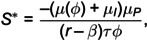 Figure 16
 Figure 17
 Figure 18
 Figure 19
 Figure 20
 Figure 21
 Figure 22
 Figure 23
 Figure 24
 Figure 25
 Figure 26
 Figure 27
 Figure 28
 Figure 29
 Figure 30
 Figure 31
 Figure 32
 Figure 33
 Figure 34
 Figure 35
 Figure 36
 Figure 37
 Figure 38
 Figure 39
 Figure 40
 Figure 41
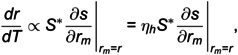 Figure 42
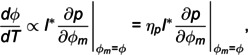 Figure 43
 Figure 44
 Figure 45
 Figure 46
 Figure 47
 Figure 48
 Figure 49
 Figure 50
Peer Reviews
No public reviews on file for this paper yet. If you reviewed it on a platform where reviews are public (OpenReview, ICLR, NeurIPS, ICML), you can paste yours below so the community can read it here.
Videos
No videos yet. Explain this paper in a talk, walkthrough, or lecture? Add one.
Taxonomy
TopicsEvolution and Genetic Dynamics · Evolutionary Game Theory and Cooperation · Zoonotic diseases and public health