Non-peptide dysbiosis metabolites reprogram a peptide quorum-sensing receptor to induce sustained predation in beneficial streptococci
Guillaume Cerckel, Denis Dereinne, Laura Ledesma-García, Vincent Meuric, Benoît Desguin, Johann Mignolet, Patrice Soumillion, Pascal Hols

TL;DR
A common oral bacterium can detect chemical signals from dysbiosis and use them to trigger long-term antibacterial behavior.
Contribution
Discovery that a peptide receptor can also sense non-peptide metabolites to drive predation in commensal streptococci.
Findings
Hydroxyphenylacetic acid (HPAA) activates ComR receptor in Streptococcus salivarius.
HPAA induces sustained bacteriocin expression while bypassing the competence program.
Porphyromonas gingivalis produces HPAA at levels sufficient to activate predation in S. salivarius.
Abstract
Cytoplasmic receptors of the RRNPPA superfamily mediate peptide-based quorum sensing in Gram-positive bacteria and are thought to be activated exclusively by short, unmodified pheromones. Here, we show that the RRNPPA regulator ComR in the human commensal Streptococcus salivarius can also be activated by a distinct class of non-peptide metabolites. A screen of ~200 organic compounds identified hydroxyphenylacetic acid (HPAA)—a microbial dysbiosis-associated catabolite—as a potent activator of ComR. Using biochemical and genetic approaches, we demonstrate that HPAA and related aromatic carboxylic acids bind the canonical pheromone pocket and induce sustained expression of predatory bacteriocins, while bypassing the competence program triggered by the native peptide signal (XIP). We further show that the oral pathogen Porphyromonas gingivalis produces physiologically relevant amounts of…
Genes, proteins, chemicals, diseases, species, mutations and cell lines named across the full text — each resolved to its canonical identifier and authoritative record.
Click any figure to enlarge with its caption.
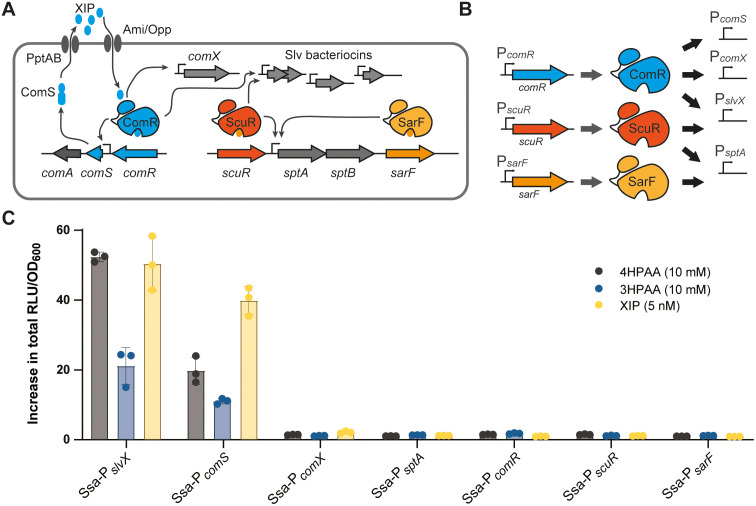 Figure 1
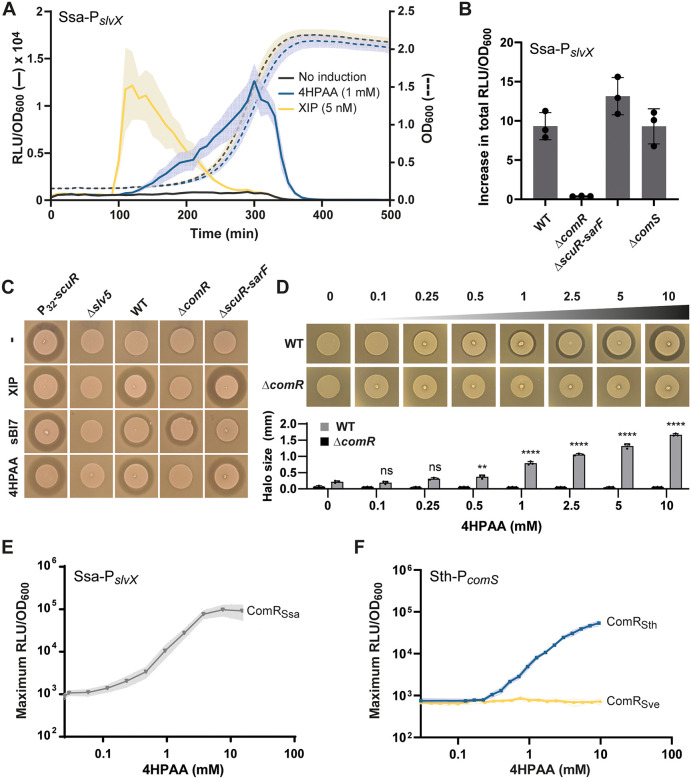 Figure 2
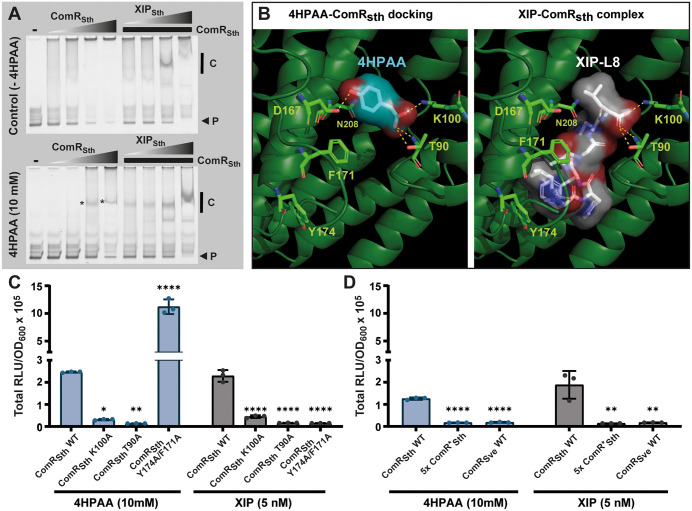 Figure 3
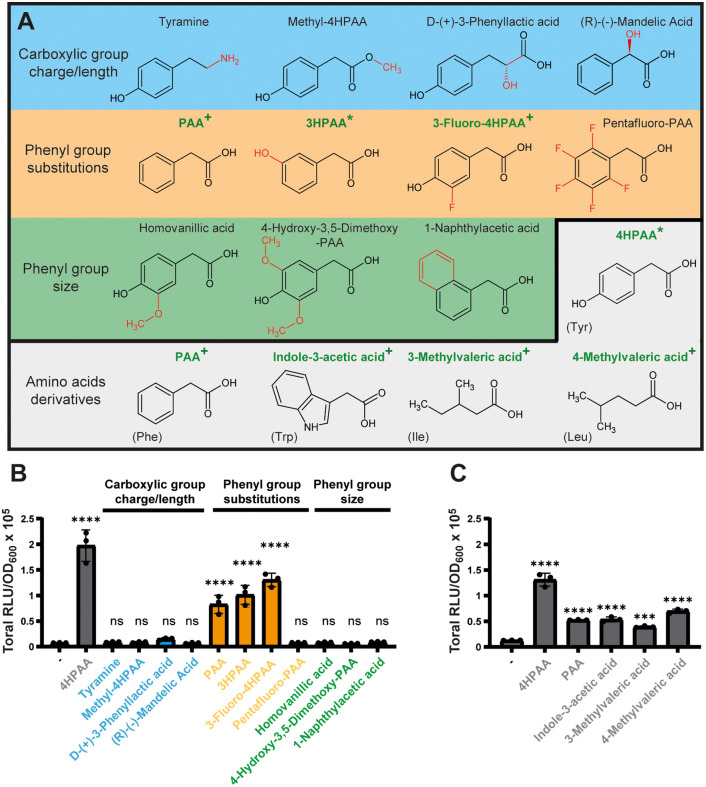 Figure 4
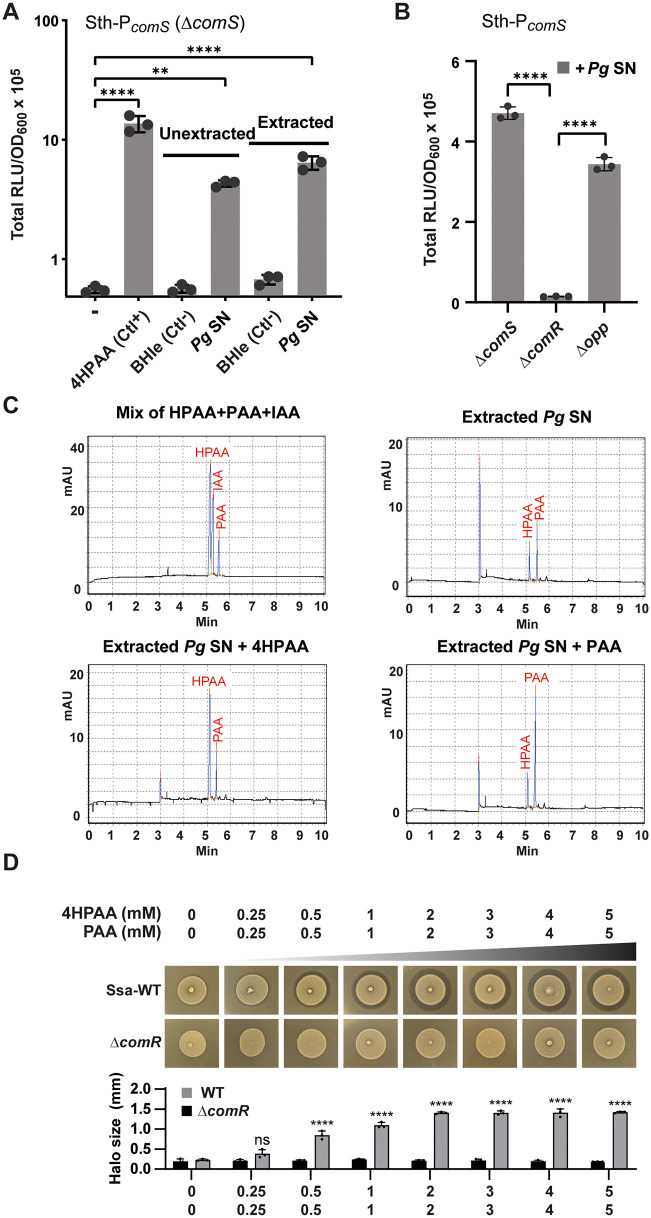 Figure 5
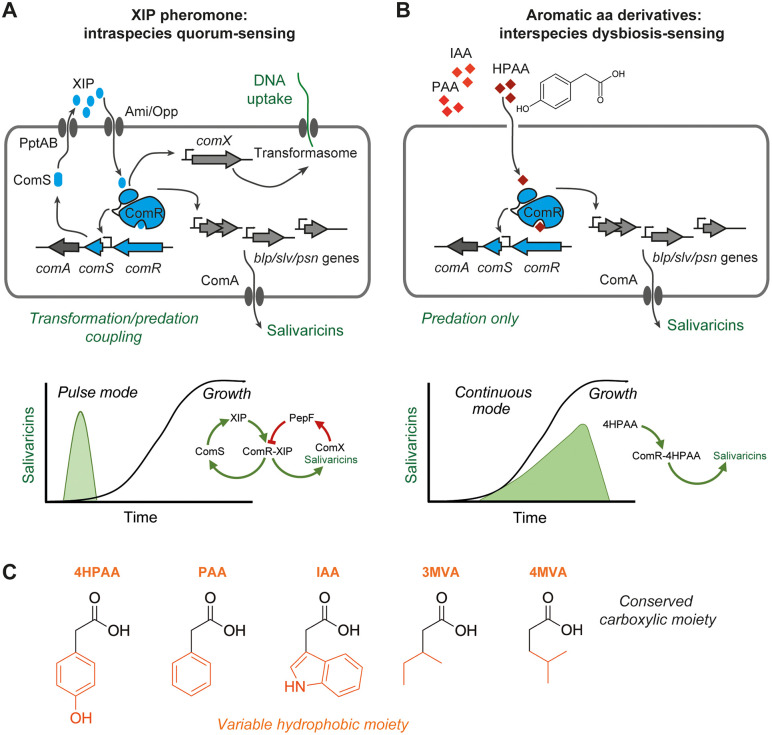 Figure 6
Peer Reviews
No public reviews on file for this paper yet. If you reviewed it on a platform where reviews are public (OpenReview, ICLR, NeurIPS, ICML), you can paste yours below so the community can read it here.
Videos
No videos yet. Explain this paper in a talk, walkthrough, or lecture? Add one.
Taxonomy
TopicsOral microbiology and periodontitis research · Bacterial biofilms and quorum sensing · Antimicrobial Resistance in Staphylococcus