Large-scale paired chain BCR analysis reveals antibody clonal family inference bias and enhances resolution with machine learning
Hao Wang, Kaixuan Wang, Qihang Xu, Linru Cai, Chuanxiang Huang, Linlin Chen, Yunliang Zang, Xihao Hu, Jian Zhang

TL;DR
This study shows that using only heavy chains to identify antibody clonal families can lead to errors, and introduces a new method that improves accuracy by incorporating light chain data.
Contribution
The paper introduces fastBCR-p, a new method that improves clonal family inference by integrating light-chain data and correcting technical and biological artifacts.
Findings
Heavy-chain-only clustering can misrepresent true clonal architecture by creating chain-mixed and pseudo-clonal clusters.
fastBCR-p improves clonal inference by resolving technical artifacts and biological convergence in real-world datasets.
The new method enhances the accuracy of tracking immune dynamics and identifying clinically relevant antibody lineages.
Abstract
A fundamental question in immunology is how the adaptive immune system encodes antigen specificity while maintaining repertoire diversity. B cell receptor (BCR) or antibody clonal families, defined by groups of B cells descending from a common ancestor, are key to deciphering this encoding. Although paired heavy and light chains jointly determine antibody specificity, most repertoire analyses have historically relied on heavy-chain-only data due to the loss of native pairing information in bulk BCR sequencing. This reliance introduces potential biases in computational clonal cluster inference, which may complicate efforts to resolve disease-associated immune signatures. Here, we leverage large-scale paired-chain BCR sequencing data to demonstrate that heavy-chain-based clustering may misrepresent true clonal architecture, and identify two major artifacts: chain-mixed clusters, in which…
Genes, proteins, chemicals, diseases, species, mutations and cell lines named across the full text — each resolved to its canonical identifier and authoritative record.
Click any figure to enlarge with its caption.
 Figure 1
 Figure 2
 Figure 3
 Figure 4
 Figure 5
 Figure 6
 Figure 7
 Figure 8
 Figure 9
 Figure 10
 Figure 11
 Figure 12
 Figure 13
 Figure 14
 Figure 15
 Figure 16
 Figure 17
 Figure 18
 Figure 19
 Figure 20
 Figure 21
 Figure 22
 Figure 23
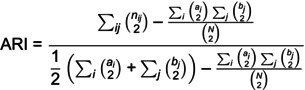 Figure 24
 Figure 25
 Figure 26
 Figure 27
 Figure 28
 Figure 29
 Figure 30
 Figure 31
 Figure 32
 Figure 33
 Figure 34
 Figure 35
 Figure 36
 Figure 37
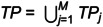 Figure 38
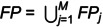 Figure 39
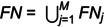 Figure 40
 Figure 41
 Figure 42
 Figure 43
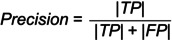 Figure 44
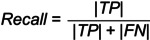 Figure 45
 Figure 46
 Figure 47
 Figure 48
 Figure 49
 Figure 50
Peer Reviews
No public reviews on file for this paper yet. If you reviewed it on a platform where reviews are public (OpenReview, ICLR, NeurIPS, ICML), you can paste yours below so the community can read it here.
Videos
No videos yet. Explain this paper in a talk, walkthrough, or lecture? Add one.
Taxonomy
TopicsT-cell and B-cell Immunology · vaccines and immunoinformatics approaches · Monoclonal and Polyclonal Antibodies Research