Community participation and technological innovation: Baseline qualitative insights to inform a five-year cohort on drone-based dengue surveillance in Malaysia
Rahmat Dapari, Safiyeh Tayebi, Ana Lorena Ruano, Timothy C. Guetterman, Seok Mui Wang, Siti Hafizah AB Hamid, Sohel Rahman, Jürgen Pilz, Nazri Che Dom, Ubydul Haque, Lawrence Mugisha, Lawrence Mugisha, Lawrence Mugisha

TL;DR
This study explores how communities in Malaysia perceive using drones for dengue surveillance, emphasizing trust, transparency, and community involvement for successful implementation.
Contribution
The study introduces a conceptual framework for integrating community perspectives with drone-based mosquito surveillance to enhance public health interventions.
Findings
Community trust in drone use increases when transparency about purpose and data is maintained.
Privacy concerns are minimal when drones are used for mosquito breeding site monitoring rather than personal surveillance.
Advance notice of drone flights and targeted surveillance in hotspots improve community acceptance.
Abstract
To inform a prospective cohort study five-year automated surveillance study, this study explores households and stakeholder perceptions of using drones for mosquito breeding site surveillance as part of dengue control strategies in Selangor, Malaysia. A qualitative design identified diverse perspectives across eight high-risk localities. Data were collected through 480 in-depth interviews with household heads, from a newly established cohort of households, and six key informant interviews with public health professionals. Participants were selected using typical case and expert sampling methods to ensure representation across socioeconomic and urban heterogeneity. This study developed a conceptual framework integrating community-based vector control, public health technology adoption, and drone-assisted surveillance, structured into five stages: Inputs, Processes, Outputs, Outcomes,…
Genes, proteins, chemicals, diseases, species, mutations and cell lines named across the full text — each resolved to its canonical identifier and authoritative record.
Click any figure to enlarge with its caption.
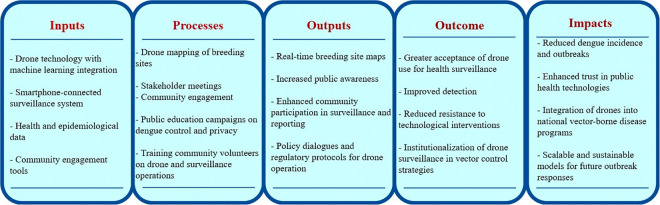 Figure 1
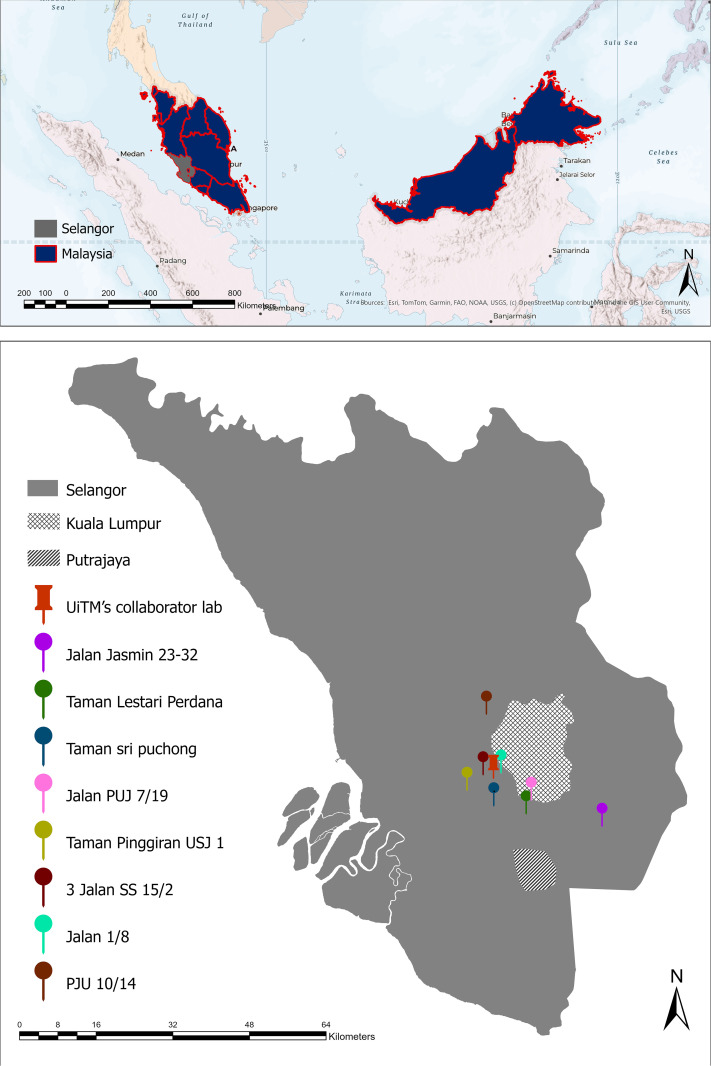 Figure 2
 Figure 3
Peer Reviews
No public reviews on file for this paper yet. If you reviewed it on a platform where reviews are public (OpenReview, ICLR, NeurIPS, ICML), you can paste yours below so the community can read it here.
Videos
No videos yet. Explain this paper in a talk, walkthrough, or lecture? Add one.
Taxonomy
TopicsUAV Applications and Optimization · Mosquito-borne diseases and control · Viral Infections and Outbreaks Research