Expanding amide bond formation with CaLB-BOP: from sterically hindered substrates to aqueous and micellar media
Katarina Zlatić, Antonija Ožegović, Nikola Maraković, Anamarija Knežević

TL;DR
A new method called CaLB-BOP efficiently forms amide bonds from non-activated esters and amines, especially in challenging conditions like water and with bulky substrates.
Contribution
The CaLB-BOP method improves amide bond formation for sterically hindered substrates and aqueous media using a combination of enzyme and phosphonium-based chemistry.
Findings
The CaLB-BOP method outperforms classical enzymatic aminolysis for sterically hindered substrates.
Amide synthesis proceeds cleanly in aqueous and micellar media with minimal purification.
Increased stirring and surfactant concentration enhance yields in aqueous conditions.
Abstract
Amide bond formation remains a cornerstone transformation in the synthesis of biologically active molecules, yet efficient methods for converting non-activated ethyl esters into amides under mild conditions remain limited. This work investigates the applicability of a one-pot protocol that combines Candida antarctica lipase B (CaLB)-mediated ester hydrolysis with phosphonium-based amidation (CaLB-BOP method) for amide synthesis. A set of esters and amines are examined via the CaLB-BOP method and benchmarked against classical base-catalyzed and CaLB-catalyzed aminolysis. Molecular docking is employed to probe substrate orientation within the CaLB active site, enabling correlation with experimental ester hydrolyzability and aminolysis reactivity. The CaLB-BOP method demonstrates markedly enhanced efficiency for sterically hindered and less reactive substrate combinations, overcoming…
Genes, proteins, chemicals, diseases, species, mutations and cell lines named across the full text — each resolved to its canonical identifier and authoritative record.
Click any figure to enlarge with its caption.
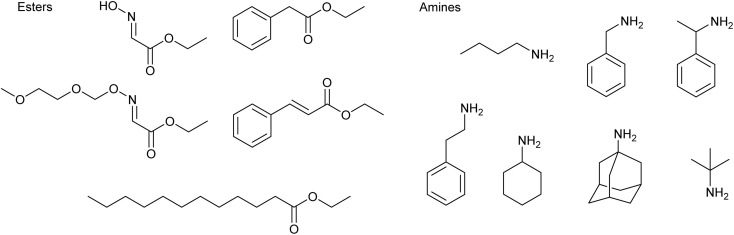 Figure 1
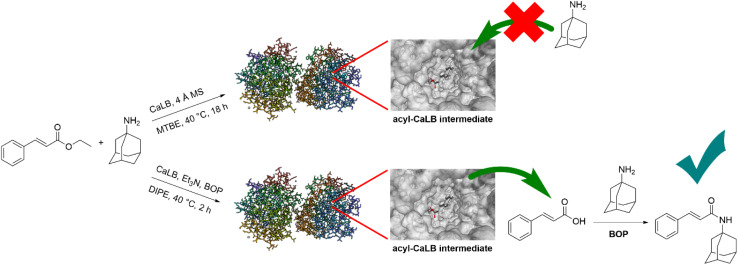 Figure 2
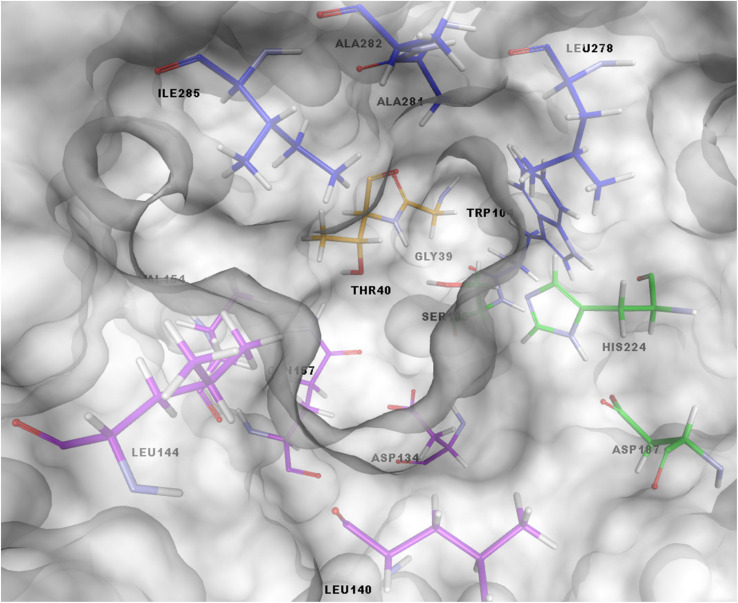 Figure 3
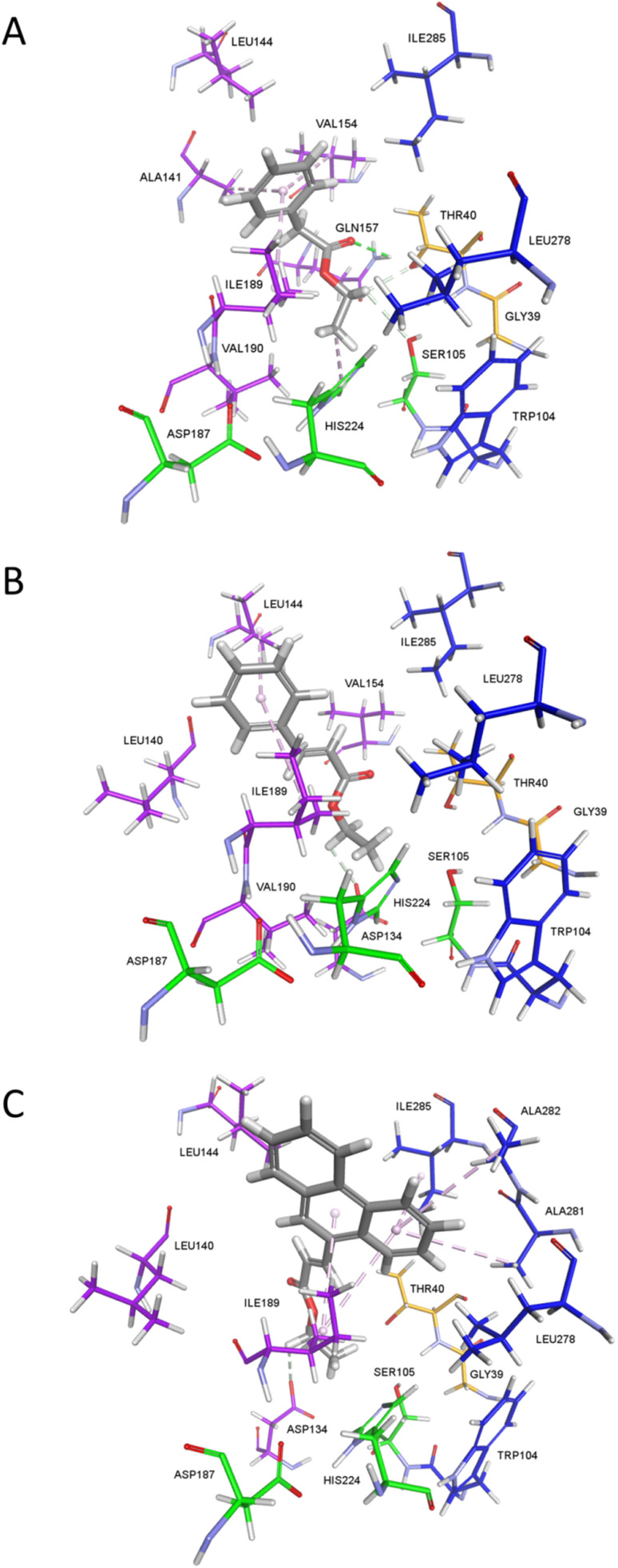 Figure 4
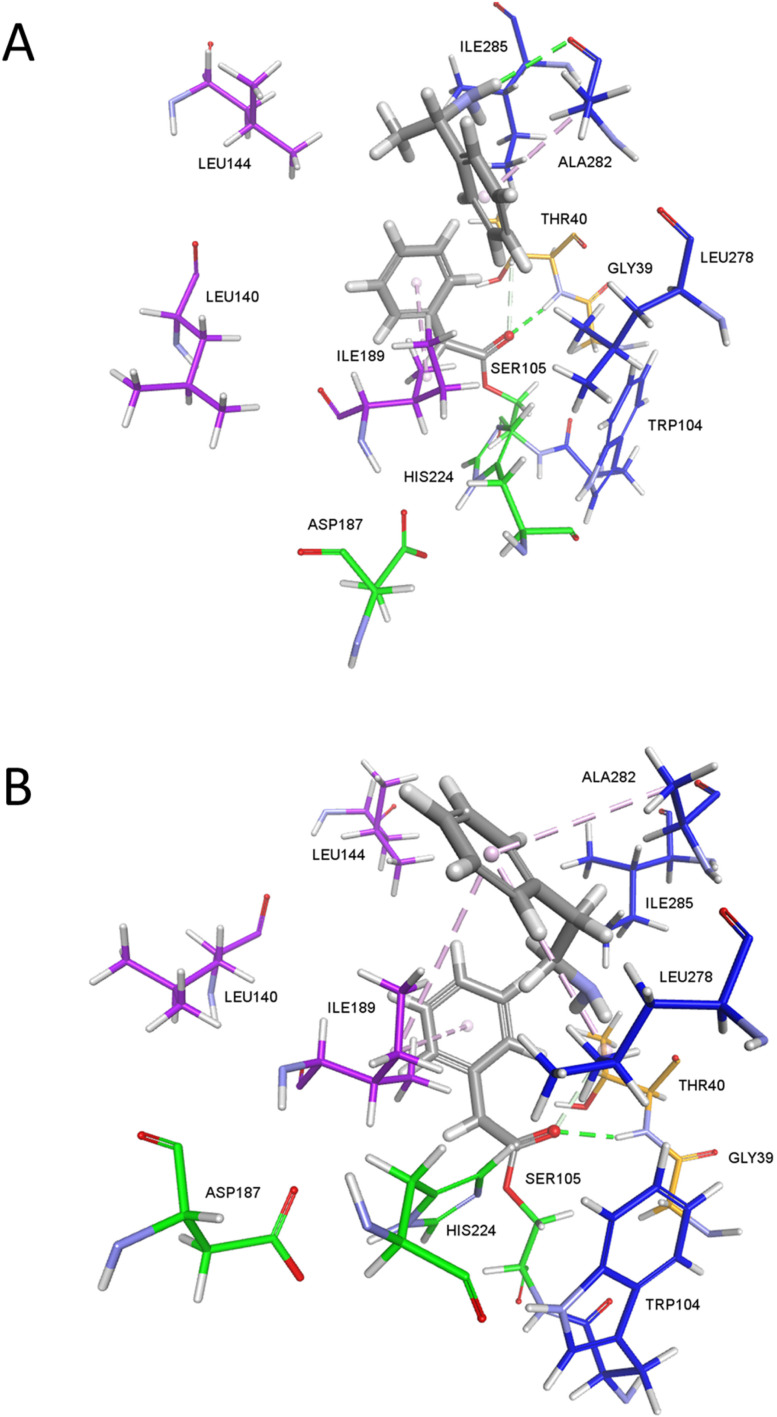 Figure 5
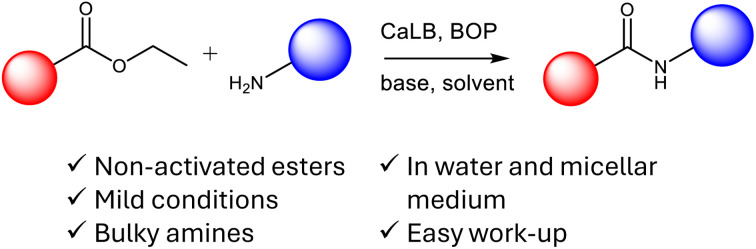 Figure 6
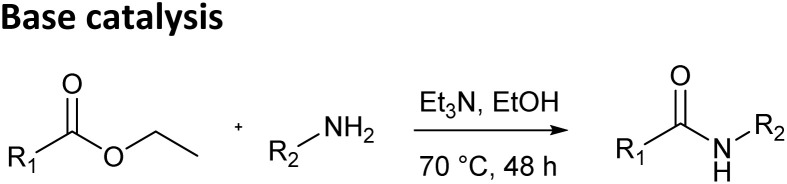 Figure 7
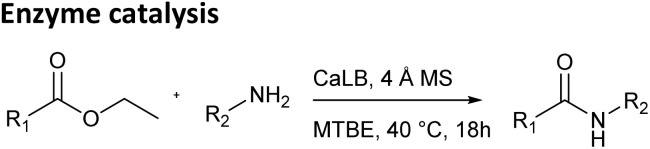 Figure 8
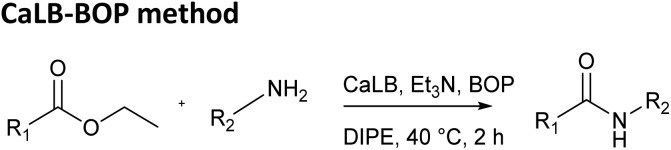 Figure 9
 Figure 10
Peer Reviews
No public reviews on file for this paper yet. If you reviewed it on a platform where reviews are public (OpenReview, ICLR, NeurIPS, ICML), you can paste yours below so the community can read it here.
Videos
No videos yet. Explain this paper in a talk, walkthrough, or lecture? Add one.
Taxonomy
TopicsChemical Synthesis and Analysis · Advanced Synthetic Organic Chemistry · Enzyme Catalysis and Immobilization