Doll play improves false belief reasoning: Evidence from a randomized-control trial
Sarah A. Gerson, Jennifer Keating, Salim Hashmi, Ross E. Vanderwert

TL;DR
A study shows that playing with dolls helps children better understand others' false beliefs compared to using creative tablets.
Contribution
First causal evidence that doll play improves false belief understanding in children.
Findings
Doll play improved false belief understanding more than tablet play in 4- to 8-year-olds.
Children with more peer problems showed stronger improvements from doll play.
Doll play encouraged more social interaction and internal state language than tablet play.
Abstract
Play is often described as a child’s “occupation,” both because young children spend the majority of their time playing when given the option and because it is a critical mechanism through which children learn both cognitive and socio-emotional skills. In a randomized control trial (N = 73), we found the first causal evidence that doll play, more so than creative tablet play, improves false belief understanding in 4- to 8-year-old children following a six week long play intervention. Improvements in false belief were particularly strong for children who had more parent-reported peer problems. Consistent with prior research, children were more likely to play socially with dolls than socially with tablets during the intervention period and were more likely to use internal state language about others when playing with dolls than with tablets (when observed in the laboratory). Together,…
Genes, proteins, chemicals, diseases, species, mutations and cell lines named across the full text — each resolved to its canonical identifier and authoritative record.
Click any figure to enlarge with its caption.
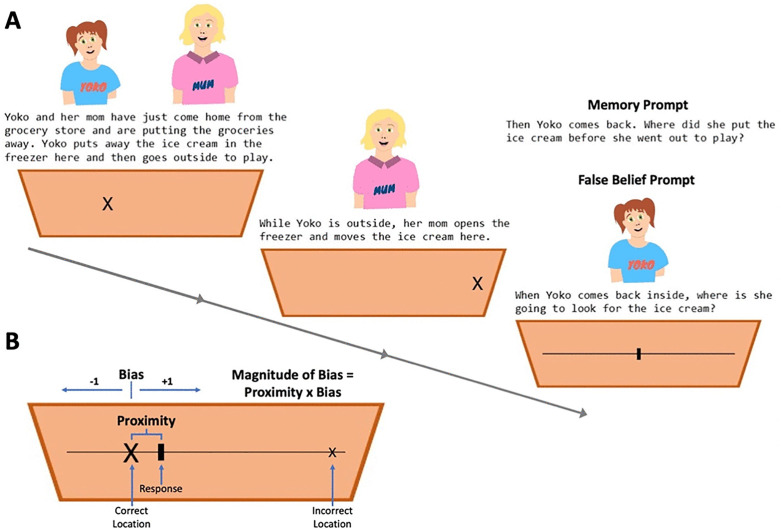 Figure 1
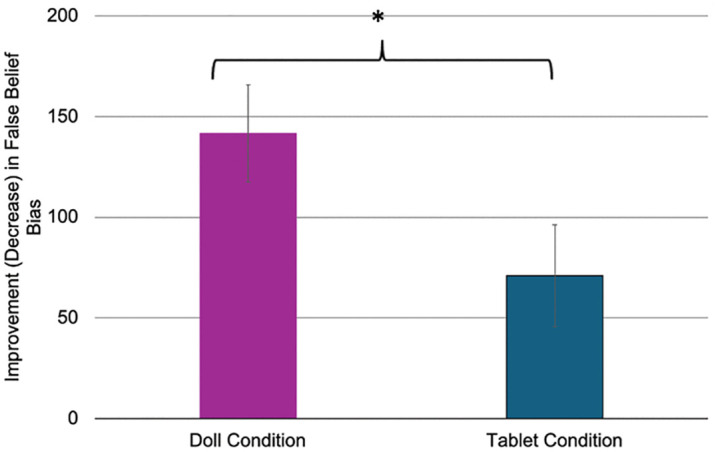 Figure 2
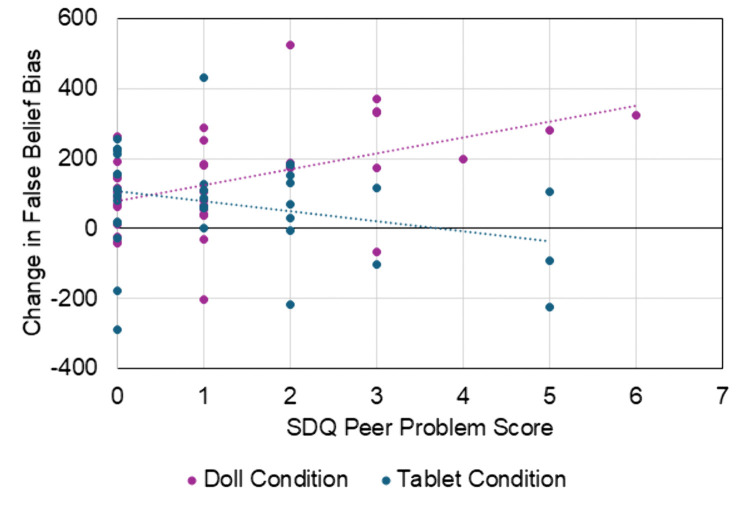 Figure 3
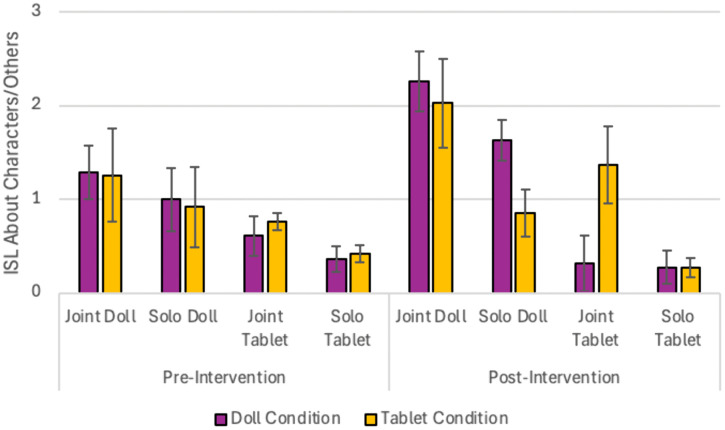 Figure 4
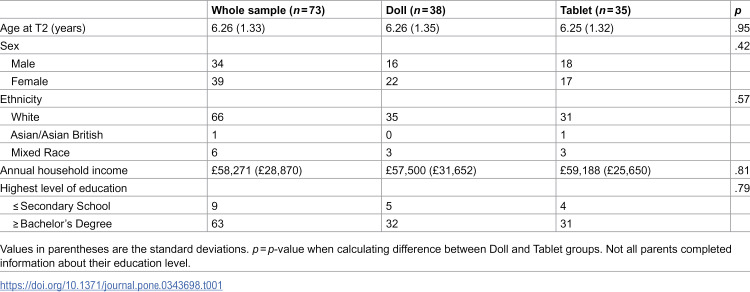 Figure 5
Peer Reviews
No public reviews on file for this paper yet. If you reviewed it on a platform where reviews are public (OpenReview, ICLR, NeurIPS, ICML), you can paste yours below so the community can read it here.
Videos
No videos yet. Explain this paper in a talk, walkthrough, or lecture? Add one.
Taxonomy
TopicsChild and Animal Learning Development · Action Observation and Synchronization · Child and Adolescent Psychosocial and Emotional Development