BioFuse: an embedding fusion framework for biomedical foundation models
Mirza Nasir Hossain, David Harris-Birtill, Xu Yanwu, Xu Yanwu, Xu Yanwu, Xu Yanwu

TL;DR
BioFuse is a new framework that combines biomedical foundation models to improve performance and uncover cross-modal relationships in data.
Contribution
BioFuse introduces a novel embedding fusion framework using multiple pre-trained models and grid search for optimal combinations.
Findings
BioFuse achieves state-of-the-art AUC in 5/12 datasets on the MedMNIST+ benchmark.
The framework demonstrates unexpected cross-modal capabilities across imaging modalities.
BioFuse offers an extensible architecture for future model integration and fusion techniques.
Abstract
The biomedical field has witnessed a surge in pre-trained foundation models excelling in specific subdomains such as radiology and histopathology. While integrating these models promises a more comprehensive understanding of biomedical data, it poses challenges in model compatibility and feature fusion. We present BioFuse, a novel open-source framework designed to generate optimised biomedical embeddings. BioFuse utilises a pool of 9 state-of-the-art (SOTA) foundation models to create task-specific embeddings. It employs grid search to automatically identify the optimal combination of models, fusing their embeddings through vector concatenation. On the MedMNIST+ benchmark, using XGBoost as the downstream classifier, BioFuse outperforms several existing methods, achieving SOTA AUC in 5/12 datasets, while maintaining near-SOTA performance across most remaining datasets. Remarkably, our…
Genes, proteins, chemicals, diseases, species, mutations and cell lines named across the full text — each resolved to its canonical identifier and authoritative record.
Click any figure to enlarge with its caption.
 Figure 1
 Figure 2
 Figure 3
 Figure 4
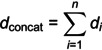 Figure 5
 Figure 6
 Figure 7
 Figure 8
 Figure 9
 Figure 10
 Figure 11
 Figure 12
 Figure 13
 Figure 14
 Figure 15
 Figure 16
 Figure 17
 Figure 18
 Figure 19
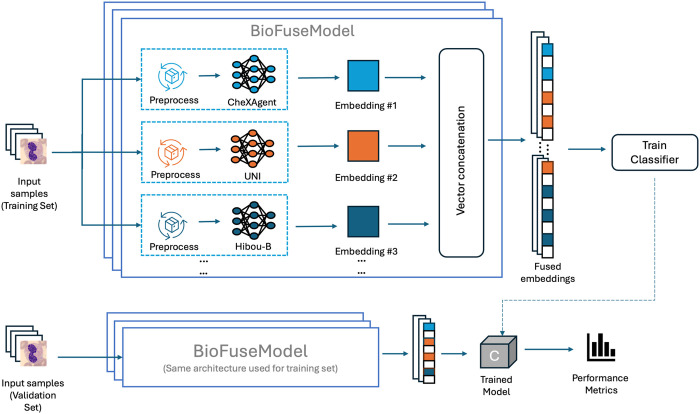 Figure 20
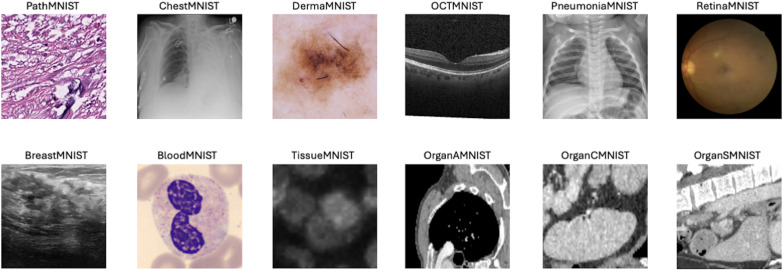 Figure 21
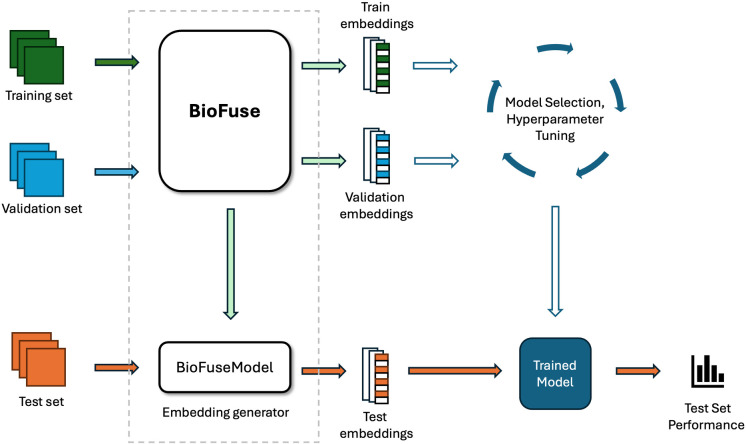 Figure 22
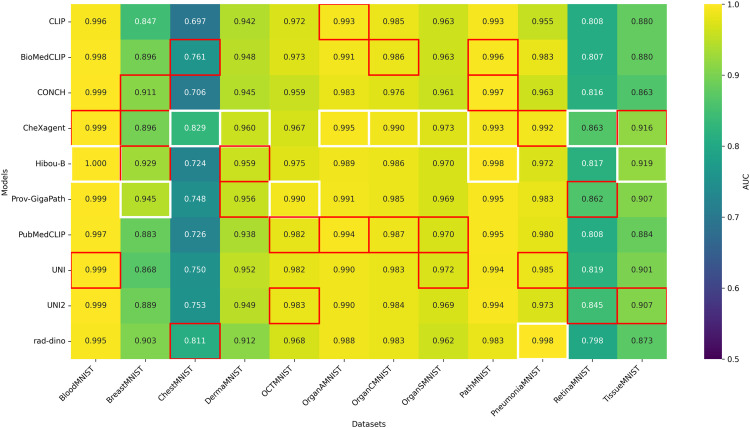 Figure 23
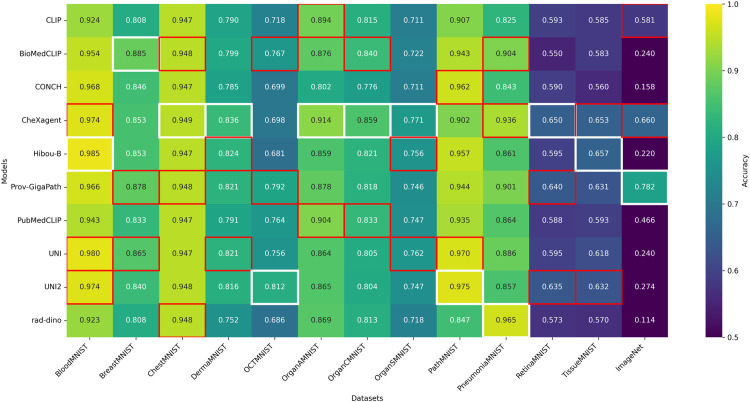 Figure 24
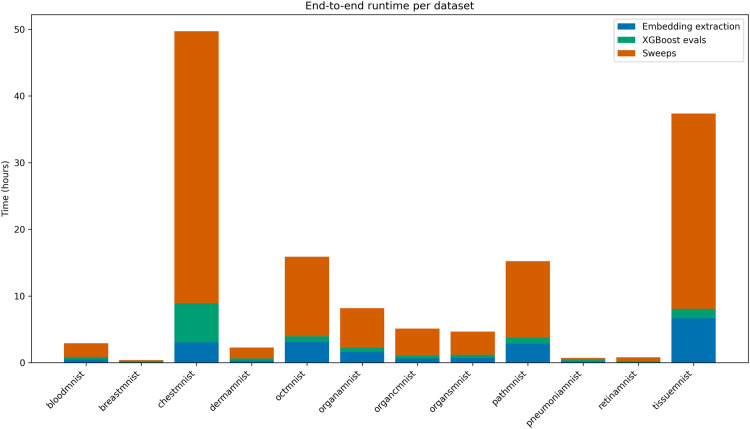 Figure 25
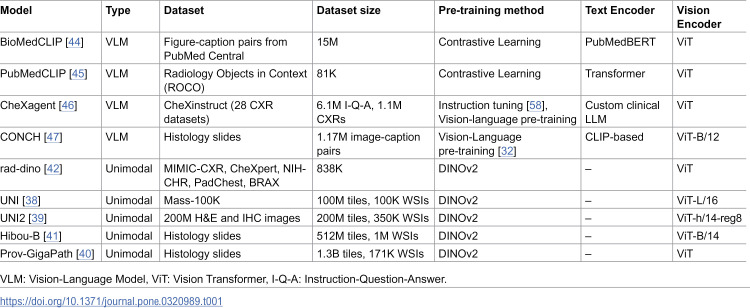 Figure 26
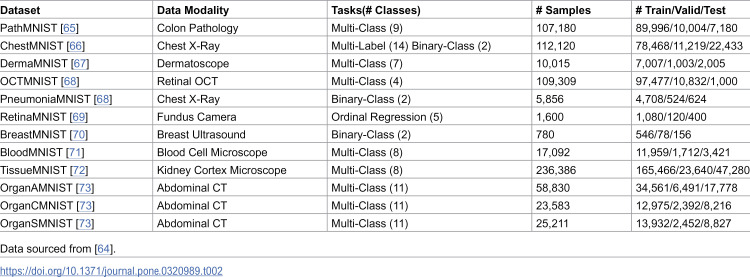 Figure 27
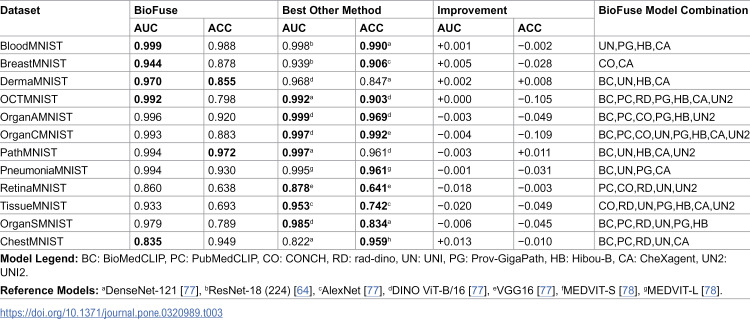 Figure 28
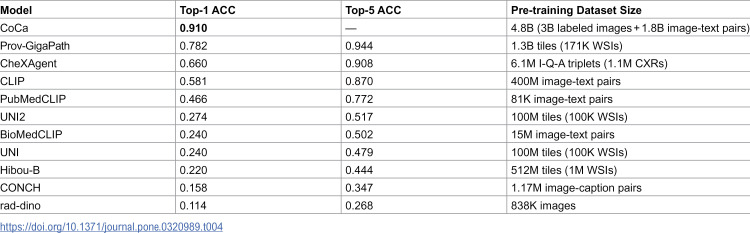 Figure 29
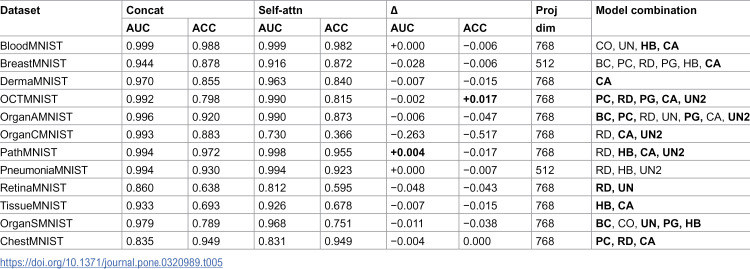 Figure 30
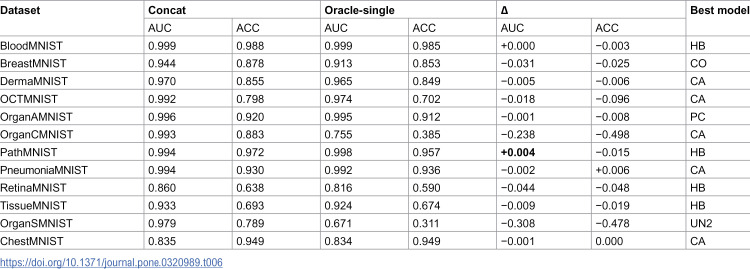 Figure 31
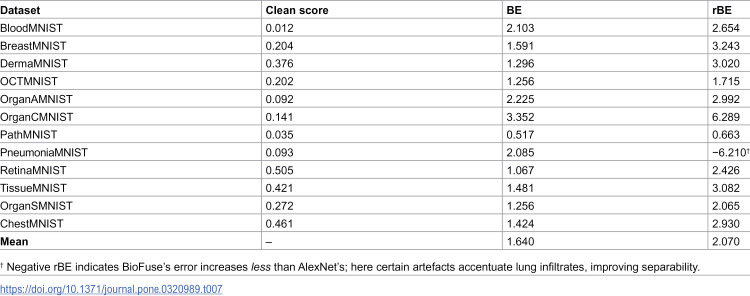 Figure 32
Peer Reviews
No public reviews on file for this paper yet. If you reviewed it on a platform where reviews are public (OpenReview, ICLR, NeurIPS, ICML), you can paste yours below so the community can read it here.
Videos
No videos yet. Explain this paper in a talk, walkthrough, or lecture? Add one.
Taxonomy
TopicsAI in cancer detection · Medical Imaging and Analysis · COVID-19 diagnosis using AI