Mode of action-specific and cause-specific retention of biologic and targeted synthetic disease-modifying antirheumatic drugs in anti-SS-A antibody-positive rheumatoid arthritis: The ANSWER cohort study
Kazuma Nishisaka, Takaichi Okano, Takumi Imai, Masanori Tsubosaka, Tomoyuki Kamenaga, Naoki Nakano, Shinya Hayashi, Wataru Yamamoto, Akira Onishi, Kosaku Murakami, Kohei Tsujimoto, Masao Katsushima, Ayaka Yoshikawa, Takuya Kotani, Hideki Amuro, Yonsu Son, Tetsu Itami

TL;DR
This study examines how anti-SS-A antibody-positive rheumatoid arthritis patients respond to different types of disease-modifying drugs, finding that treatment tolerability is more important than overall effectiveness.
Contribution
The study identifies MOA- and cause-specific drug retention patterns in anti-SS-A antibody-positive rheumatoid arthritis patients.
Findings
Anti-SS-A antibody positivity was not linked to overall drug retention but increased adverse event-related discontinuation.
Higher risks of adverse event discontinuation were observed for IL-6 inhibitors and TNF inhibitors in antibody-positive patients.
Treatment tolerability, rather than efficacy, appears to influence drug survival in this subgroup.
Abstract
Anti-SS-A (Ro) antibody-positive rheumatoid arthritis (RA) constitutes a clinically important subgroup, but its impact on retention of biologic or targeted synthetic disease-modifying antirheumatic drugs (b/tsDMARDs) across different modes of action (MOA) and reasons for discontinuation remains unclear. We conducted a multicenter retrospective analysis of the Japanese ANSWER cohort, including RA patients who started or switched b/tsDMARDs between 2011 and 2024 and had baseline anti-SS-A antibody testing. Among 1,452 patients (2,703 treatment courses), 255 patients (17.6%) were anti–SS-A antibody positive (507 courses, 18.8%). Propensity score matching balanced baseline characteristics, and drug retention was evaluated using Kaplan–Meier and competing risk analyses. Overall discontinuation was analyzed using Cox proportional hazards models, and Fine–Gray subdistribution hazards models…
Genes, proteins, chemicals, diseases, species, mutations and cell lines named across the full text — each resolved to its canonical identifier and authoritative record.
Click any figure to enlarge with its caption.
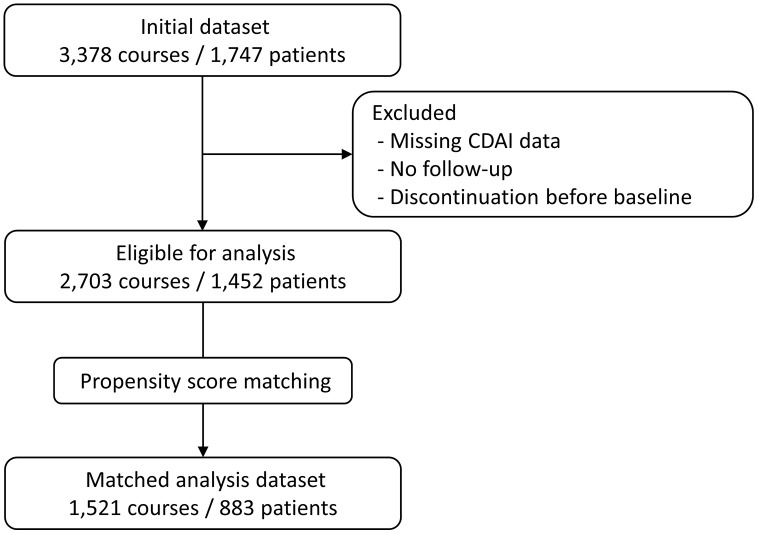 Figure 1
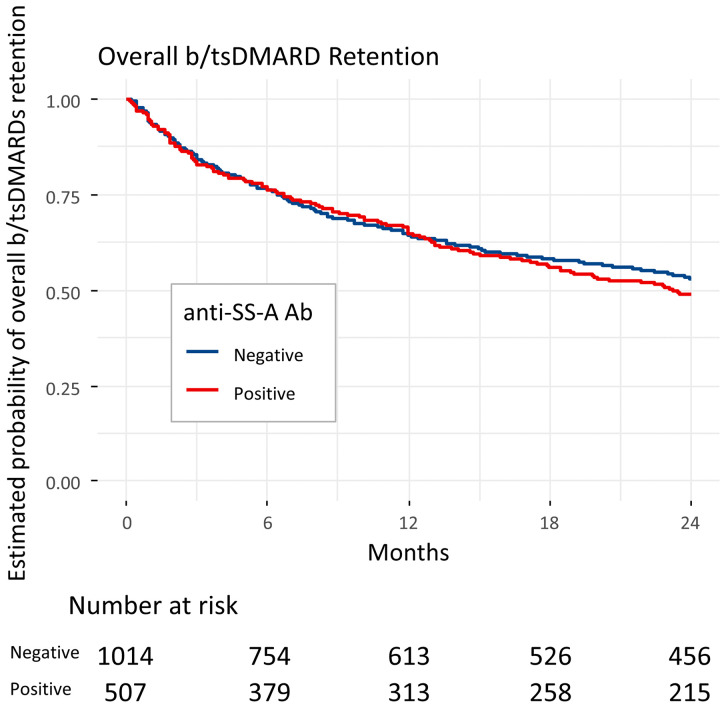 Figure 2
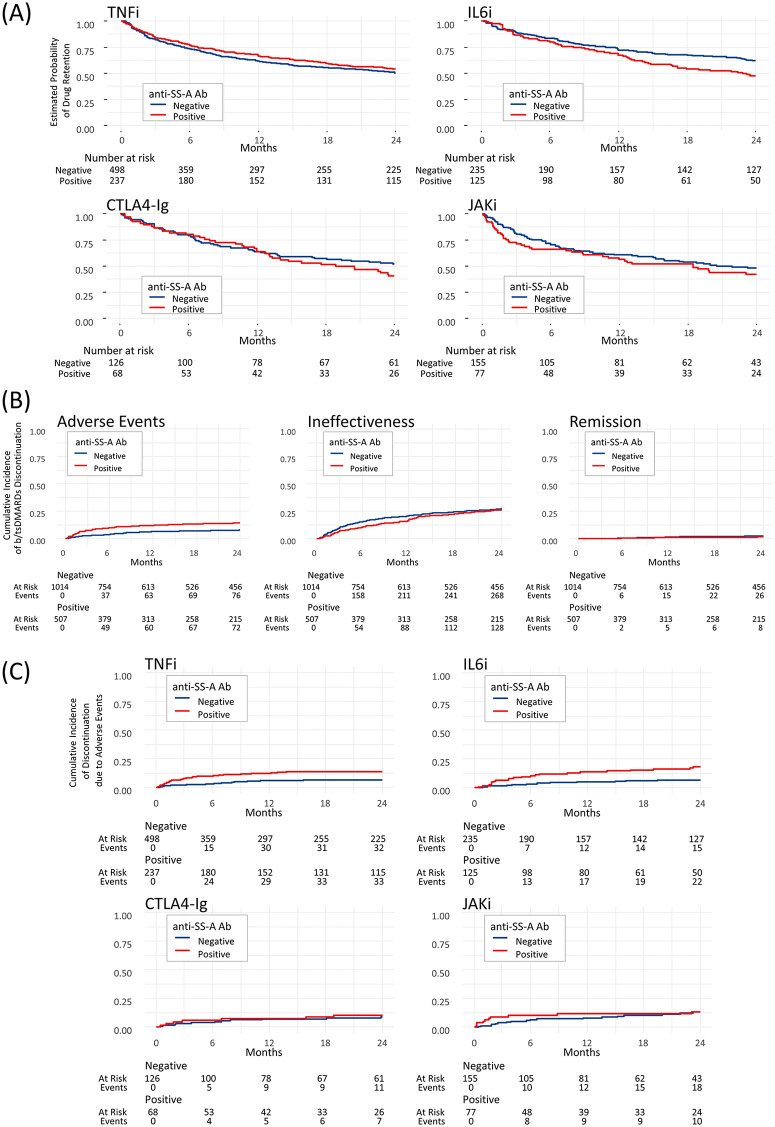 Figure 3
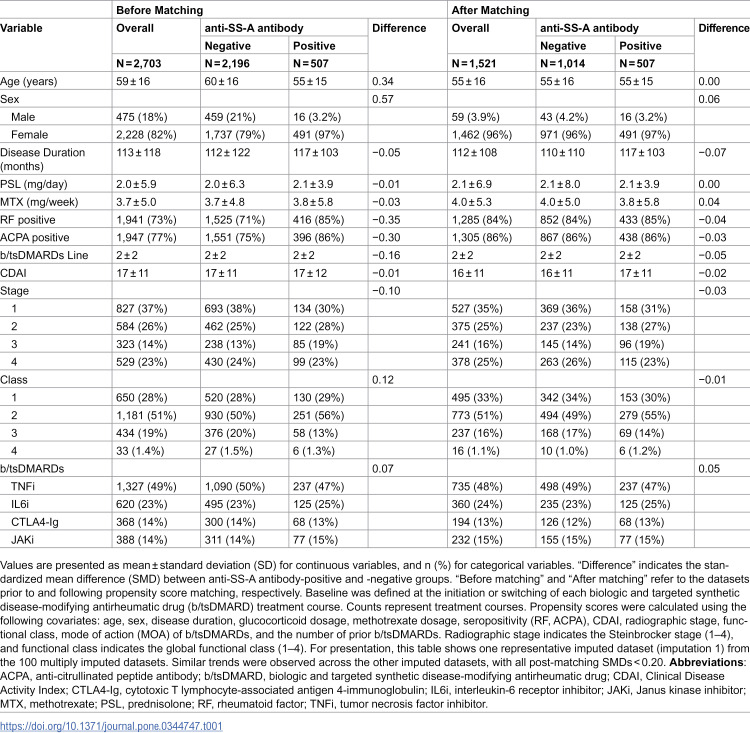 Figure 4
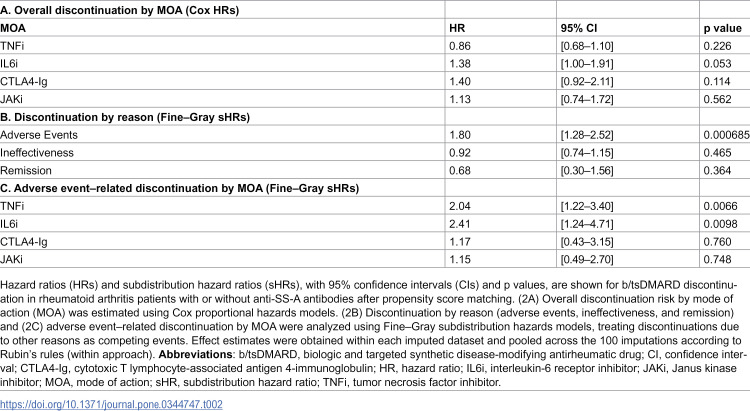 Figure 5
Peer Reviews
No public reviews on file for this paper yet. If you reviewed it on a platform where reviews are public (OpenReview, ICLR, NeurIPS, ICML), you can paste yours below so the community can read it here.
Videos
No videos yet. Explain this paper in a talk, walkthrough, or lecture? Add one.
Taxonomy
TopicsRheumatoid Arthritis Research and Therapies · Biosimilars and Bioanalytical Methods · Pharmacovigilance and Adverse Drug Reactions