Fisheries ecological knowledge, FEK: Contribution to the knowledge of the ecology and distribution of houndsharks and dogfish shark (family Triakidae and Squalidae) in the Canary Islands
Rosario Luque Cabrera, Ana Espino-Ruano, José Juan Castro, Airam Guerra-Marrero, Lorena Couce-Montero, Raibel Núñez-González, Tomàs Bañeras, David Jiménez-Alvarado

TL;DR
This study explores the ecology and fishing patterns of houndsharks and dogfish sharks in the Canary Islands using interviews with local fishers.
Contribution
The study provides new insights into the distribution, fishing practices, and conservation needs of under-researched houndshark and dogfish shark species in the Canary Islands.
Findings
Common smoothhound, tope shark, and shortnose spurdog are frequently caught but often not distinguished by fishers.
Houndsharks and dogfish sharks are mainly caught in summer, likely due to mating aggregations in shallow waters.
Most catches are discarded, and these species are not targeted by artisanal fisheries in the Canary Islands.
Abstract
Currently, it is assumed that most of elasmobranchs (sharks, rays and skates) had suffered a high depletion in their populations worldwide, but there is an important lack of biological and fishing information over the bulk of the species that do not permit to determine the real status of their populations. Seven of these scarce information species are the houndsharks and dogfish shark (family Triakidae and Squalidae) found in the Canary Islands, which actual status level and contribution to the catch in the archipelago are still unknown. 136 interviews were carried out among artisanal fishers from all the islands, in which very few of them were able to distinguish all the species. Two houndshark and one dogfish shark species were frequently identified and/or caught (the common smoothhound (Mustelus mustelus), the tope shark (Galeorhinus galeus), and the shortnose spurdog (Squalus…
Genes, proteins, chemicals, diseases, species, mutations and cell lines named across the full text — each resolved to its canonical identifier and authoritative record.
Click any figure to enlarge with its caption.
 Figure 1
 Figure 2
 Figure 3
 Figure 4
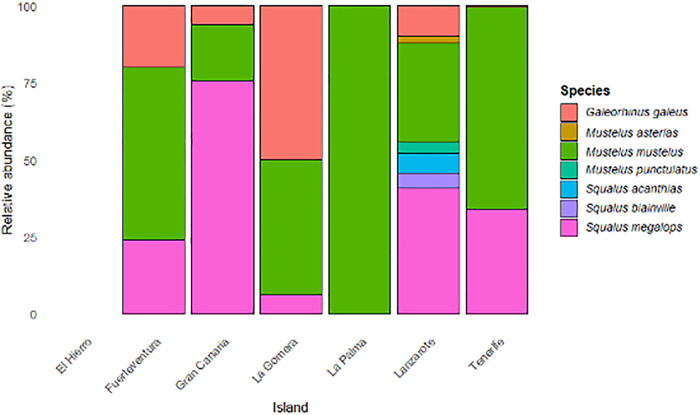 Figure 5
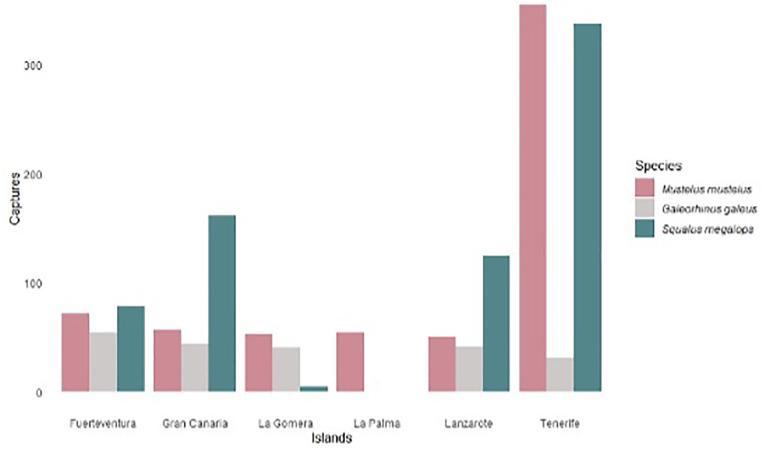 Figure 6
 Figure 7
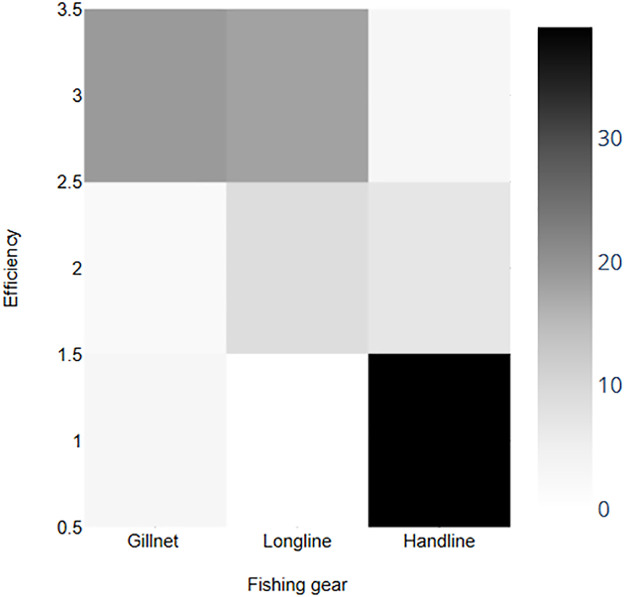 Figure 8
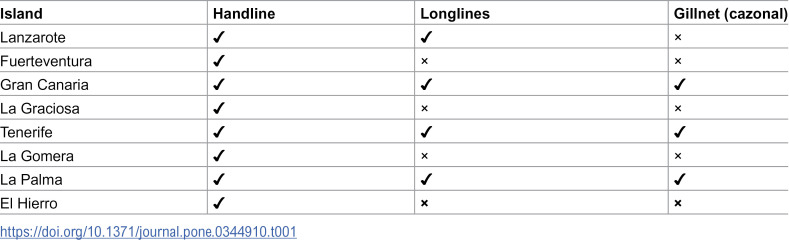 Figure 9
Peer Reviews
No public reviews on file for this paper yet. If you reviewed it on a platform where reviews are public (OpenReview, ICLR, NeurIPS, ICML), you can paste yours below so the community can read it here.
Videos
No videos yet. Explain this paper in a talk, walkthrough, or lecture? Add one.
Taxonomy
TopicsIchthyology and Marine Biology · Marine and fisheries research · Identification and Quantification in Food