Effect of rhythmic auditory stimulation (RAS)® with and without melody on Parkinson’s disease (PD) patients with deep brain stimulation (DBS): A study protocol
Kyurim Kang, Reina Arakawa, Isabella Sterner, Joseph Seemiller, Lauryn Currens, Rebecca Khamishon, Yousef Salimpour, Kelly Mills, Alexander Pantelyat

TL;DR
This study explores how rhythmic and melodic auditory stimulation affects gait and brain activity in Parkinson's patients with deep brain stimulation.
Contribution
The study introduces a novel approach combining RAS with DBS to investigate neural and behavioral responses in Parkinson's patients.
Findings
Rhythmic and melodic RAS may influence gait parameters like cadence and stride length.
Neural signals from the STN and GPi will be analyzed to understand how RAS modulates brain activity.
The study aims to inform future trials on the efficacy of RAS in Parkinson's treatment.
Abstract
Parkinson’s Disease (PD) is characterized by motor impairments, including gait abnormalities that contribute to instability and an increased risk of falls as the disease progresses. While deep brain stimulation (DBS) of the subthalamic nucleus (STN) or the globus pallidus internus (GPi) can be highly effective for managing tremor, rigidity and limb bradykinesia, its impact on gait remains limited, highlighting the need for dedicated gait therapies. Rhythmic auditory stimulation (RAS)® has been used to improve PD gait parameters, such as cadence, velocity and stride length. This exploratory pilot study aims to investigate behavioral and neurophysiological response to two RASTM approaches: pure rhythmic RAS, which uses metronome-generated beats, and melodic RAS, which incorporates composed music along with rhythmic beats. We will record local field potentials (LFP) from the DBS devices…
Genes, proteins, chemicals, diseases, species, mutations and cell lines named across the full text — each resolved to its canonical identifier and authoritative record.
Click any figure to enlarge with its caption.
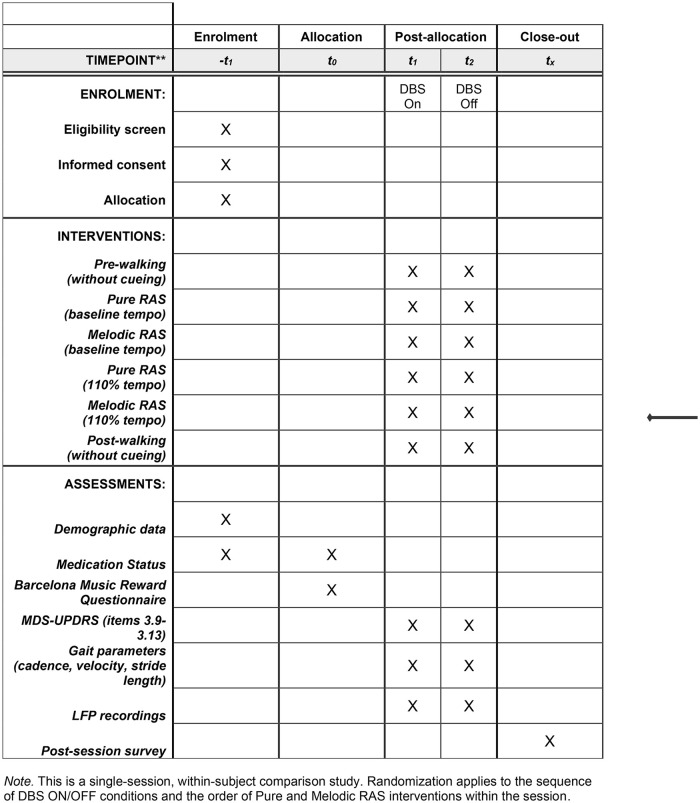 Figure 1
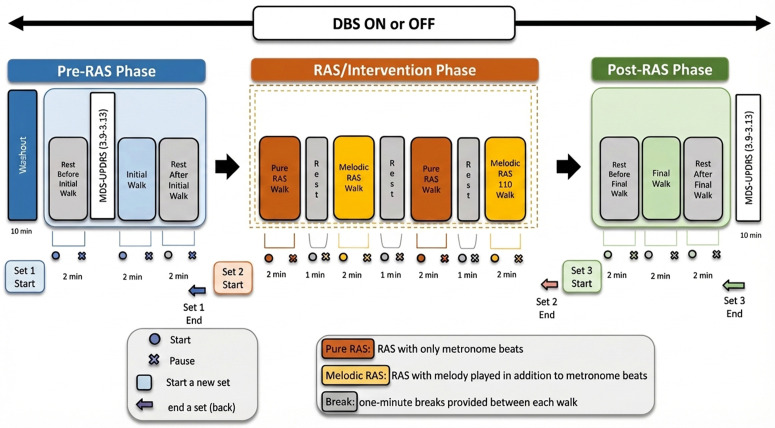 Figure 2
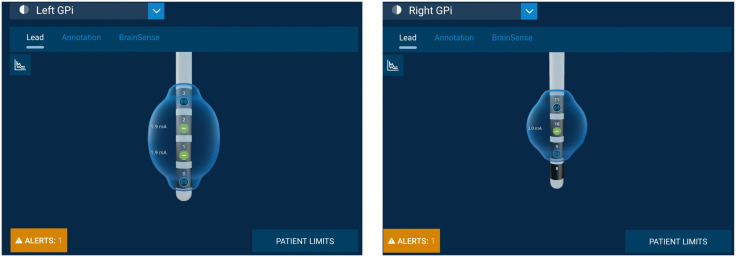 Figure 3
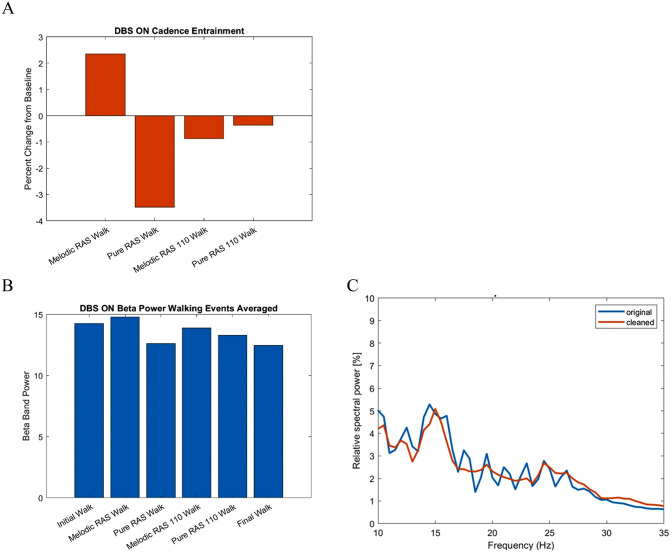 Figure 4
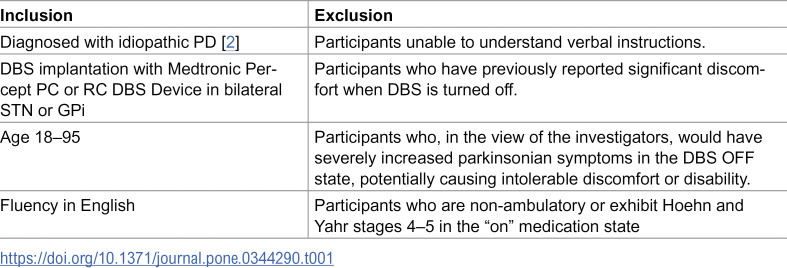 Figure 5
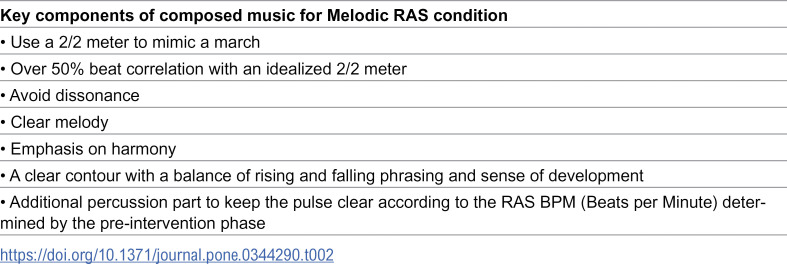 Figure 6
Peer Reviews
No public reviews on file for this paper yet. If you reviewed it on a platform where reviews are public (OpenReview, ICLR, NeurIPS, ICML), you can paste yours below so the community can read it here.
Videos
No videos yet. Explain this paper in a talk, walkthrough, or lecture? Add one.
Taxonomy
TopicsNeurological disorders and treatments · Transcranial Magnetic Stimulation Studies · EEG and Brain-Computer Interfaces