Prevalence of childhood polyvictimization, mental health outcomes, and associated risk and protective factors in Ethiopia and Uganda refugee settings
Stella Muthuri, George Odwe, Francis Obare, Peter Kisaakye, Dagim Habteyesus, Gloria Seruwagi, Yohannes Wado, Yadeta Bacha, Bonnie Wandera, Caroline Kabiru, Chi-Chi Undie, Jessica Leight, Jessica Leight, Jessica Leight

TL;DR
This study finds that many children in refugee settings in Uganda and Ethiopia face multiple types of victimization, which is linked to poor mental health and influenced by various risk and protective factors.
Contribution
The study provides new insights into polyvictimization and its mental health impacts in refugee settings in Uganda and Ethiopia.
Findings
Males had higher rates of polyvictimization than females in both Uganda and Ethiopia.
Risk factors included disability, endorsement of intimate partner violence, and household food insecurity.
Polyvictimization was strongly linked to mental distress, self-harm, and suicidal thoughts in both genders.
Abstract
Children exposed to polyvictimization (exposure to multiple types of victimization), experience severe impacts on health and well-being across the life course. While the prevalence, risk factors, and health consequences of polyvictimization have been well documented in lower-middle-income countries, there remains a significant knowledge gap regarding the situation in humanitarian contexts, particularly in refugee settings. We examined the prevalence, risk, and protective factors of polyvictimization and its association with mental health outcomes in refugee settings in Uganda and Ethiopia. We utilized data from the Uganda Humanitarian Violence Against Children and Youth Survey (HVACS) 2022, which included 1,338 females and 927 males, and the Ethiopia HVACS 2024, which comprised 1,937 females and 1,536 males. These were representative, cross-sectional household surveys of females and…
Genes, proteins, chemicals, diseases, species, mutations and cell lines named across the full text — each resolved to its canonical identifier and authoritative record.
Click any figure to enlarge with its caption.
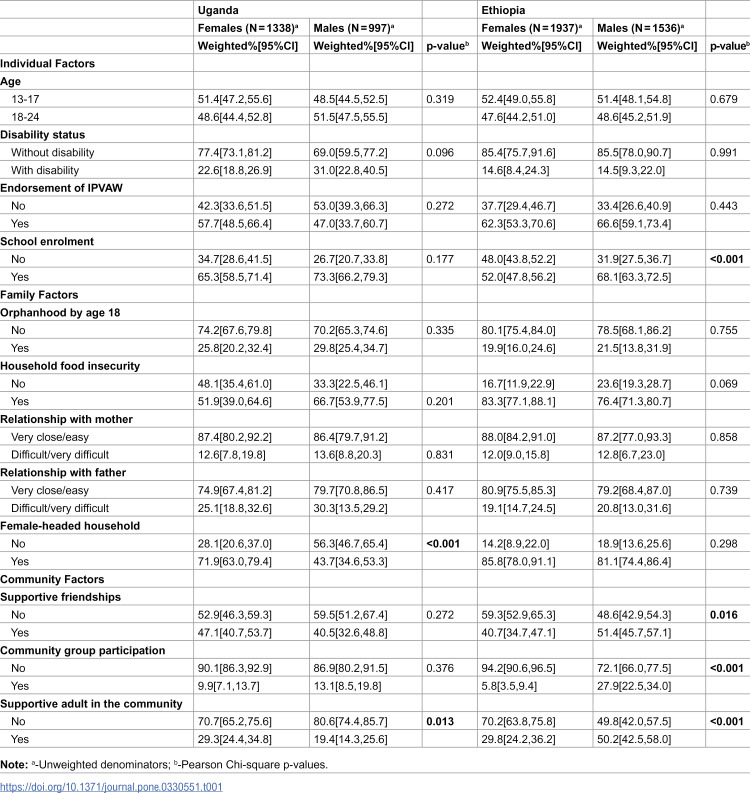 Figure 1
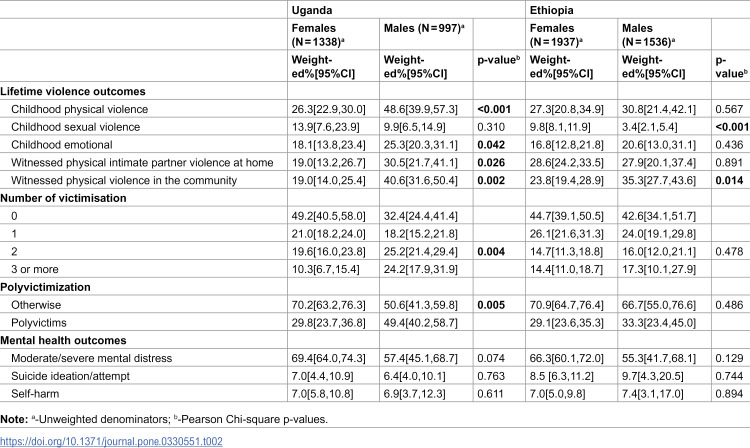 Figure 2
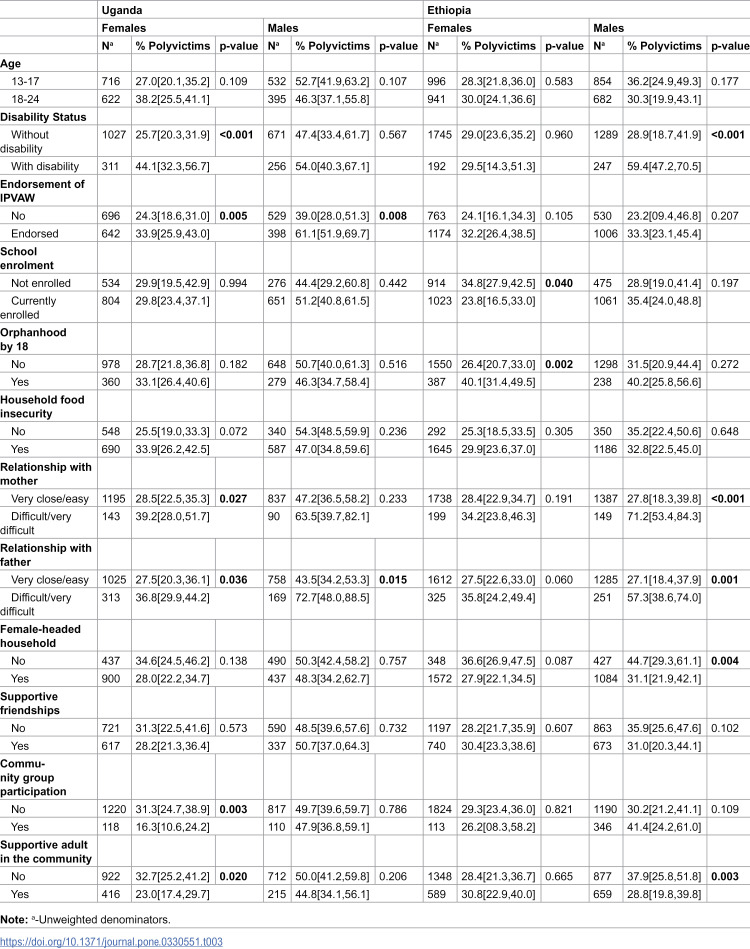 Figure 3
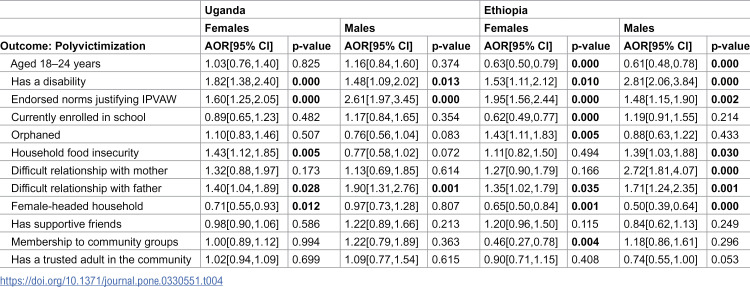 Figure 4
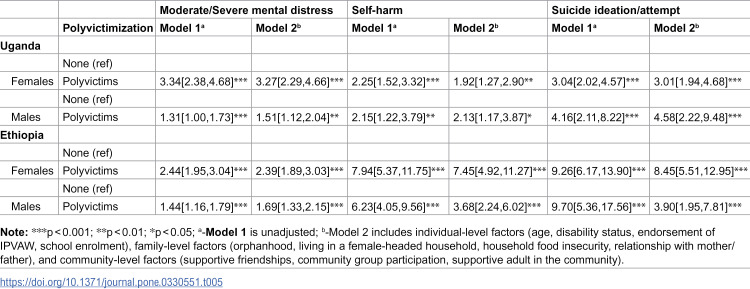 Figure 5
Peer Reviews
No public reviews on file for this paper yet. If you reviewed it on a platform where reviews are public (OpenReview, ICLR, NeurIPS, ICML), you can paste yours below so the community can read it here.
Videos
No videos yet. Explain this paper in a talk, walkthrough, or lecture? Add one.
Taxonomy
TopicsMigration, Health and Trauma · Child Abuse and Trauma · Adolescent Sexual and Reproductive Health