Effects of increasing narasin doses on feedlot performance, feeding behavior, carcass traits, and rumen-cecum morphometrics in Nellore cattle
Leandro Aparecido Ferreira da Silva, Daniel Moretto Casali, Ana Laura Januário Lélis, Tiago Leiva, Murilo Chuba Rodrigues, José Paulo Roman Barroso, Pedro Veloso Facury Lasmar, Giovanna Lombardi de Oliveira Araújo, Gercino Ferreira Virgínio Júnior, Johnny Maciel de Souza

TL;DR
This study shows that adding narasin to feedlot diets improves early cattle growth and carcass fat, with 20 ppm being the most effective dose.
Contribution
The study identifies 20 ppm as the optimal narasin dose for improving feedlot performance and carcass traits in Nellore cattle.
Findings
Narasin at 20 ppm improved early average daily gain and feed efficiency in Nellore cattle.
The 20 ppm dose resulted in the highest fat deposition at the 12th rib of the carcass.
Higher narasin doses reduced cecum goblet cells and increased rumen papillae size.
Abstract
Narasin is an ionophore commonly used to improve energy efficiency and feed utilization in beef cattle. This study evaluated the impact of increasing levels of narasin on performance, feeding behavior, carcass traits, and ruminal and cecum morphometrics of Nellore cattle in feedlot. One hundred twenty-eight Nellore yearling bulls (393 ± 24 kg) were blocked by initial body weight (BW), allocated in 32 pens (4 bulls/pen). Pens were randomly assigned to one of four treatments: 0 (control), 13, 20, or 27 ppm of narasin. After a 14-day adaptation, animals were fed a high-concentrate diet (87% concentrate, dry matter basis) for 98 days. Narasin was not included in the diet from day 109 to day 111 due to the withdrawal period required by the active compound. Animals were slaughtered on day 112. A significant linear effect of narasin was observed on BW (P = 0.02) and average daily gain (P =…
Genes, proteins, chemicals, diseases, species, mutations and cell lines named across the full text — each resolved to its canonical identifier and authoritative record.
Click any figure to enlarge with its caption.
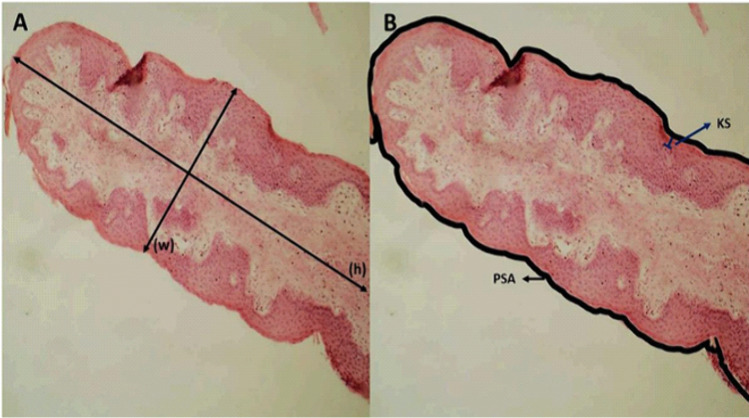 Figure 1
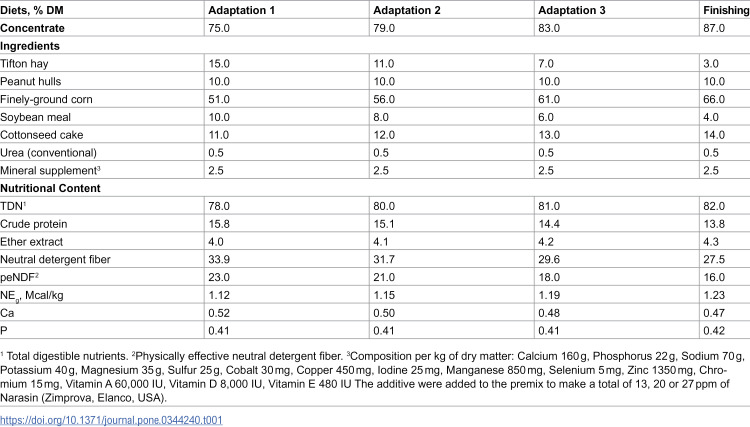 Figure 2
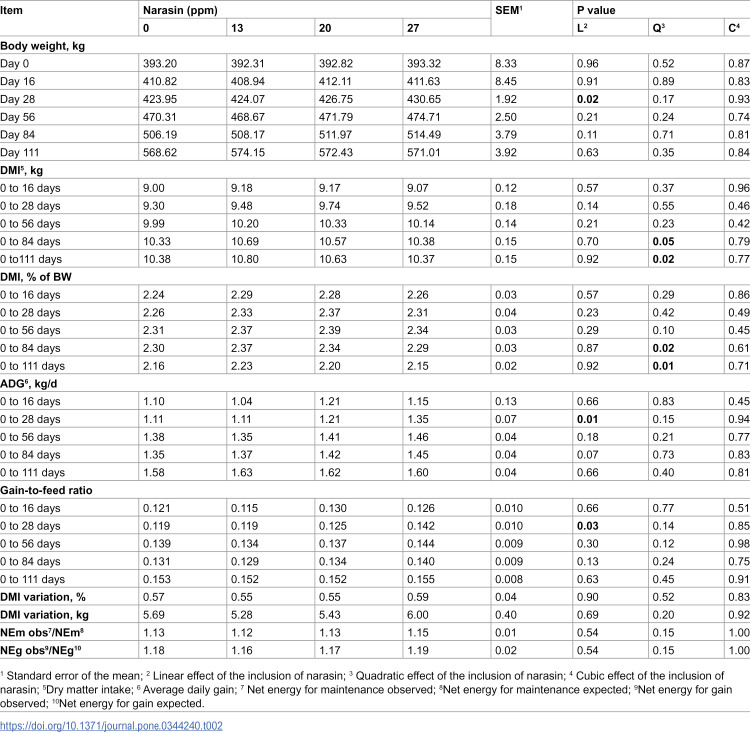 Figure 3
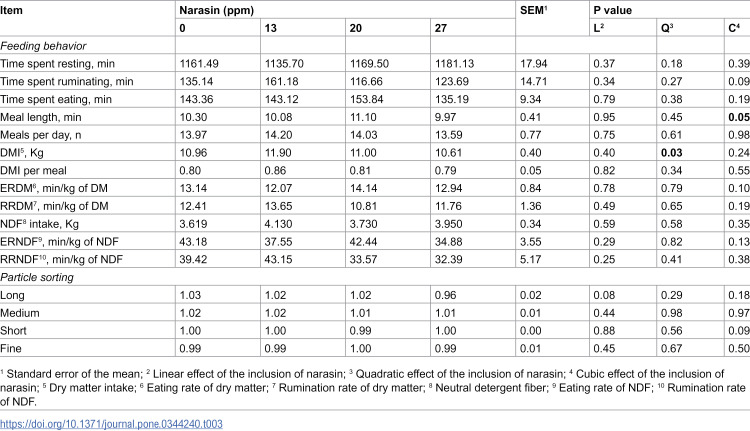 Figure 4
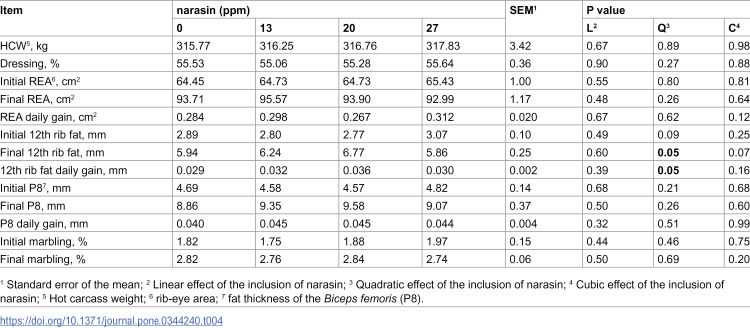 Figure 5
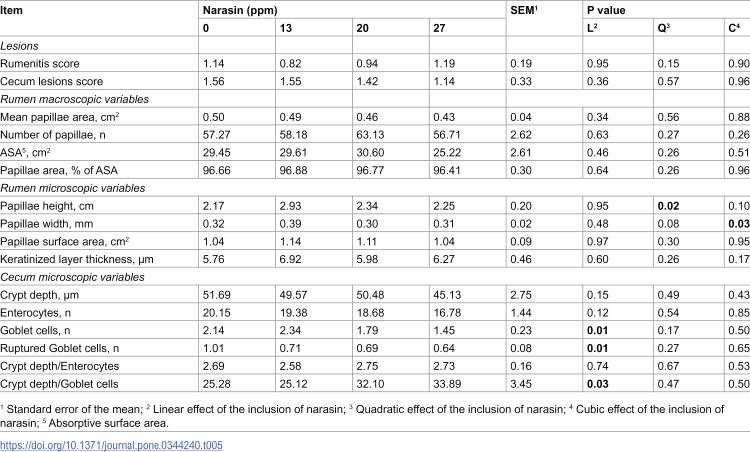 Figure 6
Peer Reviews
No public reviews on file for this paper yet. If you reviewed it on a platform where reviews are public (OpenReview, ICLR, NeurIPS, ICML), you can paste yours below so the community can read it here.
Videos
No videos yet. Explain this paper in a talk, walkthrough, or lecture? Add one.
Taxonomy
TopicsRuminant Nutrition and Digestive Physiology · Reproductive Physiology in Livestock · Pharmacological Effects and Assays