Comparison of thyroid hormones reference intervals based on thyroid antibody levels: A multicenter study
Havva Beyter, Osman Acar, Oytun Portakal, Özlem Gülbahar, Gülsüm F. Türkeş, Neslihan Yıldırım Saral, Muhittin Abdülkadir Serdar, Aysel Ozpinar, Rajeevan Selvaratnam, Rajeevan Selvaratnam, Rajeevan Selvaratnam, Rajeevan Selvaratnam

TL;DR
This study shows that thyroid hormone reference intervals differ based on thyroid antibody levels, suggesting the need for antibody-specific standards.
Contribution
The study introduces antibody-specific reference intervals for thyroid hormones, revealing significant differences based on antibody status.
Findings
Thyroid-stimulating hormone (TSH) reference intervals varied significantly between antibody-positive and antibody-negative individuals across different analyzers.
Reference intervals for free thyroxine (fT4) were notably affected by antibody status in females using Roche analyzers.
The study emphasizes the importance of adjusting reference intervals according to thyroid antibody status for more accurate thyroid assessments.
Abstract
This study aimed to determine reference intervals (RI) for thyroid hormones based on thyroid antibody levels using different autoanalyzer kits. RI for Thyroid-stimulating hormone (TSH), free thyroxine (fT4) and free triiodothyronine (fT3) were determined according to thyroid antibody levels and independently of thyroid antibody levels using the R statistical program and RefineR algorithm. Significant differences in RIs were found between antibody-positive (Ab(+)) and antibody-negative (Ab(–)) individuals. TSH RI varied most notably in Abbott and Siemens analyzers. In females, Abbott showed higher TSH RIs in the Ab(+) group (0.41–7.44 mU/L) than in Ab(–) (0.24–3.50 mU/L). In males, Roche and Beckman exhibited the greatest differences (Roche Ab(+): 0.19–5.77; Ab(–): 0.44–3.63; Beckman Ab(+): 0.12–5.23; Ab(–): 0.39–3.96 mU/L). For fT4, Roche showed increased RIs in females with Ab(+)…
Genes, proteins, chemicals, diseases, species, mutations and cell lines named across the full text — each resolved to its canonical identifier and authoritative record.
Click any figure to enlarge with its caption.
 Figure 1
 Figure 2
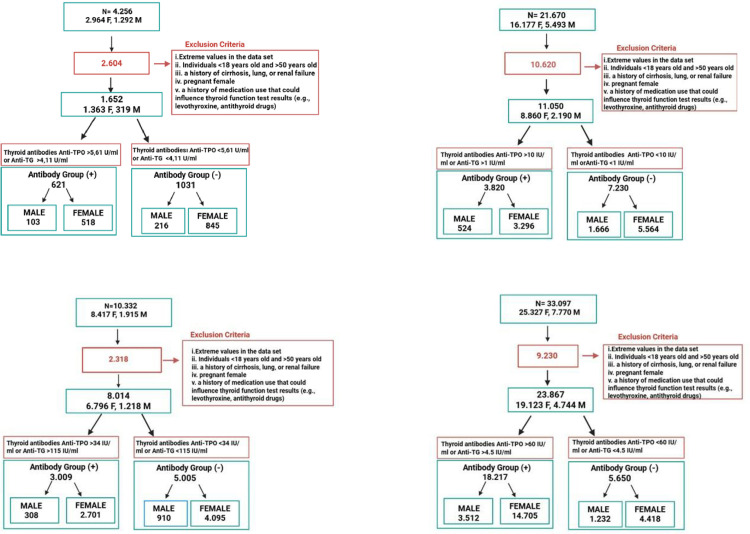 Figure 3
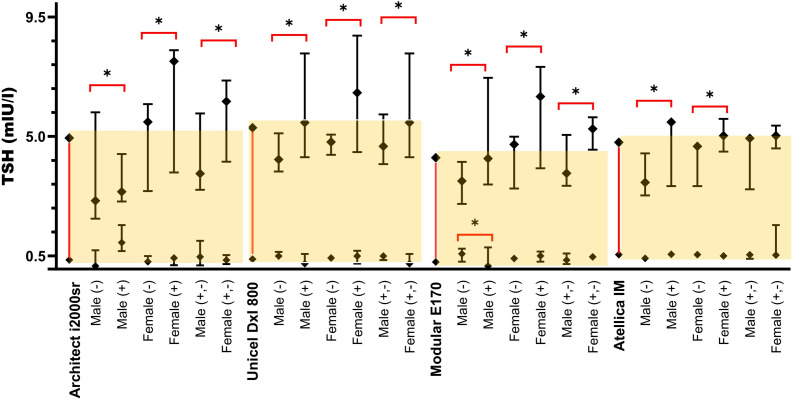 Figure 4
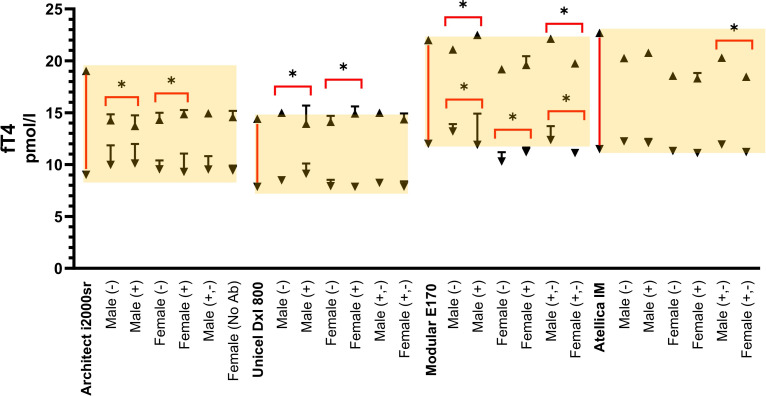 Figure 5
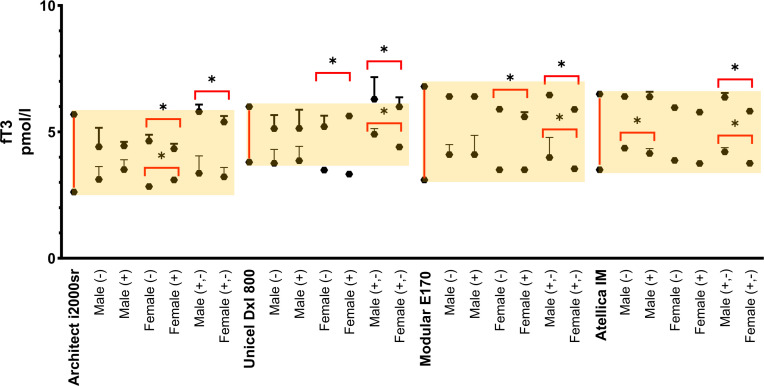 Figure 6
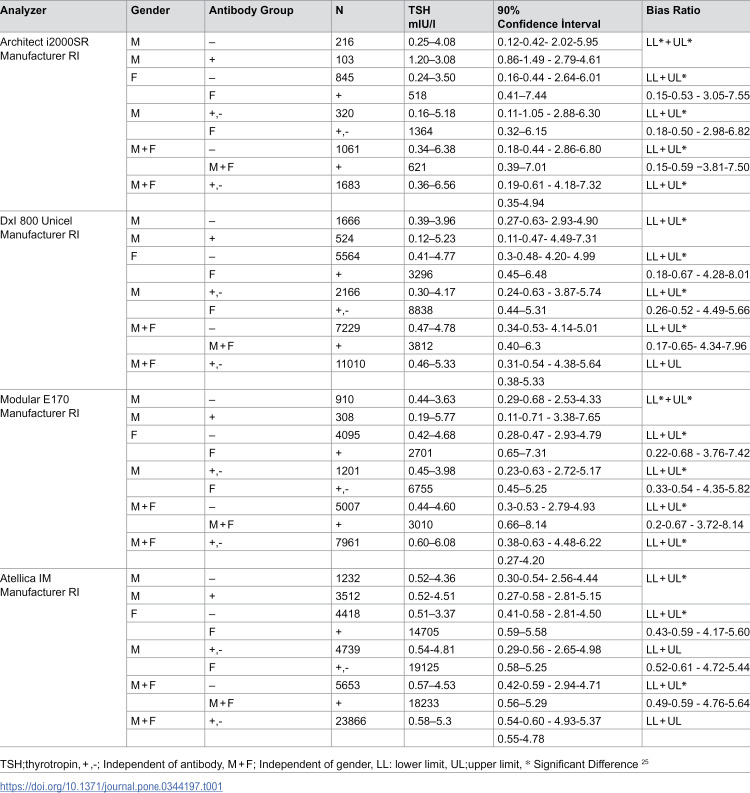 Figure 7
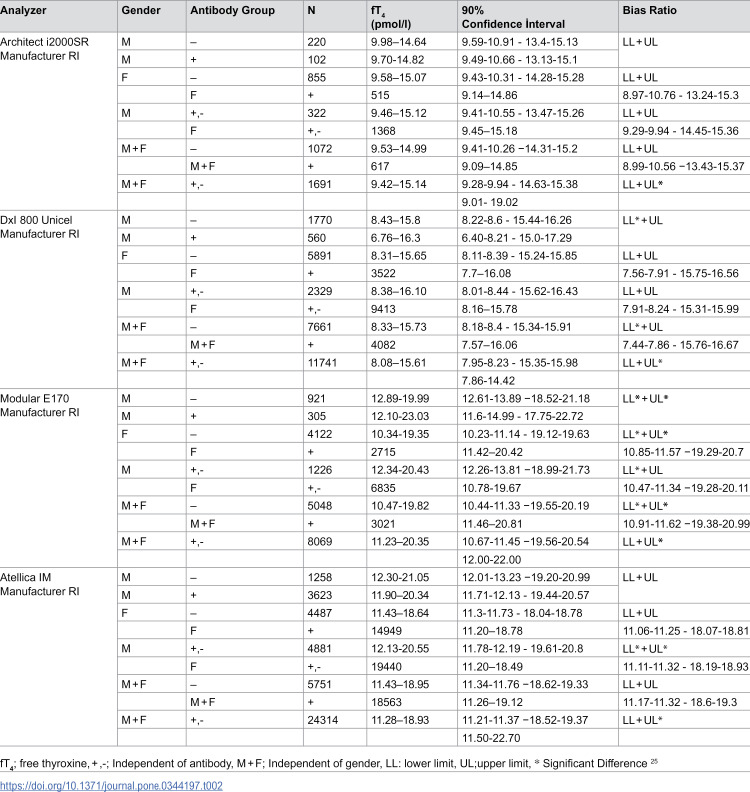 Figure 8
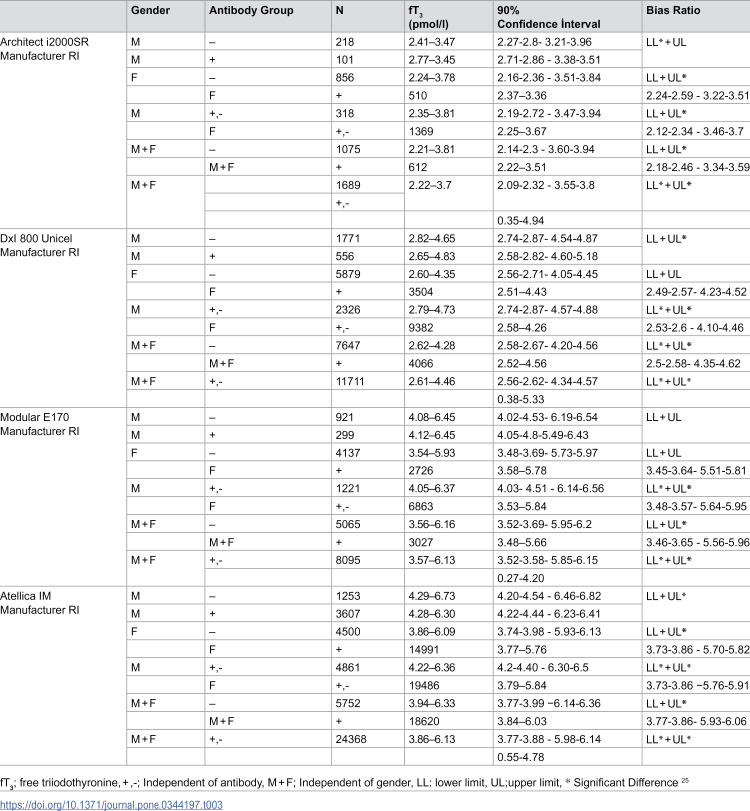 Figure 9
Peer Reviews
No public reviews on file for this paper yet. If you reviewed it on a platform where reviews are public (OpenReview, ICLR, NeurIPS, ICML), you can paste yours below so the community can read it here.
Videos
No videos yet. Explain this paper in a talk, walkthrough, or lecture? Add one.
Taxonomy
TopicsThyroid Disorders and Treatments · Pituitary Gland Disorders and Treatments · Thyroid Cancer Diagnosis and Treatment