The impact of delayed reporting on forensic evidence recovery in anal sexual assault cases: A retrospective study
Erhan Kartal, Yasin Etli, Bedir Korkmaz

TL;DR
This study shows that examining victims of anal sexual assault sooner increases chances of finding physical evidence, and delayed exams can still support allegations if documented properly.
Contribution
The study introduces a Random Forest classifier to predict physical findings in delayed anal assault cases and emphasizes the importance of timely forensic exams.
Findings
Earlier examination (≤7 days) significantly increases the likelihood of detecting acute physical findings (OR 6.13).
The Random Forest model showed moderate discrimination with a CV ROC AUC of 0.781 and out-of-fold ROC AUC of 0.762.
Assault-to-examination interval was the most important predictor of physical findings by permutation importance (43.3%).
Abstract
Delayed presentation after sexual assault reduces the probability of detecting injuries or recovering biological evidence. Evidence specific to anal-route allegations and physical findings is comparatively limited. We retrospectively reviewed 222 consecutive cases alleging anal-route sexual assault seen at a university forensic clinic in Türkiye (2010–2014). Examinations included standardized external anogenital inspection under magnification (colposcopy) and full-body assessment; anoscopy was not routinely available. The primary outcome was acute physical findings (composite of anal/perianal and, when present, parallel genital injuries, plus extragenital traumatic lesions). Bivariate associations used Pearson’s χ² (with df reported; Monte Carlo where appropriate). As a prespecified sensitivity analysis, a Random Forest classifier was trained using pre-examination demographics and…
Genes, proteins, chemicals, diseases, species, mutations and cell lines named across the full text — each resolved to its canonical identifier and authoritative record.
Click any figure to enlarge with its caption.
 Figure 1
 Figure 2
 Figure 3
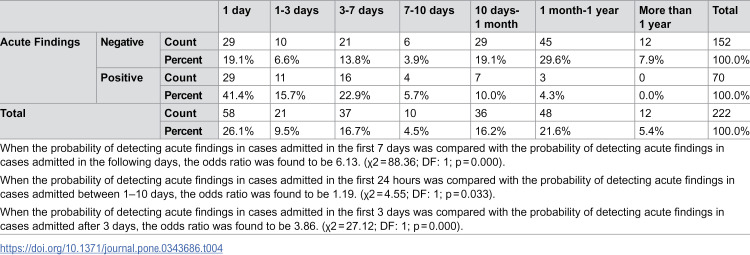 Figure 4
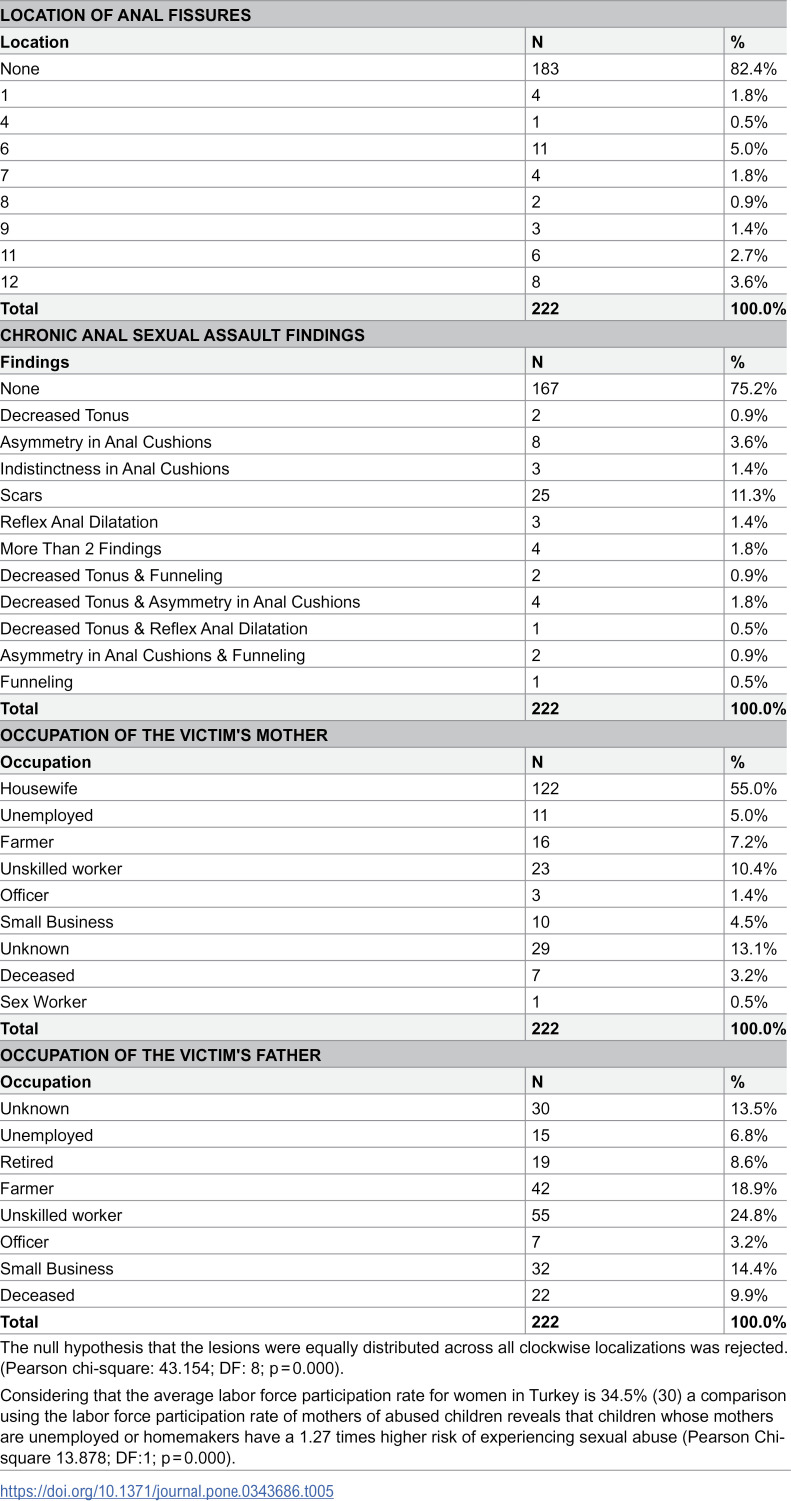 Figure 5
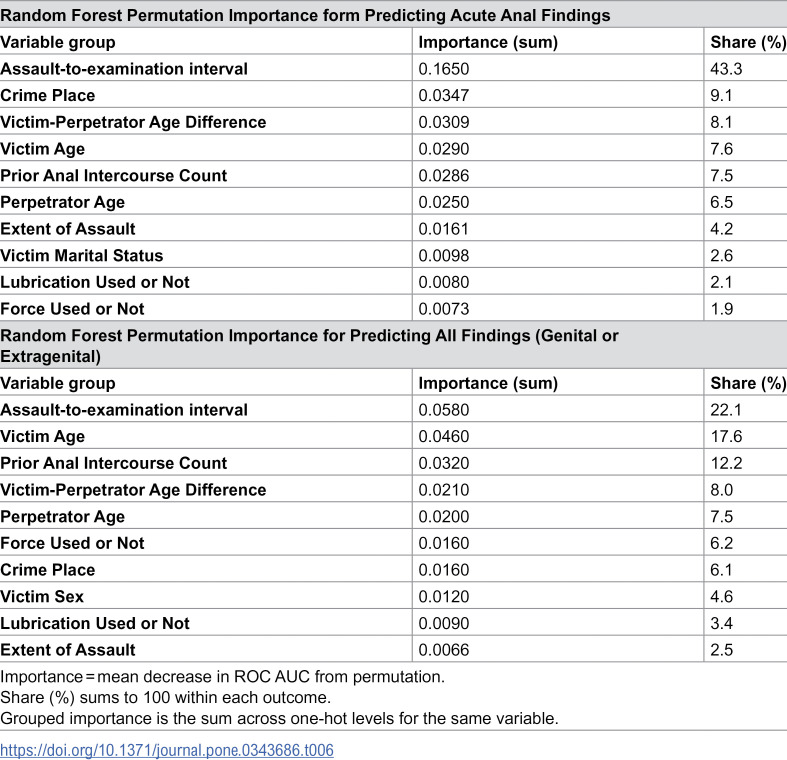 Figure 6
Peer Reviews
No public reviews on file for this paper yet. If you reviewed it on a platform where reviews are public (OpenReview, ICLR, NeurIPS, ICML), you can paste yours below so the community can read it here.
Videos
No videos yet. Explain this paper in a talk, walkthrough, or lecture? Add one.
Taxonomy
TopicsSexual Assault and Victimization Studies · Psychopathy, Forensic Psychiatry, Sexual Offending · Child Abuse and Related Trauma