Computational design of functional random heteropolymers through atomistic simulations
Tianyi Jin, Collin S. Lung, Ting Xu, Connor W. Coley, Alfredo Alexander-Katz

TL;DR
This paper uses simulations to understand how the chemical design of random heteropolymers affects their structure and hydration, offering insights for creating protein-like synthetic materials.
Contribution
The study provides new molecular design principles for tuning the assembly and dynamics of random heteropolymers through compositional and chemical control.
Findings
Methacrylate-based RHPs transition from rod-like to compact globules as chain length increases.
Hydration of positively charged monomers follows the Hofmeister series.
PEG side-chain length significantly affects solubility and hydration behavior.
Abstract
Random heteropolymers (RHPs) are emerging single-chain nanoparticles with great potential in protein mimicry, yet a systematic understanding of how chemical composition and monomer structures govern their structure, dynamics, and hydration remains limited. Using atomistic molecular dynamics simulations, we examine how various design parameters, including chain length, backbone architecture, charged monomer concentration, chain-level composition, and side-chain micropolarity influence RHP assembly and hydration behavior. As chain length increases, methacrylate-based RHPs transition from rod-like to random-walk statistics and ultimately collapse into compact globules stabilized by hydrophobic collapse and methacrylate-poly(ethylene glycol) (PEG) interactions. Positively charged monomers follow the Hofmeister series in their hydration. Interestingly, the dimerization results from…
Genes, proteins, chemicals, diseases, species, mutations and cell lines named across the full text — each resolved to its canonical identifier and authoritative record.
Click any figure to enlarge with its caption.
 Figure 1
 Figure 2
 Figure 3
 Figure 4
 Figure 5
 Figure 6
 Figure 7
 Figure 8
 Figure 9
 Figure 10
 Figure 11
 Figure 12
 Figure 13
 Figure 14
 Figure 15
 Figure 16
 Figure 17
 Figure 18
 Figure 19
 Figure 20
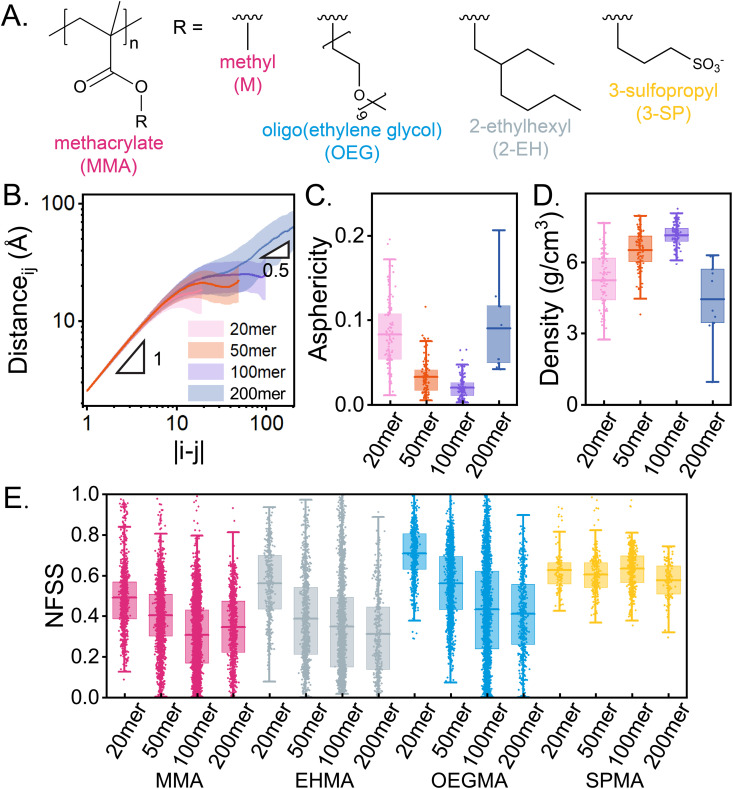 Figure 21
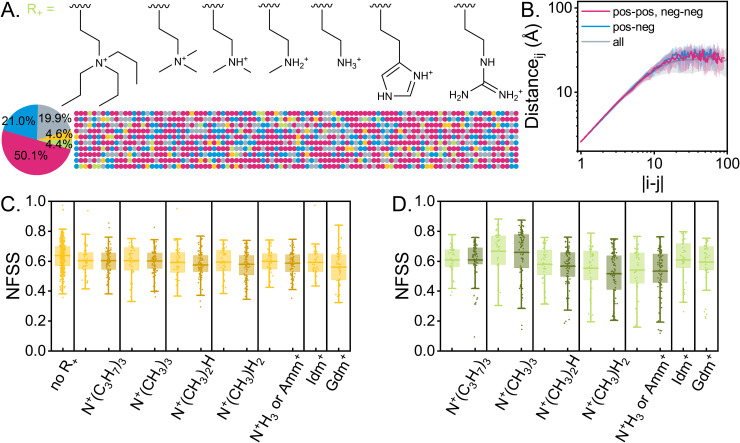 Figure 22
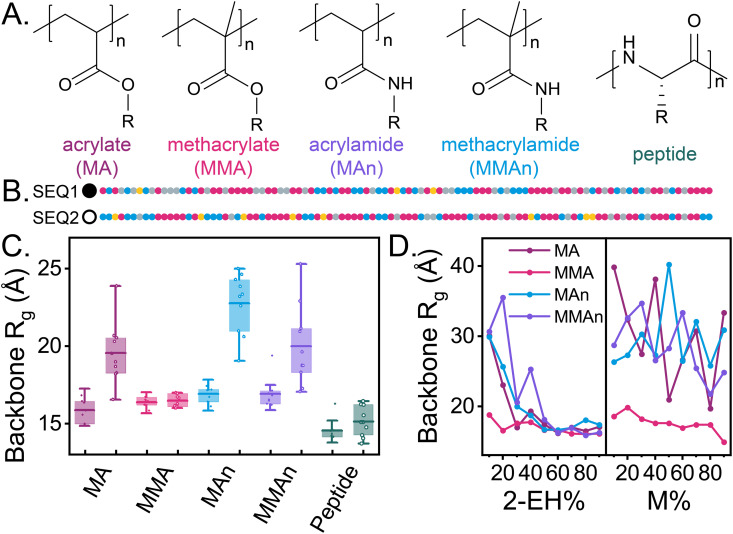 Figure 23
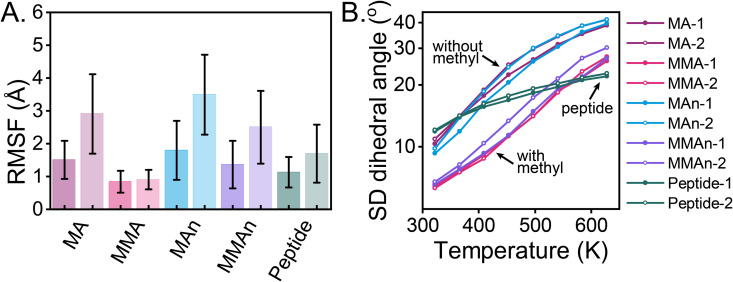 Figure 24
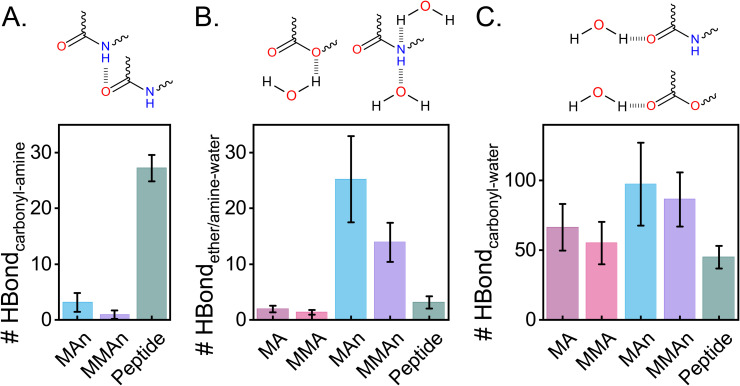 Figure 25
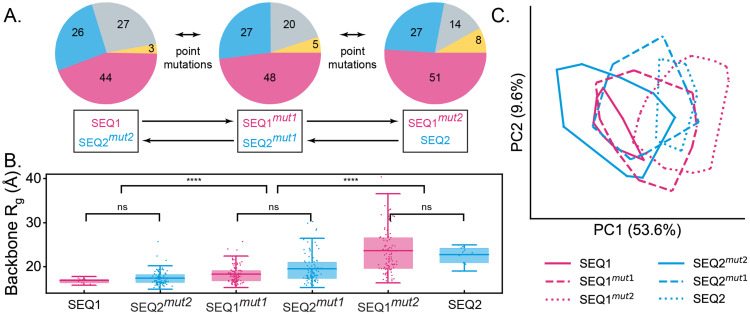 Figure 26
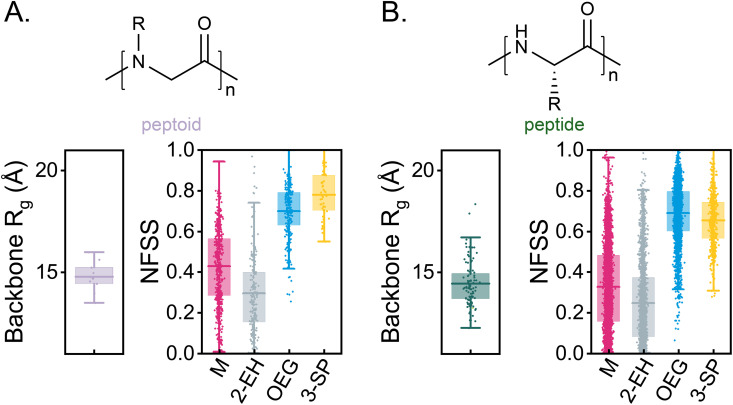 Figure 27
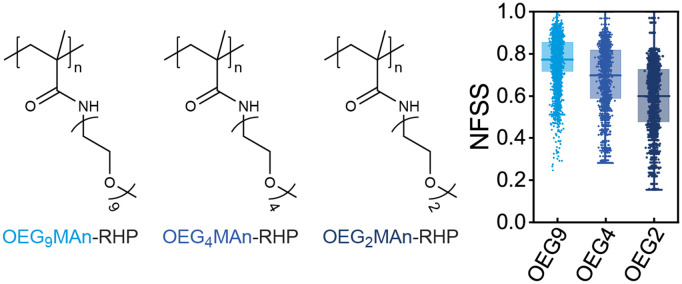 Figure 28
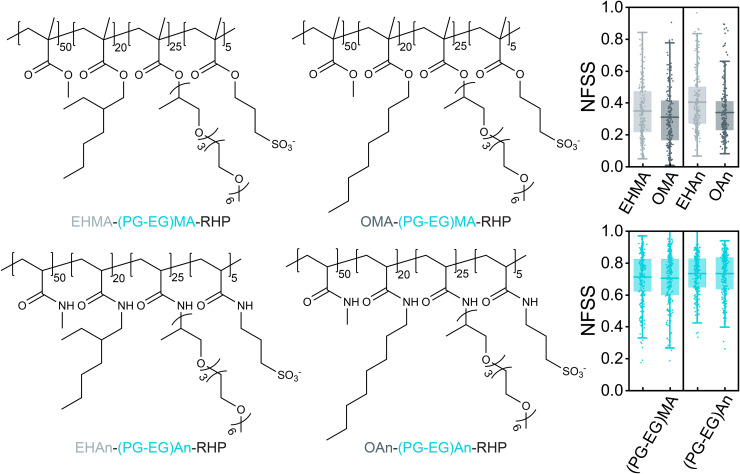 Figure 29
Peer Reviews
No public reviews on file for this paper yet. If you reviewed it on a platform where reviews are public (OpenReview, ICLR, NeurIPS, ICML), you can paste yours below so the community can read it here.
Videos
No videos yet. Explain this paper in a talk, walkthrough, or lecture? Add one.
Taxonomy
TopicsHydrogels: synthesis, properties, applications · Polymer Surface Interaction Studies · Pickering emulsions and particle stabilization