Deciphering the Presence of Active Interscapular Brown Adipose Tissue in Humans
Joaquin Sanchez‐Gomez, Samuel Ruiz‐Campos, Anabel Chica‐Perez, Andrés Baena‐Raya, Francisco M. Acosta, Christian Wolfrum, Patrick C. N. Rensen, Tania Romacho, Borja Martinez‐Tellez

TL;DR
This review explores whether active interscapular brown adipose tissue exists in adult humans, based on anatomical, imaging, and molecular evidence.
Contribution
The paper synthesizes evidence for the potential persistence of interscapular brown adipose tissue in adult humans, particularly in women.
Findings
Dorsocervical subcutaneous adipose tissue in human neonates has been conclusively identified as interscapular brown adipose tissue.
Cold-induced PET/CT studies show elevated glucose uptake in the dorsocervical region, more prevalent in women.
Molecular confirmation of interscapular brown adipose tissue in adults remains lacking despite suggestive histological and imaging data.
Abstract
Brown adipose tissue (BAT) is increasingly recognized as a metabolically active tissue in humans, although its physiological relevance remains incompletely understood. In rodents, BAT is well characterized, with interscapular BAT (iBAT) representing the main thermogenic depot. In contrast, the existence and persistence of iBAT in adult humans have long been overlooked. In this review, we synthesize anatomical, histological, imaging, and molecular evidence supporting the presence of a potentially active iBAT depot within the dorsocervical subcutaneous adipose tissue in humans. Gene expression and histological studies have conclusively identified dorsocervical subcutaneous adipose tissue as iBAT in human neonates. In adults, the persistence of this depot has been suggested by early histological observations, although definitive molecular confirmation is still lacking. More recent data…
Genes, proteins, chemicals, diseases, species, mutations and cell lines named across the full text — each resolved to its canonical identifier and authoritative record.
Click any figure to enlarge with its caption.
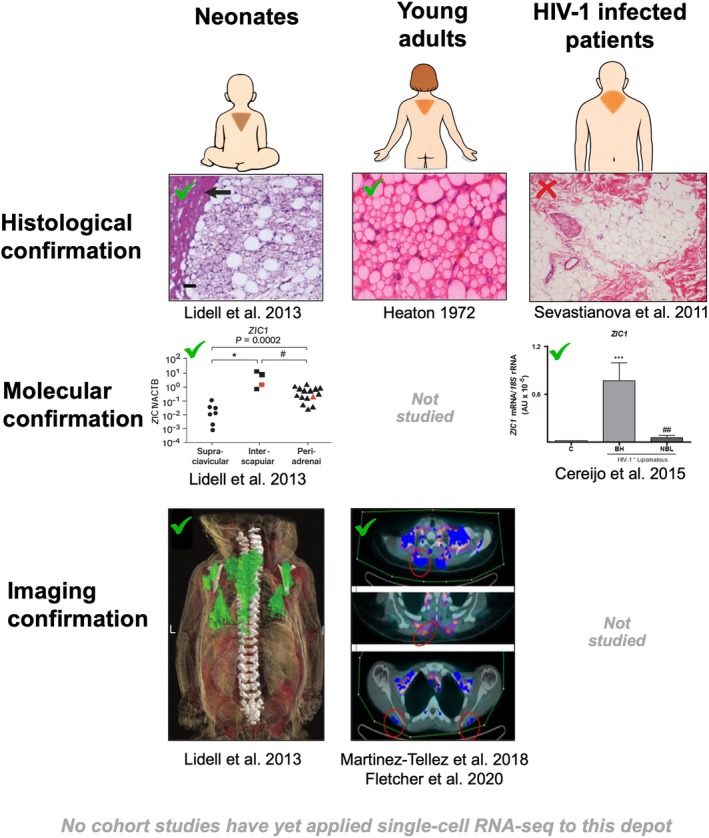 Figure 1
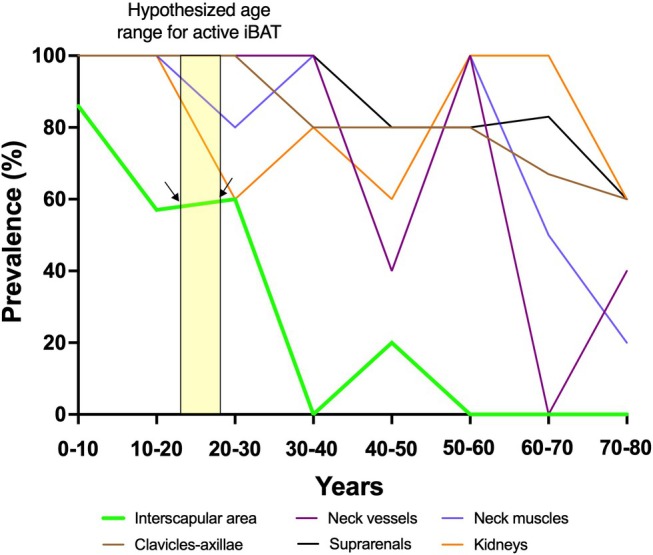 Figure 2
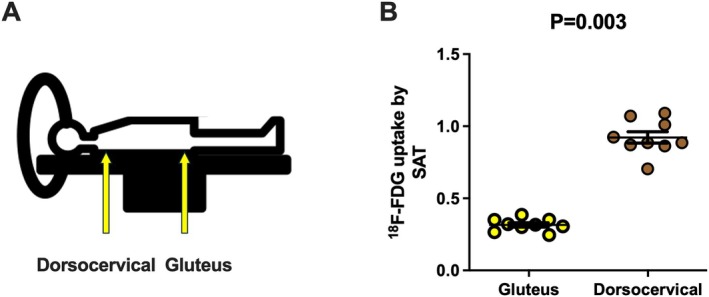 Figure 3
Peer Reviews
No public reviews on file for this paper yet. If you reviewed it on a platform where reviews are public (OpenReview, ICLR, NeurIPS, ICML), you can paste yours below so the community can read it here.
Videos
No videos yet. Explain this paper in a talk, walkthrough, or lecture? Add one.
Taxonomy
TopicsAdipose Tissue and Metabolism · Adipokines, Inflammation, and Metabolic Diseases · Cardiovascular Disease and Adiposity