Targeting MD2 in prostate cancer bone metastasis: Mechanistic insights and therapeutic potential
Melina A. Dattilo, Marina G. Ferrari, Alexis P. Jimenez-Uribe, Teresa Morales, Kyle T. Amber, Adrian P. Mansini

TL;DR
This paper explores how targeting MD2 could help treat prostate cancer that spreads to the bone, with new evidence showing it reduces tumor growth and could serve as a biomarker.
Contribution
The paper introduces MD2 as a novel therapeutic target and identifies soluble MD2 as a potential biomarker for metastatic prostate cancer.
Findings
Pharmacological inhibition of MD2 reduces tumor growth in a mouse model of prostate cancer bone metastasis.
High MD2 expression correlates with increased infiltration of immunosuppressive cells like Tregs and MDSCs.
Soluble MD2 may serve as a non-invasive biomarker for metastatic burden and PARP inhibitor resistance.
Abstract
Metastatic prostate cancer (PCa), especially when it involves the bone, remains a significant clinical challenge with limited therapeutic options. Our recent research identified Myeloid Differentiation Protein-2 (MD2/LY96) as a potential biomarker associated with poor prognosis and higher metastatic potential in PCa. In this Research Perspective, we build on those findings and present new preclinical data showing that pharmacological inhibition of MD2 markedly reduces tumor growth in a PCa mouse model of bone metastasis. Analysis of patient tumor tissues demonstrated that high MD2 expression is associated not only with metastasis but also with increased infiltration of T regulatory cells (Tregs) and myeloid-derived suppressor cells (MDSCs), indicating a role in promoting an immunosuppressive environment. Additionally, we show that soluble MD2 (sMD2) may serve as a non-invasive biomarker…
Genes, proteins, chemicals, diseases, species, mutations and cell lines named across the full text — each resolved to its canonical identifier and authoritative record.
Click any figure to enlarge with its caption.
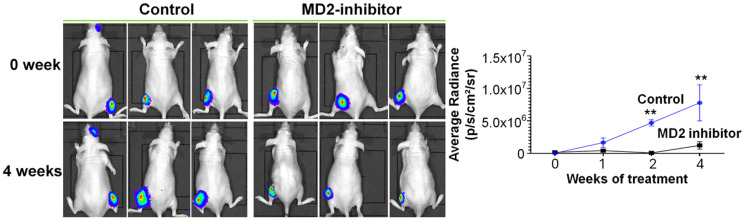 Figure 1
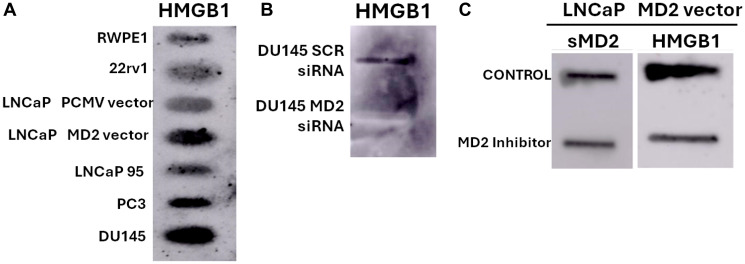 Figure 2
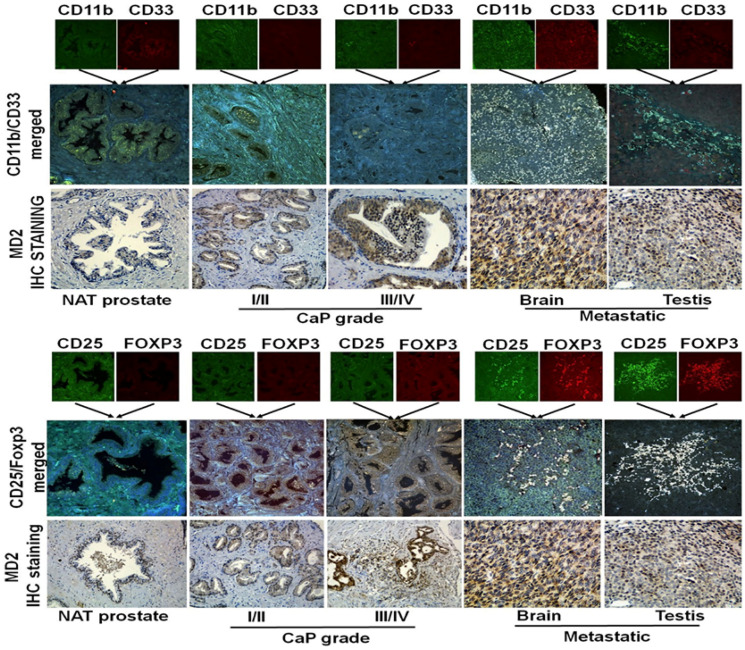 Figure 3
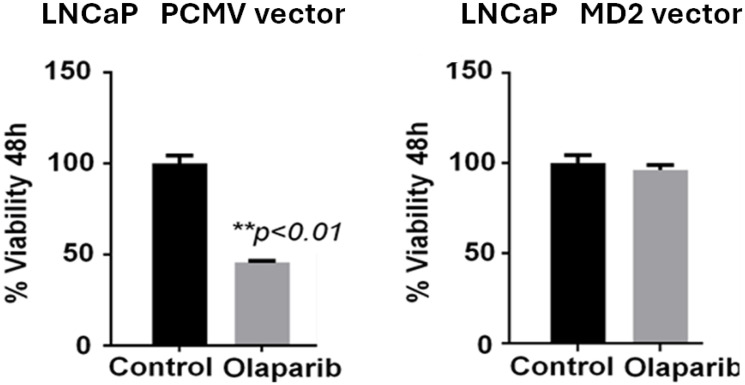 Figure 4
Peer Reviews
No public reviews on file for this paper yet. If you reviewed it on a platform where reviews are public (OpenReview, ICLR, NeurIPS, ICML), you can paste yours below so the community can read it here.
Videos
No videos yet. Explain this paper in a talk, walkthrough, or lecture? Add one.
Taxonomy
TopicsDrug Transport and Resistance Mechanisms · Immunotherapy and Immune Responses · NF-κB Signaling Pathways