Differential cell signaling testing for cell-cell communication inference from single-cell data by dominoSignal
Jacob T Mitchell, Orian Stapleton, Kavita Krishnan, Sushma Nagaraj, Dmitrijs Lvovs, Christopher Cherry, Amanda Poissonnier, Wesley Horton, Andrew Adey, Varun Rao, Amanda Huff, Jacquelyn W Zimmerman, Luciane T Kagohara, Neeha Zaidi, Lisa M Coussens, Elizabeth M Jaffee

TL;DR
The dominoSignal software introduces a method to statistically test for differences in cell-cell communication from single-cell data, enabling insights into biological changes like cancer and immunotherapy effects.
Contribution
dominoSignal extends the Domino algorithm by introducing a statistical test for differential cell signaling, enabling the identification of condition-dependent communication changes.
Findings
The DCST in dominoSignal can identify differential signaling linkages in single-cell data with multiple subjects or replicates.
Simulation studies show the number of subjects and cells needed for accurate differential linkage identification.
Applications in cancer studies reveal how therapies alter cell communication networks in tumor microenvironments.
Abstract
Algorithms for ligand-receptor network inference have emerged as commonly used tools to estimate cell-cell communication from reference single-cell data. Many studies employ these algorithms to compare signaling between conditions and lack methods to statistically identify signals that are significantly different. We previously developed the cell communication inference algorithm Domino, which considers ligand and receptor gene expression in association with downstream transcription factor activity scoring. We developed the dominoSignal software to innovate upon Domino and extend its functionality to test statistically differential cellular signaling. This new functionality includes the compilation of active signals as linkages from multiple subjects in a single-cell data set and testing condition-dependent signaling linkage. The software is applicable for analysis of single-cell data…
Genes, proteins, chemicals, diseases, species, mutations and cell lines named across the full text — each resolved to its canonical identifier and authoritative record.
Click any figure to enlarge with its caption.
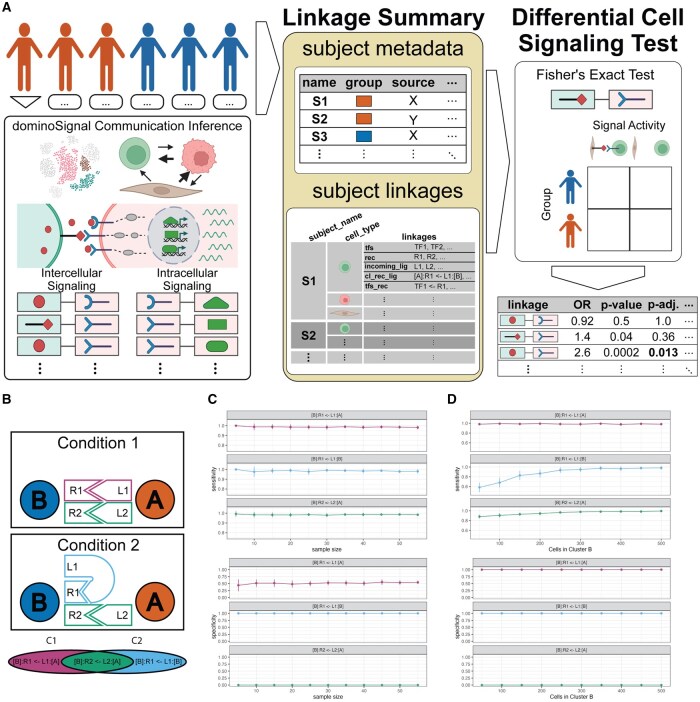 Figure 1
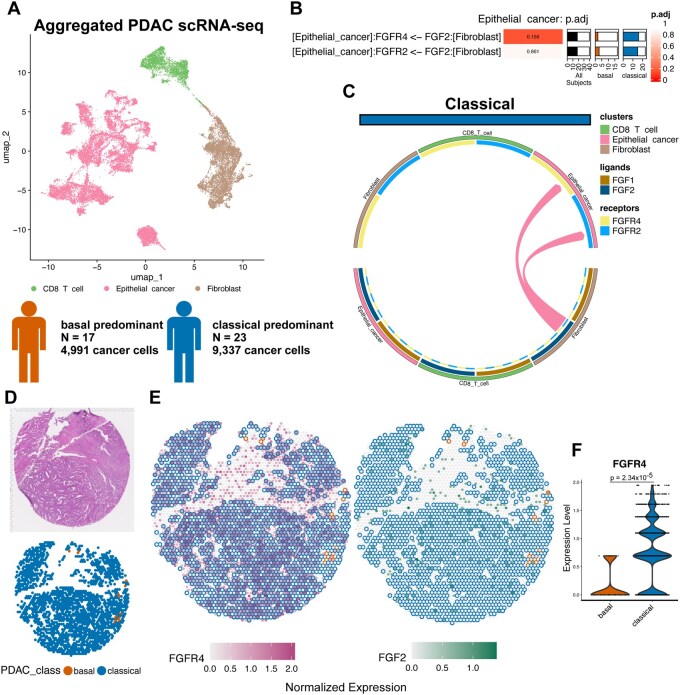 Figure 2
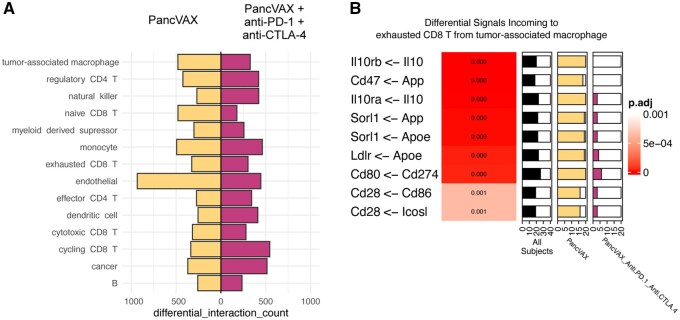 Figure 3
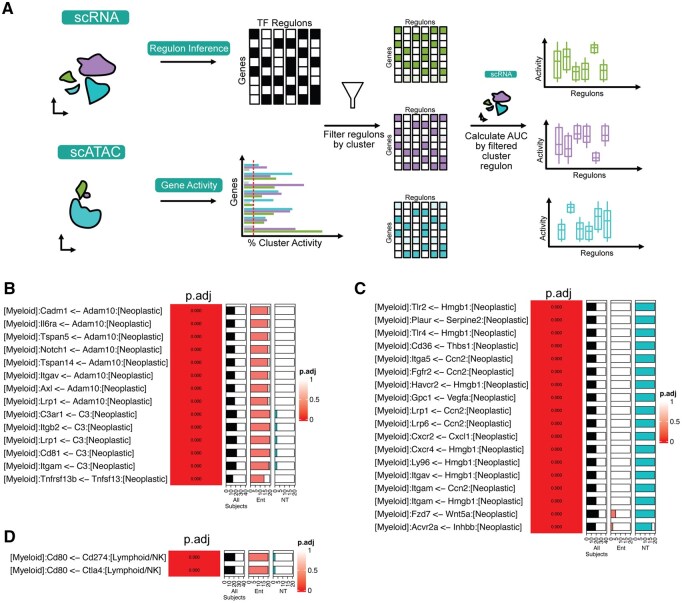 Figure 4
Peer Reviews
No public reviews on file for this paper yet. If you reviewed it on a platform where reviews are public (OpenReview, ICLR, NeurIPS, ICML), you can paste yours below so the community can read it here.
Videos
No videos yet. Explain this paper in a talk, walkthrough, or lecture? Add one.
Taxonomy
TopicsSingle-cell and spatial transcriptomics · Molecular Communication and Nanonetworks · Microfluidic and Bio-sensing Technologies