Short-Term Arrhythmia Prediction Using AI Based on Daily Data From Implantable Devices: Multicenter Prospective Observational Study
Ignacio Fernández Lozano, Joaquín Fernández de la Concha, Javier Ramos Maqueda, Nicasio Pérez Castellano, Rafael Salguero Bodes, F Javier García-Fernández, Juan Benezet Mazuecos, Javier Jiménez Candil, Tomás Datino, Sem Briongos Figuero, Javier Paniagua Olmedillas

TL;DR
This study shows that AI can predict short-term changes in heart rhythm using data from implantable devices, with reasonable accuracy.
Contribution
The novel contribution is an AI model for short-term arrhythmia prediction using remote monitoring data from pacemakers.
Findings
The model achieved 66.4% sensitivity and 77.4% specificity in predicting arrhythmia changes.
Patients without baseline arrhythmia had 39% sensitivity and 81% specificity.
Subgroup analysis showed 69% sensitivity and 80% specificity for patients without atrial fibrillation history.
Abstract
Predictive medicine relies on algorithms to determine clinical treatments tailored to each patient’s individual characteristics. Predictive models based on artificial intelligence have shown promise in identifying atrial fibrillation episodes; however, they rarely focus on short-term dynamic prediction. This study aimed to evaluate the use of an artificial intelligence model and remote monitoring data extracted from pacemaker devices to predict the onset or worsening of arrhythmias in the short term. This was a multicenter prospective observational study in which data from 314 patients were analyzed. A total of 65,243 data sequences were collected, of which 55,532 (85.1%) were used to train the algorithm. This model used 31-day records to predict whether the number of arrhythmic episodes would increase, decrease, or remain the same in the following 14 days. The sensitivity and…
Genes, proteins, chemicals, diseases, species, mutations and cell lines named across the full text — each resolved to its canonical identifier and authoritative record.
Click any figure to enlarge with its caption.
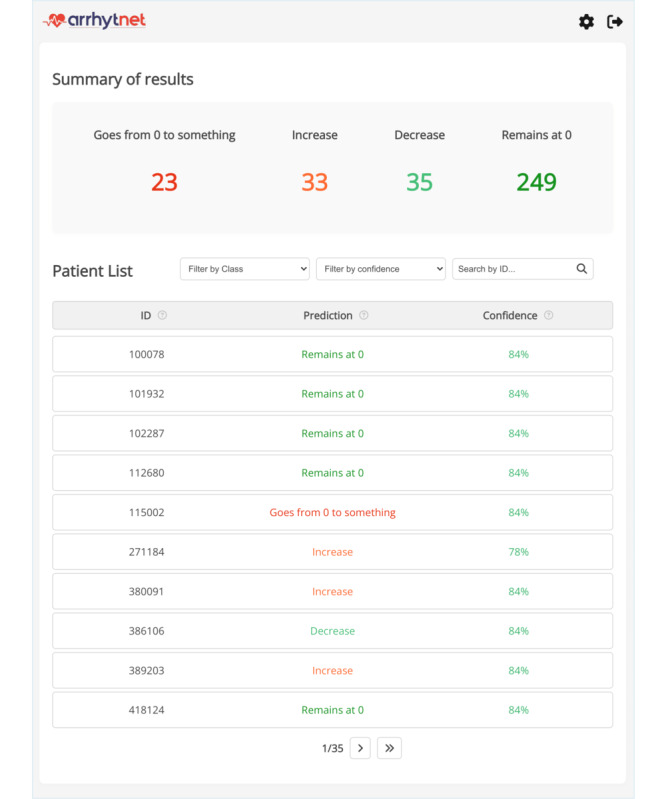 Figure 1
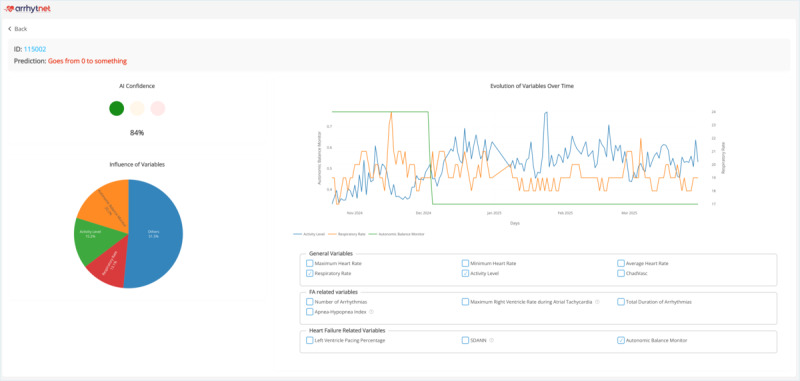 Figure 2
Peer Reviews
No public reviews on file for this paper yet. If you reviewed it on a platform where reviews are public (OpenReview, ICLR, NeurIPS, ICML), you can paste yours below so the community can read it here.
Videos
No videos yet. Explain this paper in a talk, walkthrough, or lecture? Add one.
Taxonomy
TopicsECG Monitoring and Analysis · Cardiac pacing and defibrillation studies · Cardiac electrophysiology and arrhythmias