Single-position ligand modifications tune CB2R activity by targeting the toggle switch
Rudolf L. Z. Ganzoni, Miroslav Kosar, Yongqi Han, Rosa Maria Vitale, Pietro Amodeo, Xiaoting Li, Zhonghua Zha, Kacper J. Patej, Bilal Kicin, Taddäus E. N. Strunden, Lisa Reichert, Uxía Gómez-Bouzó, Themiya P. Perera, Kenneth Atz, Wolfgang Guba, Christian Bartelmus

TL;DR
Researchers modified a single position of a ligand to control CB2R activity by targeting a key receptor residue, enabling diverse functional outcomes.
Contribution
A new strategy for modulating CB2R activity by targeting the toggle switch through single-position ligand modifications is introduced.
Findings
Modifications at a single ligand position modulate CB2R toggle switch Trp2586.48 to control receptor activity.
Ligands exhibit a range of functional outcomes, including full agonism and partial inverse agonism.
Compound (S)-1 shows biased signaling and unique pharmacological behavior due to toggle switch interactions.
Abstract
Cannabinoid receptor type 2 (CB2R) is a prominent class A G protein-coupled receptor (GPCR) and is a therapeutic target of interest for inflammatory diseases, pain management, and neurodegenerative disorders. We report the development of ligands based on HU-308 that share a single central scaffold but bear diverse sidechains, enabling controlled modulation of GPCR activation. Structural modifications at a single position of the parent ligand allow modulation of the single-residue toggle switch of CB2R, Trp2586.48, and thereby control over receptor activity. A continuum of functional outcomes is achieved through interaction of the ligands with the CB2R toggle switch, leading to full agonism, partial agonism, neutral antagonism, or partial inverse agonism. Several low-efficacy ligands display protean behavior across assays, underscoring context-dependent modulation of CB2R and its…
Genes, proteins, chemicals, diseases, species, mutations and cell lines named across the full text — each resolved to its canonical identifier and authoritative record.
Click any figure to enlarge with its caption.
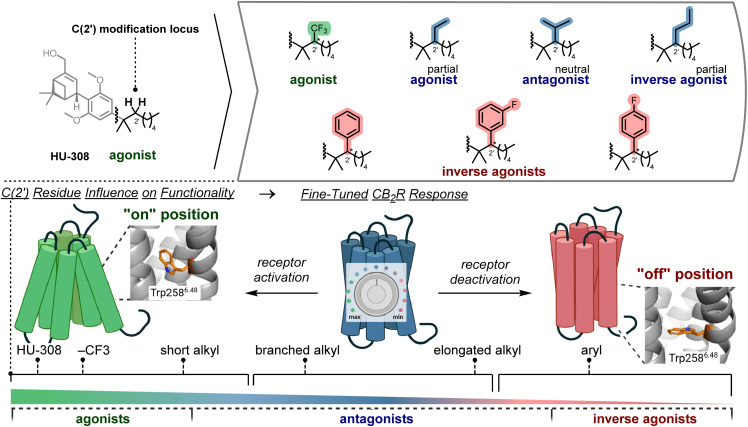 Figure 1
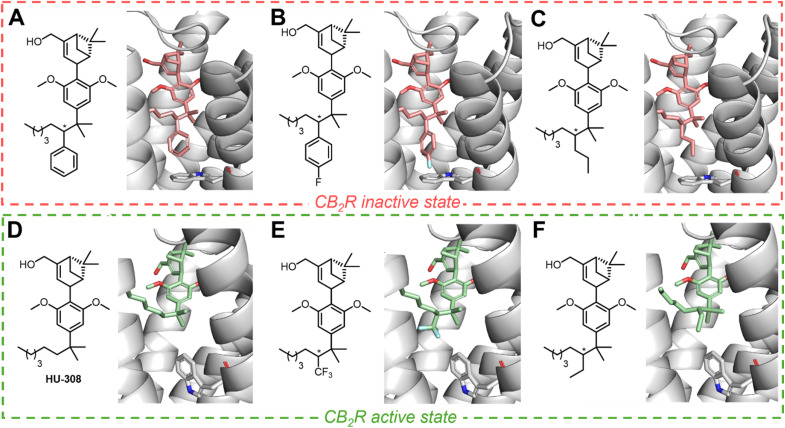 Figure 2
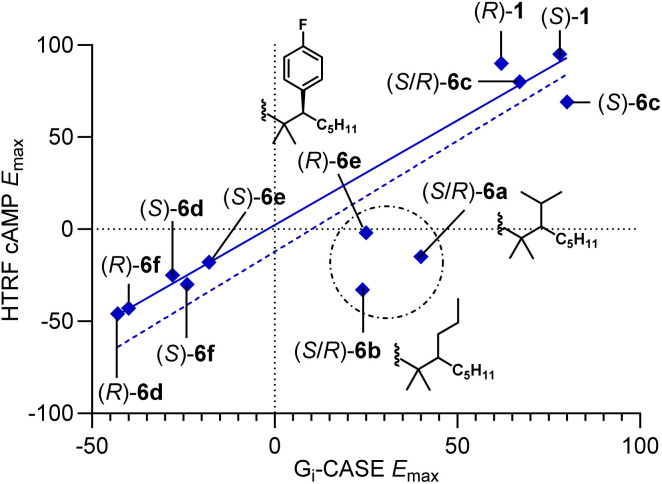 Figure 3
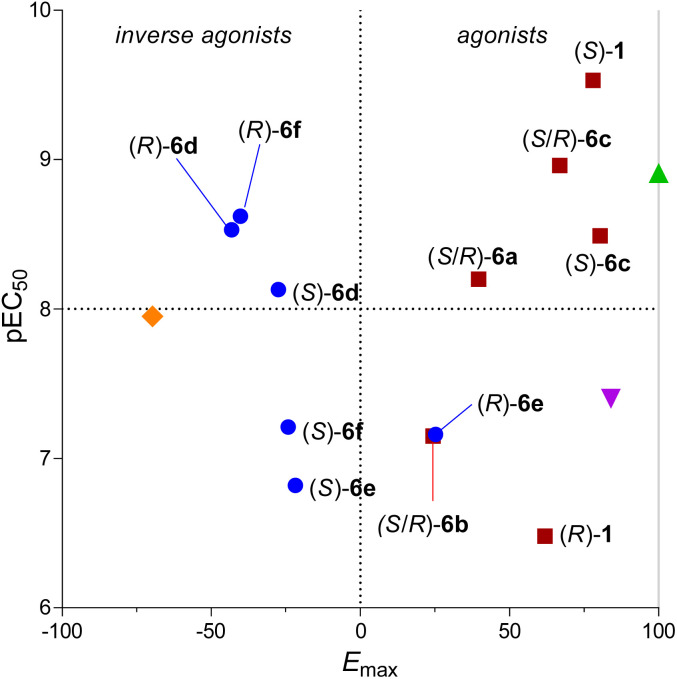 Figure 4
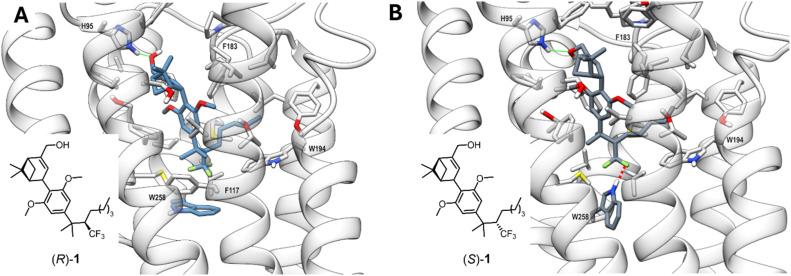 Figure 5
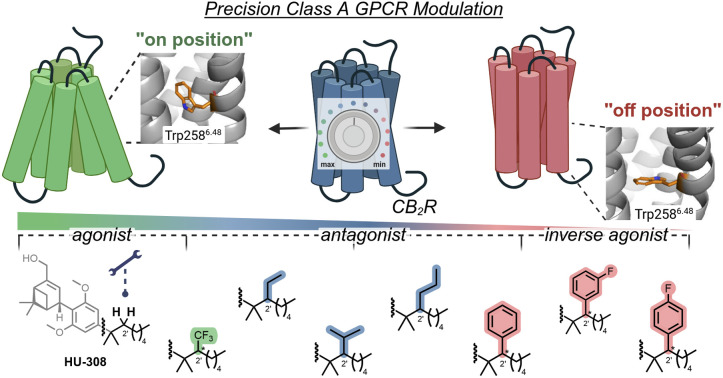 Figure 6
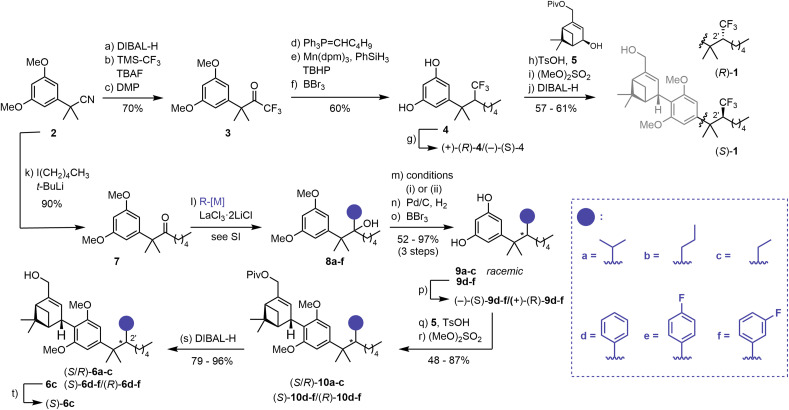 Figure 7
 Figure 8
 Figure 9
 Figure 10
 Figure 11
 Figure 12
Peer Reviews
No public reviews on file for this paper yet. If you reviewed it on a platform where reviews are public (OpenReview, ICLR, NeurIPS, ICML), you can paste yours below so the community can read it here.
Videos
No videos yet. Explain this paper in a talk, walkthrough, or lecture? Add one.
Taxonomy
TopicsReceptor Mechanisms and Signaling · Protein Kinase Regulation and GTPase Signaling · Pancreatic function and diabetes