Assessing Night-to-Night Sleep Variability as a Hallmark of Chronic Insomnia Using Longitudinal, Contactless, Mobile Sleep Monitoring: Prospective Cohort Study
Devon A Hansen, Mary E Peterson, Myles G Finlay, Elie Gottlieb, Sharon Danoff-Burg, Roy JEM Raymann, Dedra Buchwald, Nathaniel F Watson

TL;DR
This study shows that night-to-night sleep variability is a key sign of chronic insomnia, using a contactless device to track sleep over 8 weeks in real homes.
Contribution
The study introduces the first long-term, objective, contactless sleep monitoring of chronic insomnia in natural home settings.
Findings
Insomnia patients had lower sleep efficiency and higher sleep latency than healthy controls.
Night-to-night variability in sleep metrics was significantly higher in insomnia patients.
Contactless radio frequency devices can accurately detect insomnia in home environments.
Abstract
Chronic insomnia affects more than 30% of US adults, is more prevalent in women and older adults, and is strongly associated with poor mental and physical health outcomes. Poor sleep quality and intraindividual variability of sleep are recognized to be key characteristics of chronic insomnia, but longitudinal assessment of sleep is largely subjective, with no objective characterization of sleep patterns and intraindividual variability over extended periods. Objective, ecologically valid longitudinal sleep measurements are needed to help identify and manage insomnia in both clinical and population settings. Consumer sleep technologies offer a possible solution, but their clinical utility remains relatively unexplored. We aimed to evaluate the utility of a contactless, radio frequency–based device by demonstrating its ability to objectively characterize sleep in individuals with insomnia…
Genes, proteins, chemicals, diseases, species, mutations and cell lines named across the full text — each resolved to its canonical identifier and authoritative record.
Click any figure to enlarge with its caption.
 Figure 1
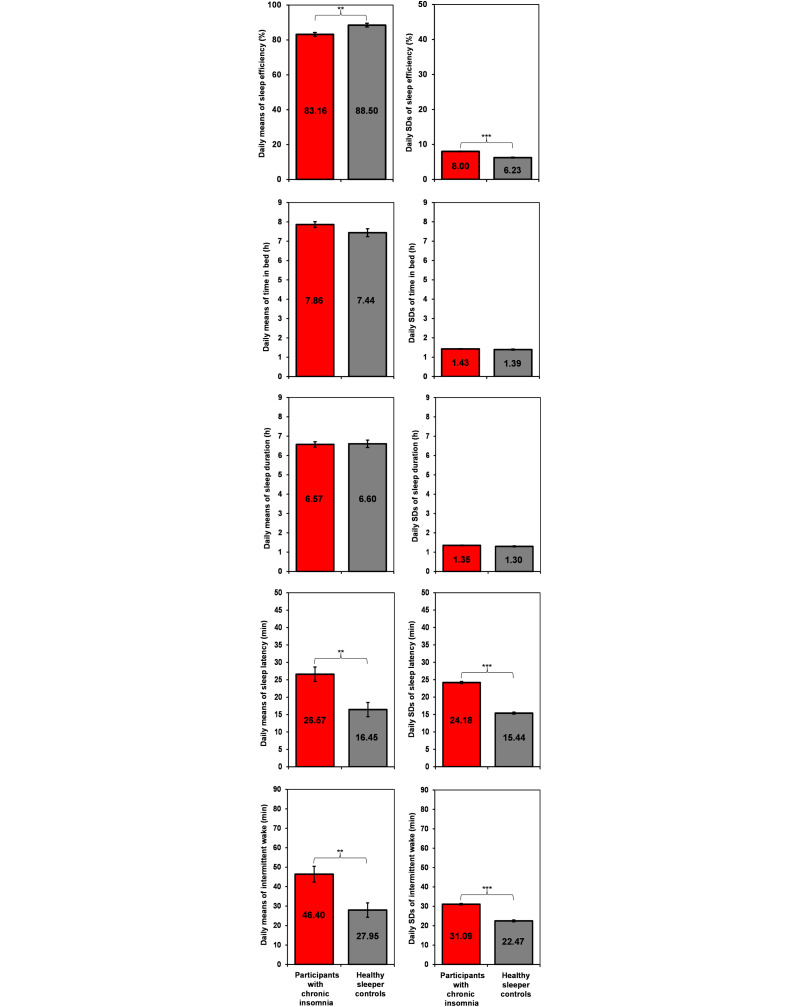 Figure 2
Peer Reviews
No public reviews on file for this paper yet. If you reviewed it on a platform where reviews are public (OpenReview, ICLR, NeurIPS, ICML), you can paste yours below so the community can read it here.
Videos
No videos yet. Explain this paper in a talk, walkthrough, or lecture? Add one.
Taxonomy
TopicsSleep and related disorders · Obstructive Sleep Apnea Research · Digital Mental Health Interventions