KLF5 controls subtype-independent highly interactive enhancers in pancreatic cancer to regulate cell survival
Thomas L. Ekstrom, Zhangshuai Dai, Julia Thiel, Akshay Kanakan, Bishakha Joyeeta Saha, Meghana Manjunath, Nadine Schacherer, Pavlos Bousounis, Emily L Siegler, Amro M. Abdelrahman, Yara Souto, Frank Essmann, Zeynab Najafova, Sven Beyes, Mark J. Truty, Meng Dong, Steven A. Johnsen

TL;DR
This study identifies KLF5 as a key regulator of enhancers that control cell survival in pancreatic cancer, regardless of tumor subtype.
Contribution
The study reveals KLF5-bound enhancers as a common target for treating heterogeneous pancreatic cancer.
Findings
KLF5 binds to enhancers that interact with essential genes in pancreatic cancer.
Depletion of KLF5 reduces cell viability by inducing apoptosis.
BCL2L1 is a target gene regulated by KLF5-bound enhancers.
Abstract
Pancreatic ductal adenocarcinoma (PDAC) remains a highly lethal cancer with a 5-year survival rate of 13%. Despite recent molecular stratification of tumors into distinct classical and basal-like cell states, most tumors are heterogeneous and contain both subtypes. Therefore, therapeutic approaches targeting only one subtype are unlikely to be effective as standalone PDAC treatments. Here, we integrated chromatin accessibility [assay for transposase-accessible chromatin with sequencing (ATAC-seq)], genome-wide occupancy [chromatin immunoprecipitation sequencing (ChIP-seq)] for epigenetic status (H3K27ac), and H3K4me3-anchored chromatin topology (HiChIP) to uncover subtype-independent highly interactive enhancers that interact with essential genes in PDAC. Motif analysis revealed that these common enhancers were bound by KLF5 with subsequent depletion leading to decreased cell viability…
Genes, proteins, chemicals, diseases, species, mutations and cell lines named across the full text — each resolved to its canonical identifier and authoritative record.
Click any figure to enlarge with its caption.
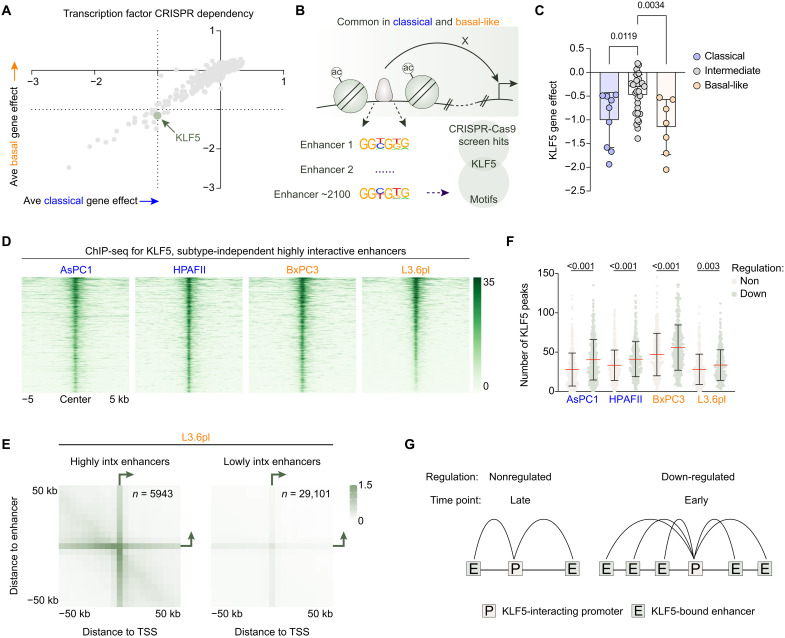 Figure 1
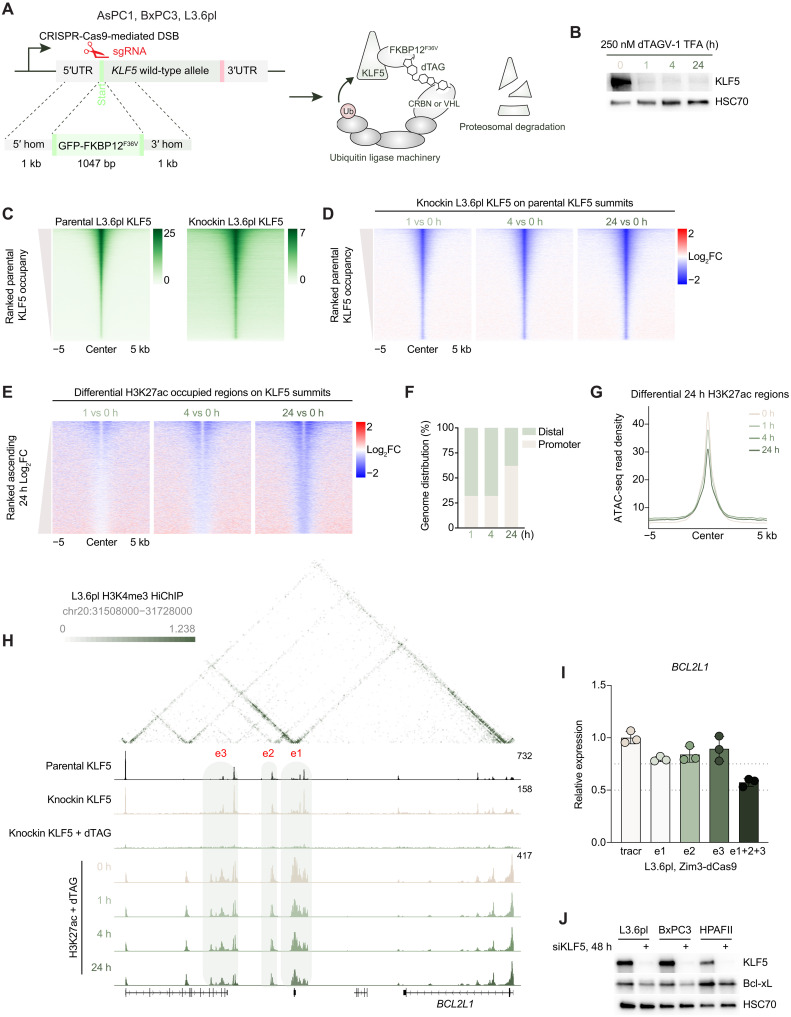 Figure 2
 Figure 3
 Figure 4
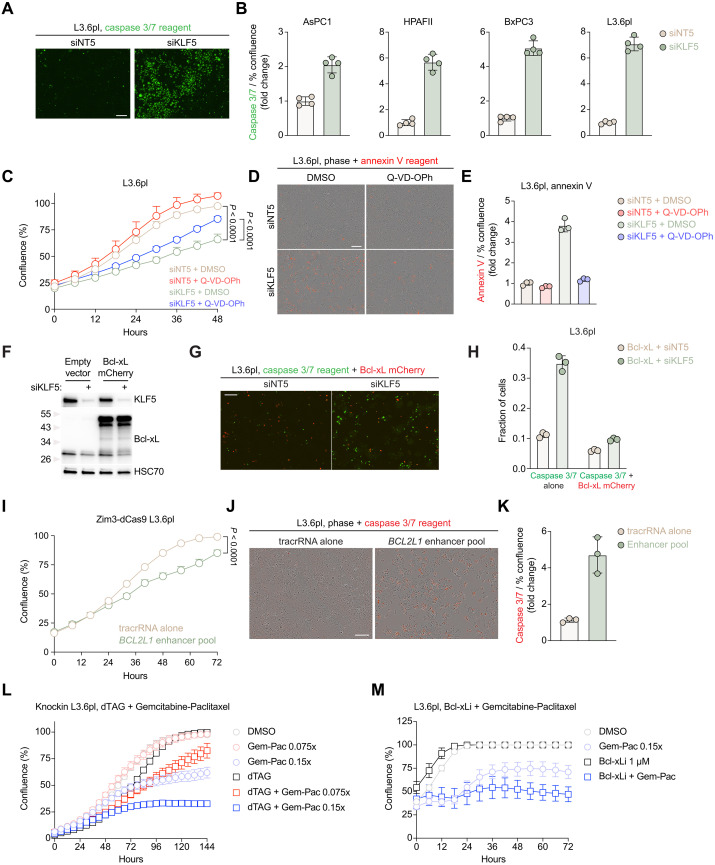 Figure 5
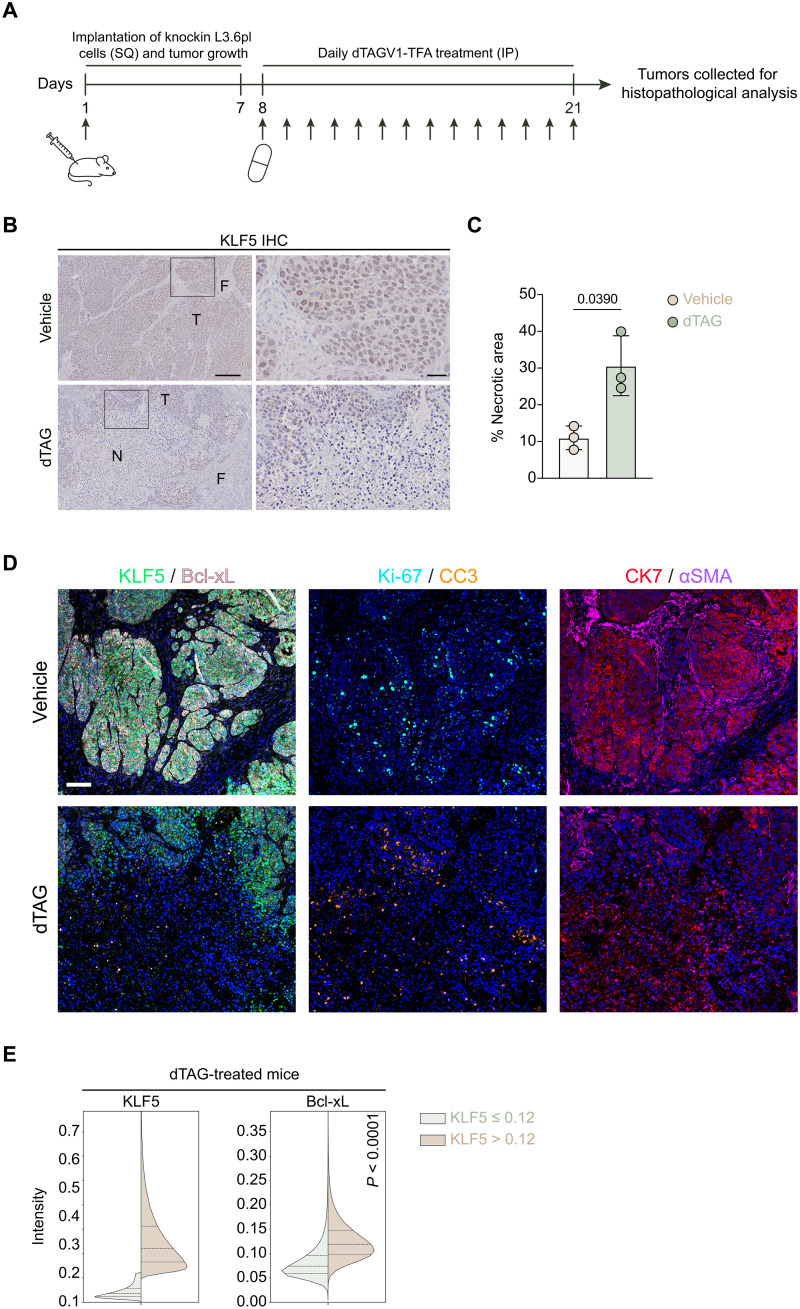 Figure 6
Peer Reviews
No public reviews on file for this paper yet. If you reviewed it on a platform where reviews are public (OpenReview, ICLR, NeurIPS, ICML), you can paste yours below so the community can read it here.
Videos
No videos yet. Explain this paper in a talk, walkthrough, or lecture? Add one.
Taxonomy
TopicsKruppel-like factors research · Chromatin Remodeling and Cancer · Lipid metabolism and disorders