Insights into the structure and evolution of the human SAGA complex by affinity-ligand purification
Mylène Damilot, Thomas Schoeps, Laszlo Tora, Patrick Schultz, Luc Lebeau, Gabor Papai, Adam Ben-Shem

TL;DR
This study reveals the structure of the human SAGA complex and how it incorporates a splicing module unique to metazoans.
Contribution
The paper presents the high-resolution structure of the SPL module and its integration into SAGA using unperturbed human cells.
Findings
The SPL module and TAF6L HEAT repeat domain structure were resolved at high resolution.
TAF6L and TAF5L have structural differences that allow SPL integration into SAGA.
SPL interacts with SAGA through a smaller interface than in U2snRNP, suggesting a potential relay to splicing machinery.
Abstract
Human SAGA is a 20-subunit transcriptional coactivator. Compared with yeast, metazoan SAGA uniquely incorporates a 150-kDa splicing-factor module (SPL), also present in U2 small nuclear ribonucleoprotein (U2snRNP). Metazoan gene duplication further specialized shared TFIID/SAGA subunits into SAGA-specific paralogs (TAF5L and TAF6L), but the functional consequences of this divergence are unknown. We report the structure of endogenous human SAGA purified via an affinity ligand from cells that were not disturbed by any genomic engineering tools. Our work reveals the high-resolution structure of SPL and the TAF6L HEAT repeat domain that provides the SPL with a docking surface. We elucidate how SPL and the HEAT repeats are incorporated into SAGA. We identify major structural differences between TAF6L/TAF5L and their canonical paralogs that enable SPL accommodation. SPL engages SAGA through a…
Genes, proteins, chemicals, diseases, species, mutations and cell lines named across the full text — each resolved to its canonical identifier and authoritative record.
Click any figure to enlarge with its caption.
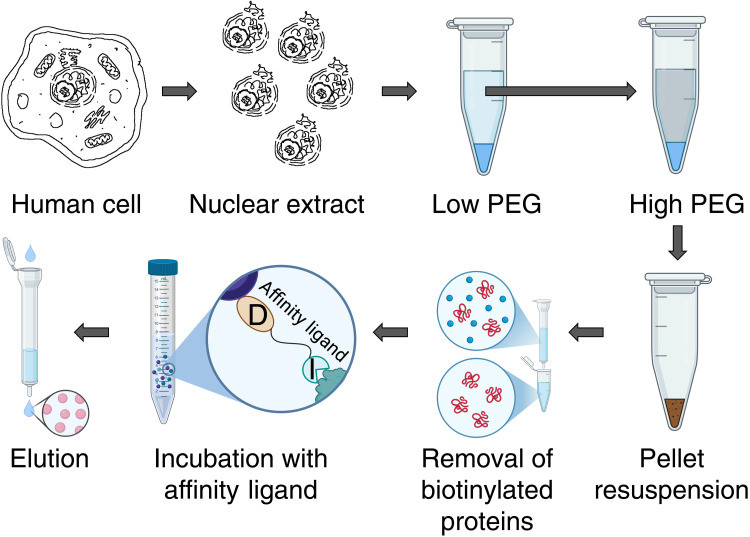 Figure 1
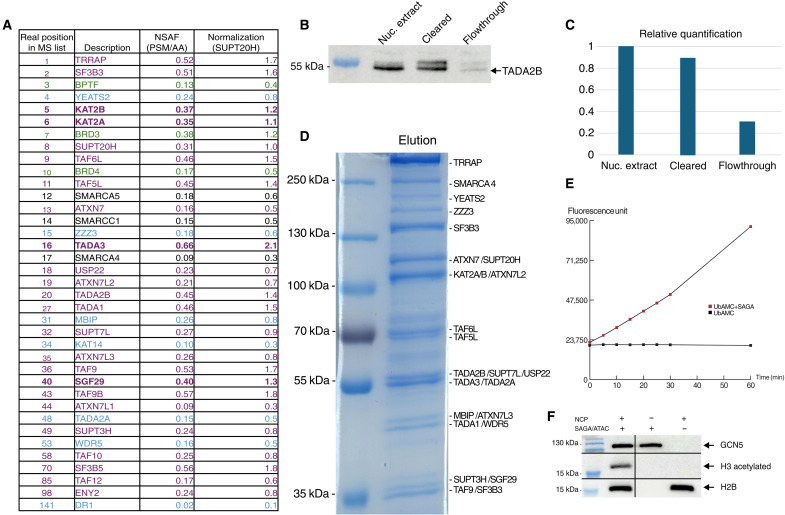 Figure 2
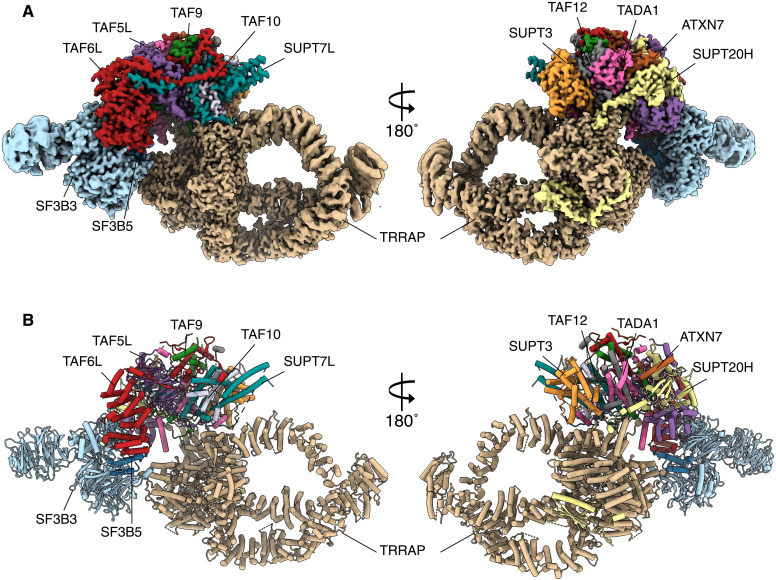 Figure 3
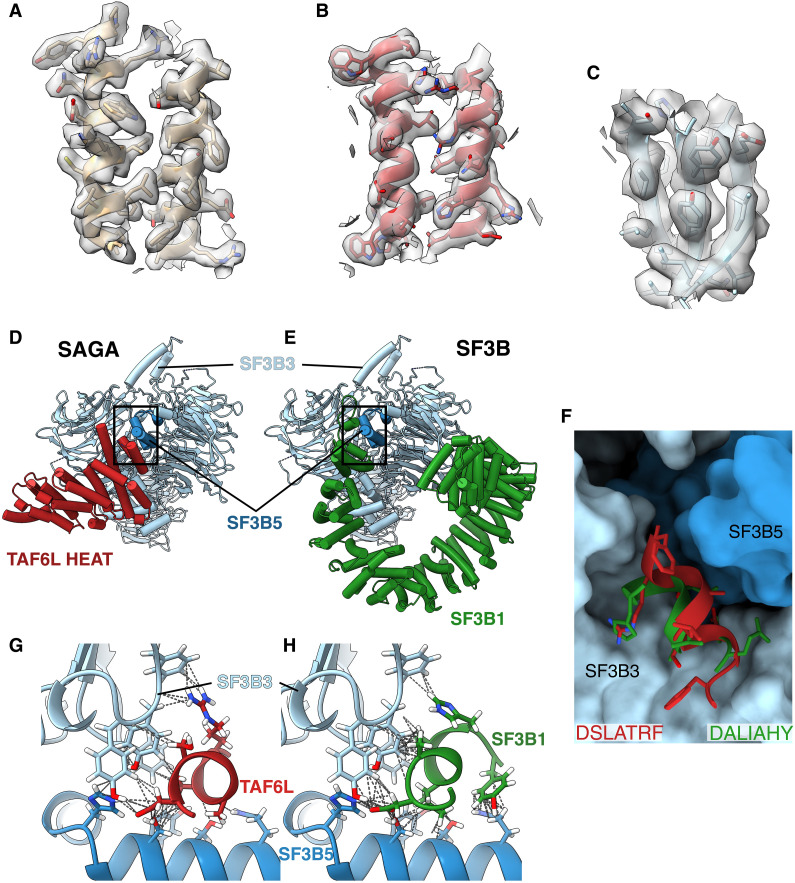 Figure 4
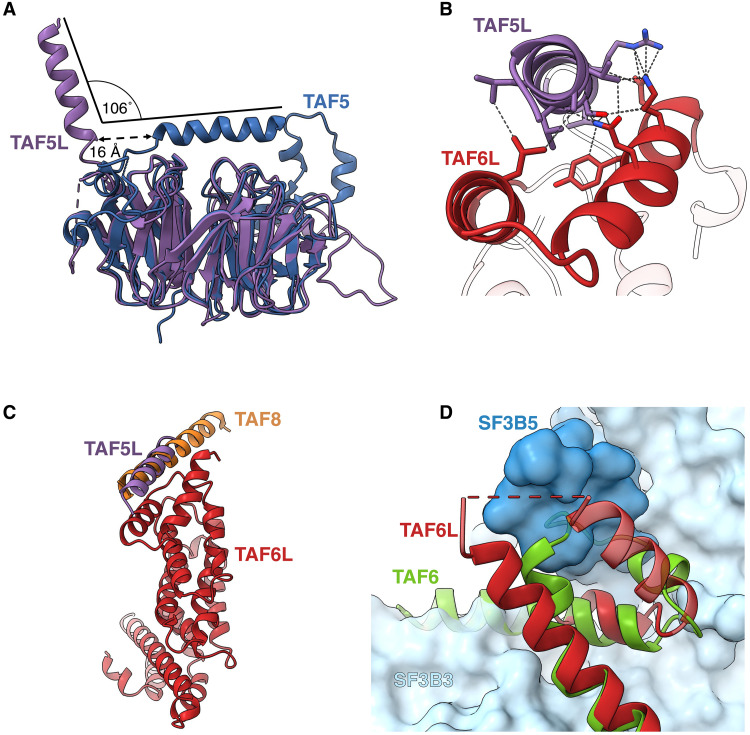 Figure 5
Peer Reviews
No public reviews on file for this paper yet. If you reviewed it on a platform where reviews are public (OpenReview, ICLR, NeurIPS, ICML), you can paste yours below so the community can read it here.
Videos
No videos yet. Explain this paper in a talk, walkthrough, or lecture? Add one.
Taxonomy
TopicsRNA Research and Splicing · Genomics and Chromatin Dynamics · Developmental Biology and Gene Regulation