Impact of Coronary Microvascular Dysfunction on Left Ventricular Function After Percutaneous Coronary Intervention: Assessment With Combined Dipyridamole‐Exercise Stress and Myocardial Strain/Work
Wanyu Zhao, Xiaoli Dong, Xiangyu Ji, Jiong Tang, Lin Ding, Yunfei Zhou, Shuanglan Yu, Jian Li, Haibo Li, Chunfang Yang, Qiuzhe Guo, Zhiling Luo, Yan Shen

TL;DR
This study shows that impaired coronary microvascular function after heart procedures leads to worse heart function and quality of life.
Contribution
The study introduces a combined stress echocardiography and strain/work analysis method to assess post-PCI left ventricular function.
Findings
Lower coronary flow velocity reserve (CFVR) was linked to reduced global longitudinal strain and work efficiency.
CMD after PCI correlated with worse 1-year quality of life scores on the Seattle Angina Questionnaire.
Peak exercise global constructive work and recovery wasted work were independent predictors of CMD.
Abstract
Coronary microvascular dysfunction (CMD) persists after percutaneous coronary intervention (PCI) in individuals with coronary artery disease (CAD). This study assessed CMD using combined dipyridamole‐exercise stress echocardiography (DExE) and myocardial strain/work to evaluate the impact on left ventricular (LV) function. This prospective study enrolled CAD individuals who underwent left anterior descending artery PCI and DExE assessment at 3 months post‐PCI to evaluate myocardial strain/work parameters at rest and stress. The primary endpoint was adverse clinical events, and the secondary endpoint was Seattle Angina Questionnaire (SAQ) health status at 1‐year. The cohort comprised 84 individuals (54 ± 10 years, 17.9% female). Participants were stratified into two groups by coronary flow velocity reserve (CFVR): CFVR ≥ 2.5 group (n = 63) and CFVR < 2.5 group (n = 21). Compared with…
Genes, proteins, chemicals, diseases, species, mutations and cell lines named across the full text — each resolved to its canonical identifier and authoritative record.
Click any figure to enlarge with its caption.
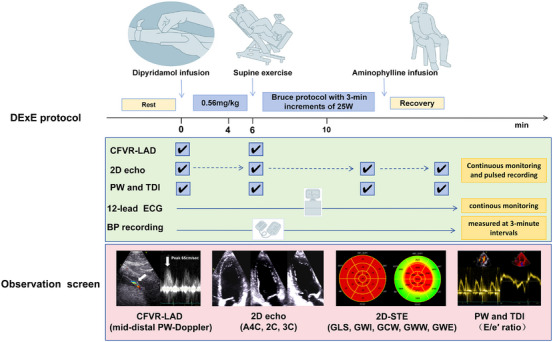 Figure 1
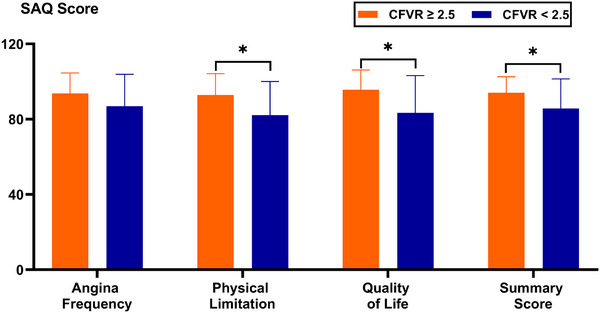 Figure 2
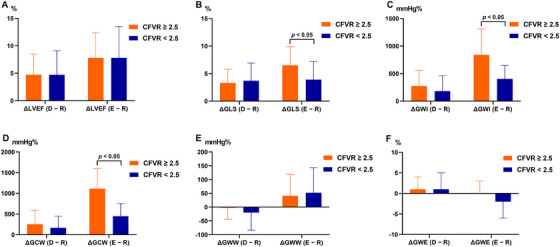 Figure 3
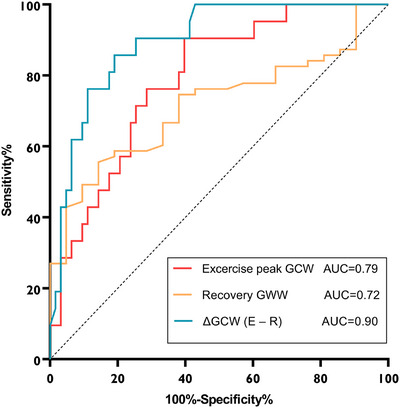 Figure 4
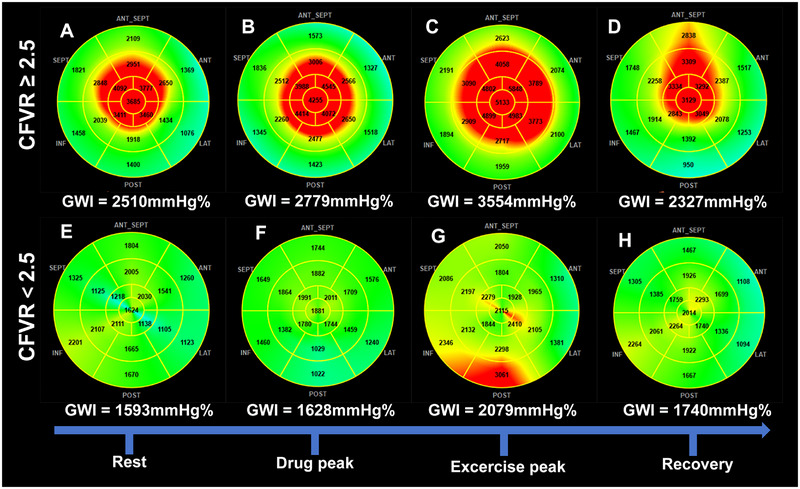 Figure 5
 Figure 6
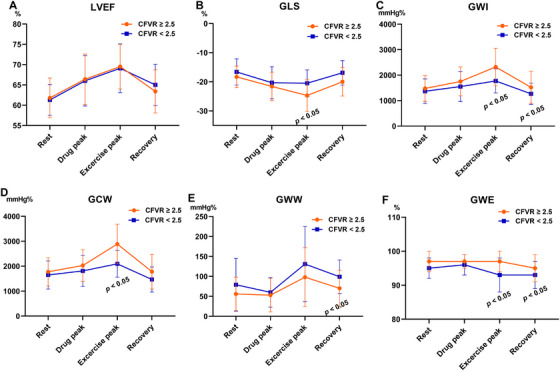 Figure 7
Peer Reviews
No public reviews on file for this paper yet. If you reviewed it on a platform where reviews are public (OpenReview, ICLR, NeurIPS, ICML), you can paste yours below so the community can read it here.
Videos
No videos yet. Explain this paper in a talk, walkthrough, or lecture? Add one.
Taxonomy
TopicsCardiac Imaging and Diagnostics · Cardiovascular Function and Risk Factors · Cardiac Fibrosis and Remodeling