Generation of In Vivo‐Inspired 3D Collagen Models for Guided Tumor Invasion In Vitro
Stijn den Daas, Gert‐Jan Bakker, Diede van Ens, Eleni‐Andria Grosu, Manon Vullings, Lianne Beunk, Peter Friedl, Katarina Wolf

TL;DR
This paper introduces new 3D collagen models that mimic in vivo tumor invasion by incorporating structural guidance cues, improving the study of cell migration in vitro.
Contribution
The paper provides detailed protocols for creating collagen hydrogel models with structural guidance cues to study ECM-guided cell migration.
Findings
Migration efficiency increases in the presence of structural guidance cues in collagen models.
Protocols include methods for generating cleft-like gaps and tunnel-like tracks using laser ablation.
The models allow comparison of cell migration behavior as single cells or spheroids.
Abstract
Porous collagen hydrogels are widely used to model dynamic cell‐extracellular matrix (ECM) interactions relevant to inflammation, wound healing, and cancer invasion. To improve the physiological relevance of such assays, it is essential to incorporate architectural ECM characteristics identified in vivo that may affect the mechanical and molecular mechanisms of cell migration, including ECM geometry, alignment, and dimensionality. We present detailed, step‐by‐step protocols for generating three collagen‐hydrogel‐based migration assays that integrate structural guidance cues, either as cleft‐like deformable gaps or tunnel‐like tracks, including track generation by multiphoton (MP) laser ablation. For this application, practical guidance on laser setup and integration in commonly used MP microscopes is provided. We include example applications to compare the migratory behavior of HT1080…
Genes, proteins, chemicals, diseases, species, mutations and cell lines named across the full text — each resolved to its canonical identifier and authoritative record.
Click any figure to enlarge with its caption.
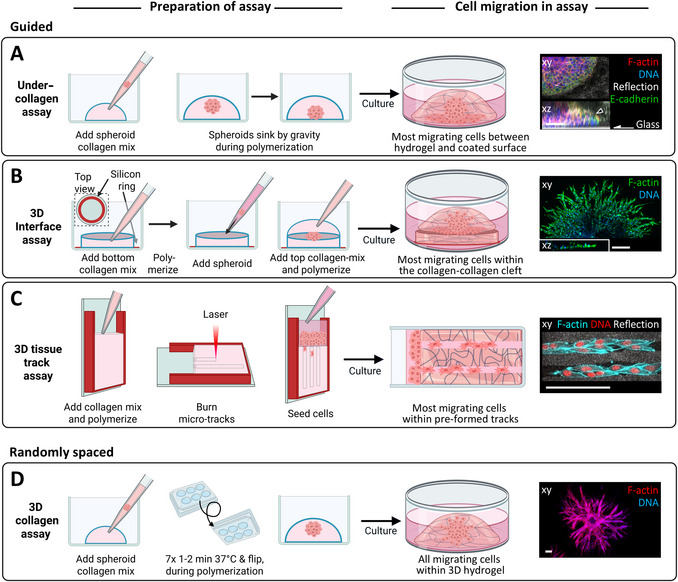 Figure 1
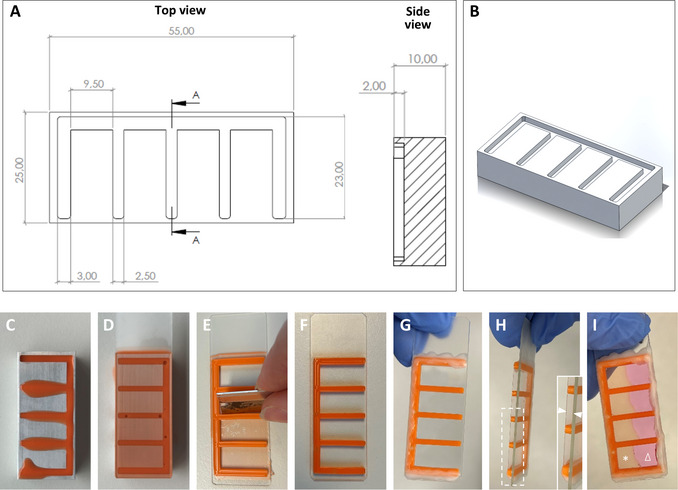 Figure 2
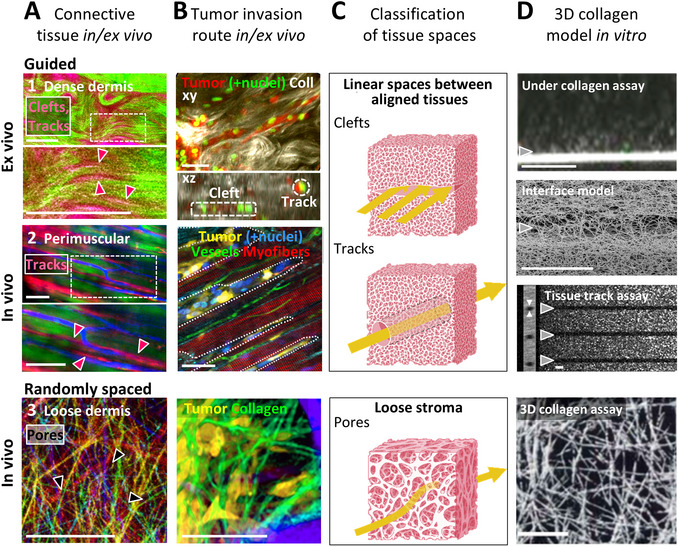 Figure 3
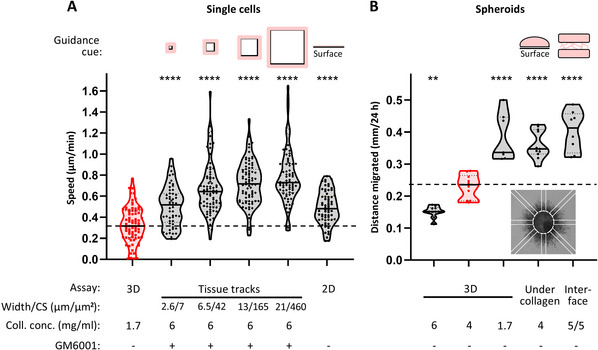 Figure 4
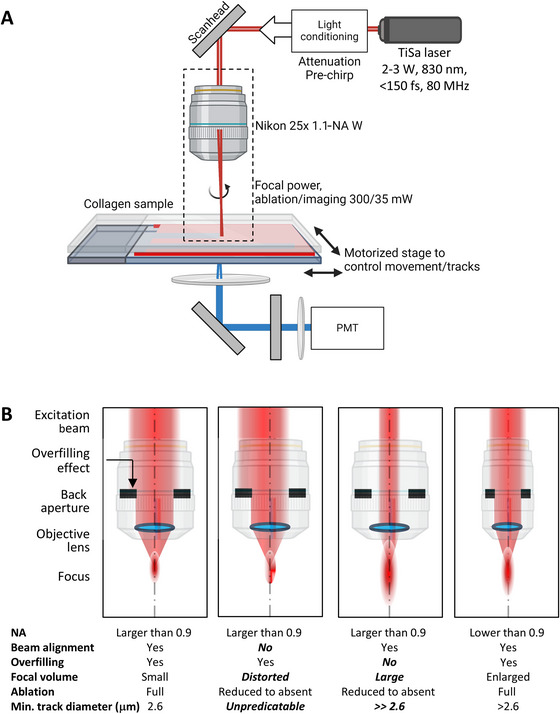 Figure 5
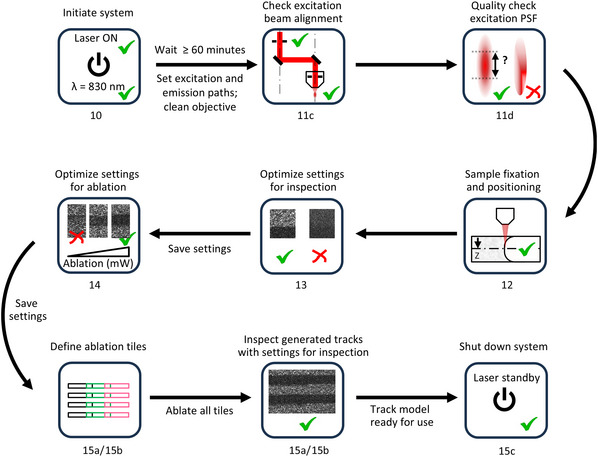 Figure 6
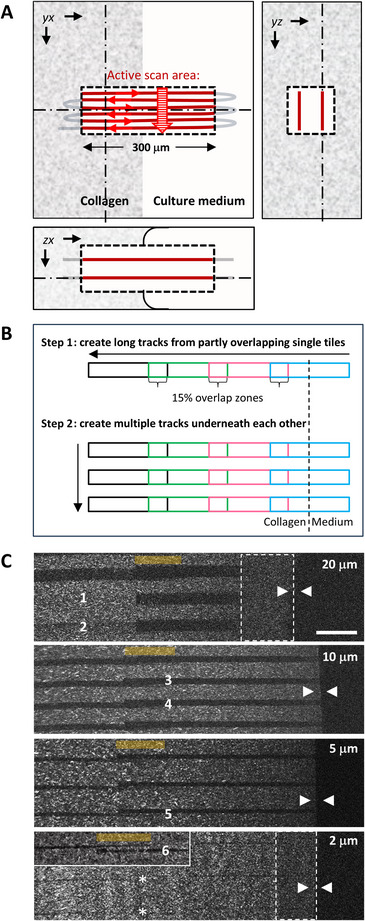 Figure 7
Peer Reviews
No public reviews on file for this paper yet. If you reviewed it on a platform where reviews are public (OpenReview, ICLR, NeurIPS, ICML), you can paste yours below so the community can read it here.
Videos
No videos yet. Explain this paper in a talk, walkthrough, or lecture? Add one.
Taxonomy
TopicsCellular Mechanics and Interactions · Advanced Fluorescence Microscopy Techniques · 3D Printing in Biomedical Research