Refractory ventricular tachycardia storm with 42 ICD shocks in 24 h: A case report
Parth Adrejiya, Negarsadat Neshat, Abdel Rahman Qamar, Harsh Suthar, Ngozika Orjioke, Abhishek Thandra, Divyang Patel

TL;DR
A 71-year-old man with heart disease experienced an extreme case of ventricular tachycardia with 42 ICD shocks in 24 hours, highlighting the need for urgent interventional treatments.
Contribution
This case report documents one of the highest ICD shock burdens in a single day and emphasizes the importance of timely electrophysiological interventions.
Findings
The patient experienced 42 ICD shocks in 24 hours, indicating severe and refractory ventricular tachycardia.
Pacing transiently suppressed arrhythmias, but episodes degenerated into ventricular fibrillation, suggesting unstable cardiac substrate.
Conventional therapies failed, and urgent interventions like ablation and sympathetic denervation were required but unsuccessful.
Abstract
An electrical storm (ES) represents a critical arrhythmic emergency, often associated with high morbidity and mortality rates in patients with underlying structural heart disease. Despite therapeutic advancements, its management remains challenging. The present case report describes an exceptional case of ES marked by 42 appropriate implantable cardioverter-defibrillator (ICD) shocks within a period of 24 h, one of the highest documented burdens underscoring the limitations of conventional therapy and the importance of timely interventional strategies. A 71-year-old male patient with ischemic cardiomyopathy and prior MitraClip implantation presented with recurrent ICD shocks. Despite optimized device programming and dual antiarrhythmic therapy (amiodarone and lidocaine), he experienced 42 appropriate ICD discharges in a single day. His course rapidly progressed to severe hemodynamic…
Genes, proteins, chemicals, diseases, species, mutations and cell lines named across the full text — each resolved to its canonical identifier and authoritative record.
Click any figure to enlarge with its caption.
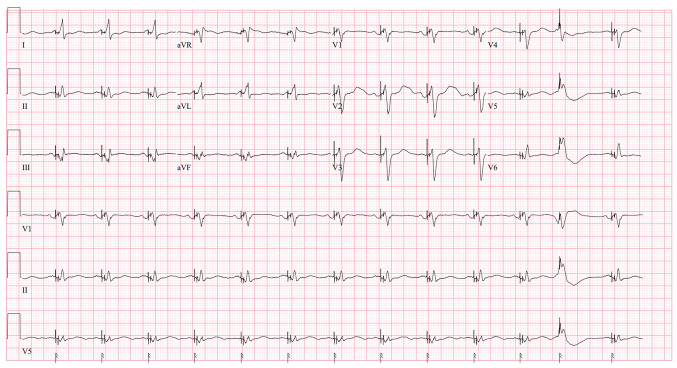 Figure 1
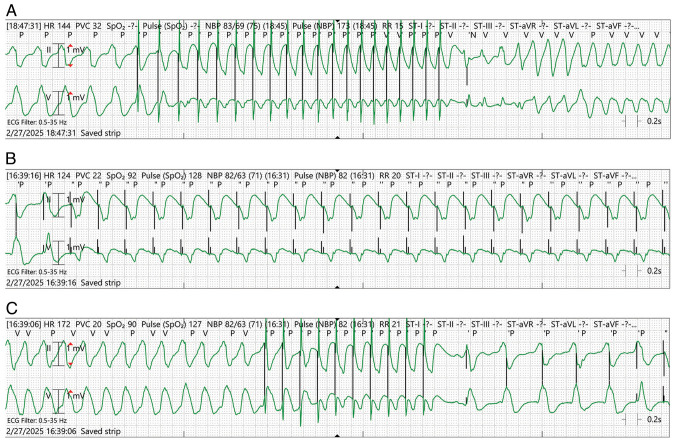 Figure 2
Peer Reviews
No public reviews on file for this paper yet. If you reviewed it on a platform where reviews are public (OpenReview, ICLR, NeurIPS, ICML), you can paste yours below so the community can read it here.
Videos
No videos yet. Explain this paper in a talk, walkthrough, or lecture? Add one.
Taxonomy
TopicsCardiac Arrhythmias and Treatments · Cardiac electrophysiology and arrhythmias · Cardiac pacing and defibrillation studies