C3 mutation-associated atypical hemolytic uremic syndrome with severe renal dysfunction and hypertensive emergency successfully treated with ravulizumab and sacubitril/valsartan: a case report
Hiroki Yanagidani, Yujiro Maeoka, Maria Yoshida, Mayuko Ueda, Mari Kumano, Akira Takahashi, Aiko Okubo, Noritoshi Kato, Shoichi Maruyama, Takao Masaki

TL;DR
A rare kidney disease with high blood pressure was successfully treated using a combination of two drugs, leading to significant recovery.
Contribution
This is the first reported case of C3 mutation-associated aHUS with HE successfully treated using ravulizumab and sacubitril/valsartan.
Findings
The patient's kidney function improved significantly after treatment with ravulizumab and sacubitril/valsartan.
Blood pressure control and renal recovery were achieved within a year.
A C3 gene mutation was identified, confirming the diagnosis of C3 mutation-associated aHUS.
Abstract
Atypical hemolytic uremic syndrome (aHUS) is a rare complement-mediated thrombotic microangiopathy characterized by microangiopathic hemolytic anemia, thrombocytopenia, and acute kidney injury. Although C5 inhibitors, such as eculizumab and ravulizumab, have markedly improved outcomes, renal recovery remains limited in cases complicated by hypertensive emergency (HE) or malignant hypertension, likely due to complement-independent vascular injury. Angiotensin receptor–neprilysin inhibitor therapy exerts dual actions of renin–angiotensin system blockade and augmentation of natriuretic peptide signaling. Additionally, this therapy has recently demonstrated renal benefits in thrombotic microangiopathy with HE compared with conventional renin–angiotensin system inhibitors. However, the combined use of an angiotensin receptor–neprilysin inhibitor with a C5 inhibitor in aHUS with HE has not…
Genes, proteins, chemicals, diseases, species, mutations and cell lines named across the full text — each resolved to its canonical identifier and authoritative record.
Click any figure to enlarge with its caption.
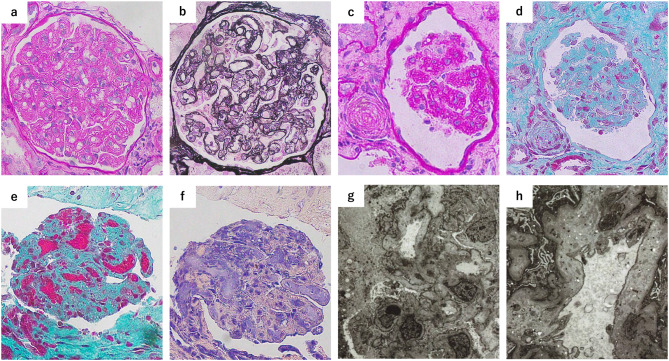 Figure 1
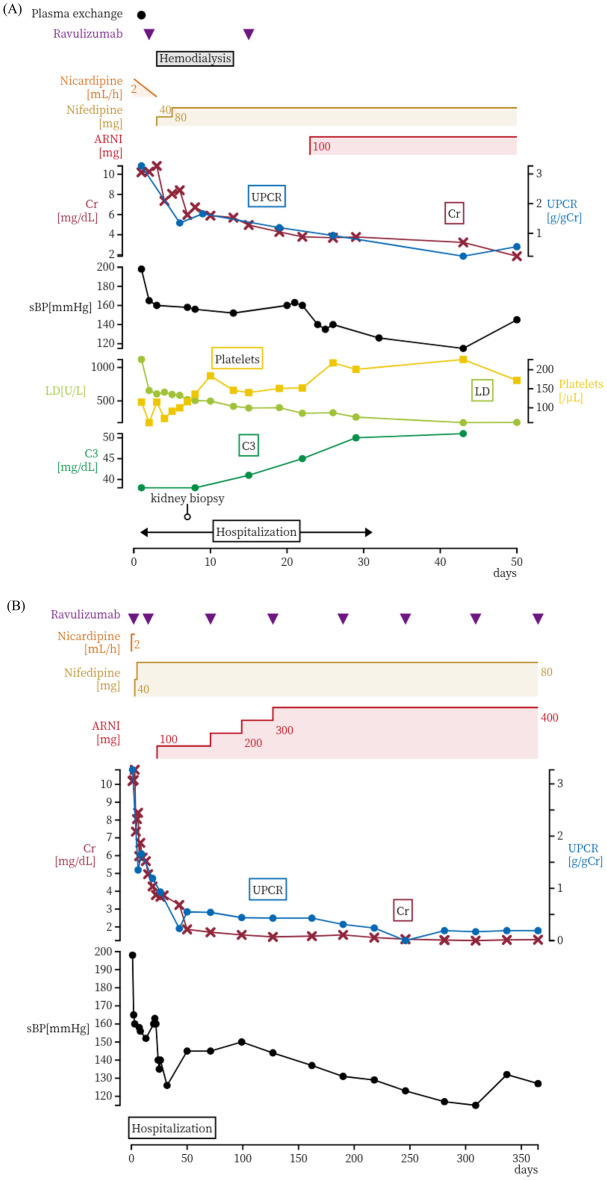 Figure 2
Peer Reviews
No public reviews on file for this paper yet. If you reviewed it on a platform where reviews are public (OpenReview, ICLR, NeurIPS, ICML), you can paste yours below so the community can read it here.
Videos
No videos yet. Explain this paper in a talk, walkthrough, or lecture? Add one.
Taxonomy
TopicsComplement system in diseases · Coagulation, Bradykinin, Polyphosphates, and Angioedema · Mitochondrial Function and Pathology