Quiet residents of the vaginal epithelium: immunohistochemical study on the distribution and role of human vaginal Merkel cells
Simona Polakovičová, Ivan Varga, Barbora Filová, Luana Sallicandro, Jaroslav Voller, Bernard Fioretti, Alexandra Krištúfková

TL;DR
This study explores the role of Merkel cells in the human vaginal epithelium and finds they likely do not function as mechanoreceptors but may support tissue homeostasis.
Contribution
First study to investigate the function of Merkel cells in the vaginal epithelium and their potential endocrine role.
Findings
Merkel cells in the vaginal epithelium lack PIEZO2 and CGRP, suggesting they are not mechanoreceptors.
Merkel cells show a distinct immunophenotype, indicating a possible endocrine function.
Merkel cells are non-innervated and localized in the basal epithelial layers.
Abstract
Although Merkel cells (MCs) are well-established mechanoreceptors in human skin, their function within the vaginal epithelium remains undefined. The aim of the present histological study was to investigate whether MCs located in the stratified epithelium of the anterior wall of the human vagina exhibit similar mechanosensory functions to those observed in the skin. Immunohistochemical analysis was performed on vaginal wall samples from eight women undergoing transabdominal or laparoscopic surgery. Immunohistochemical markers including cytokeratin 20 (CK20), neuron-specific enolase (NSE), synaptophysin (SYN), chromogranin A (CHRA), vasoactive intestinal peptide (VIP), calcitonin gene-related peptide (CGRP), PIEZO2 and protein gene product 9.5 (PGP9.5) were used to identify MCs and assess their distribution and phenotype. To better demonstrate the connection of MCs with nerve fibres, we…
Genes, proteins, chemicals, diseases, species, mutations and cell lines named across the full text — each resolved to its canonical identifier and authoritative record.
Click any figure to enlarge with its caption.
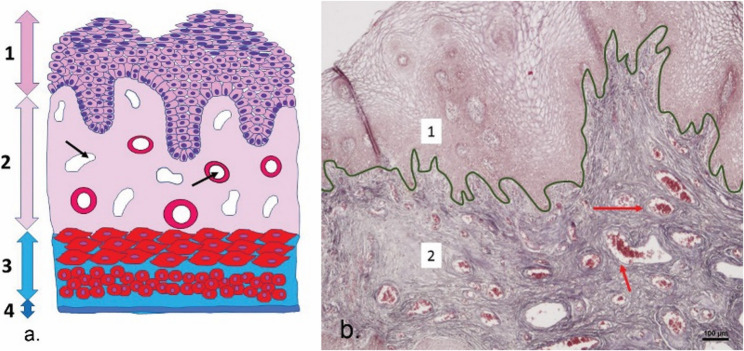 Figure 1
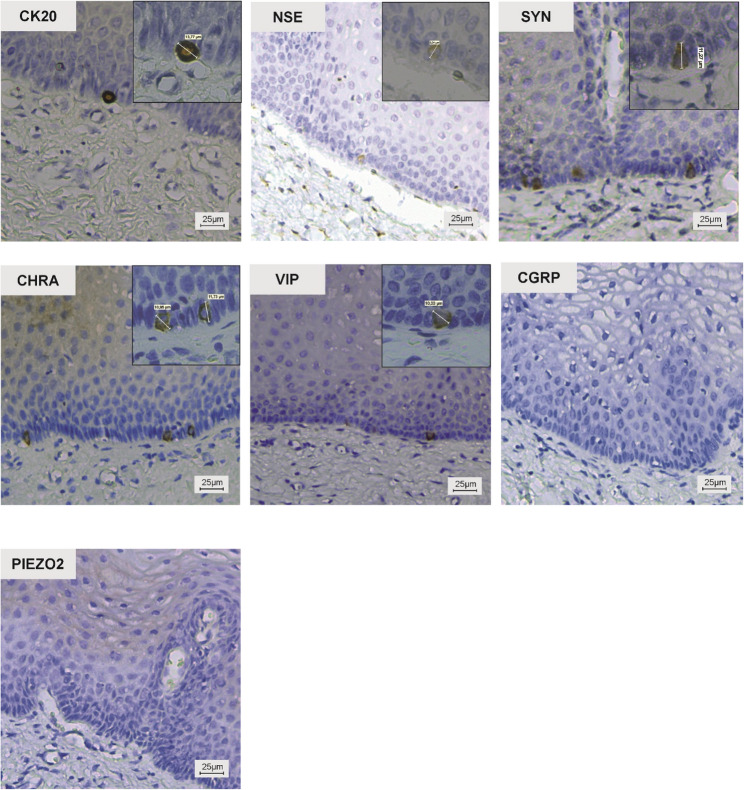 Figure 2
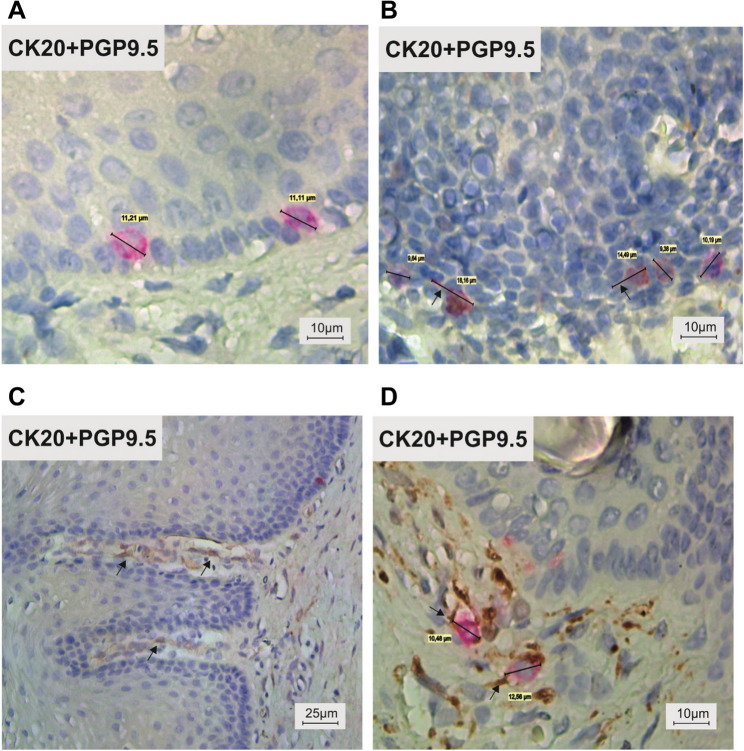 Figure 3
Peer Reviews
No public reviews on file for this paper yet. If you reviewed it on a platform where reviews are public (OpenReview, ICLR, NeurIPS, ICML), you can paste yours below so the community can read it here.
Videos
No videos yet. Explain this paper in a talk, walkthrough, or lecture? Add one.
Taxonomy
TopicsPolyomavirus and related diseases · Reproductive System and Pregnancy · Herpesvirus Infections and Treatments