Bilateral Hypertrophic Olivary Degeneration Following Unilateral Mesencephalic Hemorrhage
Saeed Razmeh, Amir Mohammad Dashti, Amir Hassan Habibi

TL;DR
A midbrain hemorrhage can lead to bilateral hypertrophic olivary degeneration, causing symptoms like palatal myoclonus and tinnitus.
Contribution
Highlights the clinical relevance of bilateral hypertrophic olivary degeneration following unilateral midbrain hemorrhage.
Findings
Unilateral midbrain hemorrhage can lead to bilateral hypertrophic olivary degeneration.
Symptoms include palatal myoclonus, dysarthria, and tinnitus.
Timely diagnosis and symptom management are crucial for effective care.
Abstract
After a unilateral midbrain hemorrhage, clinicians should recognize that bilateral hypertrophic olivary degeneration may occur, presenting as palatal myoclonus, dysarthria, or tinnitus. This highlights the necessity for timely diagnosis and effective symptom management.
Genes, proteins, chemicals, diseases, species, mutations and cell lines named across the full text — each resolved to its canonical identifier and authoritative record.
Click any figure to enlarge with its caption.
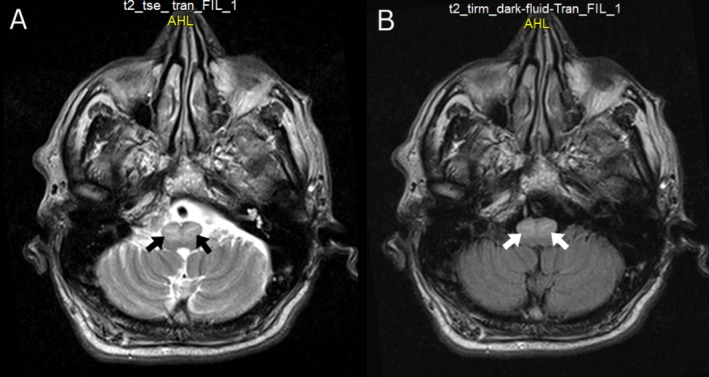 Figure 1
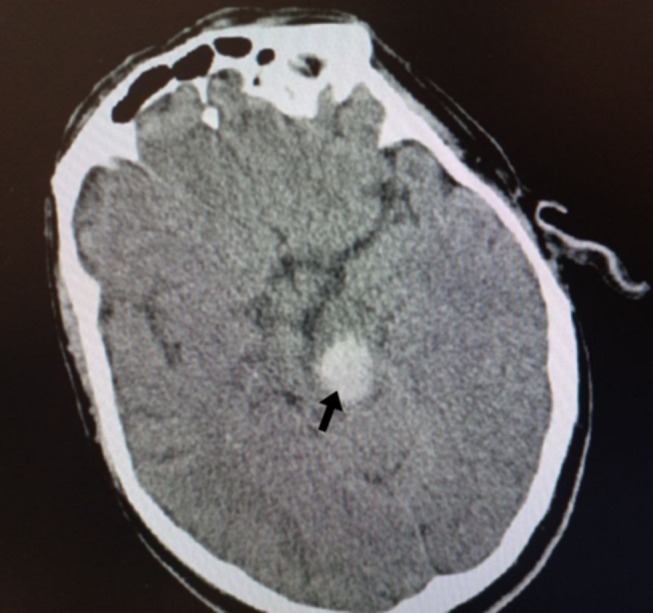 Figure 2
Peer Reviews
No public reviews on file for this paper yet. If you reviewed it on a platform where reviews are public (OpenReview, ICLR, NeurIPS, ICML), you can paste yours below so the community can read it here.
Videos
No videos yet. Explain this paper in a talk, walkthrough, or lecture? Add one.
Taxonomy
TopicsGlycogen Storage Diseases and Myoclonus · Neurological and metabolic disorders · Sympathectomy and Hyperhidrosis Treatments