A Report on the First Ex‐Utero Intrapartum Treatment (EXIT) Procedure in West Africa
Betty Anane‐Fenin, Oluwayemisi Esther Ekor, Teresa Mensah, Victor Etwire, Joyce Ashong, Kenneth Kojo Baidoo, Grace N. A. Amoo‐Quaye, Joycelyn Akuorkor Ashong, Kofi Ulzen‐Appiah, Peter Appiah‐Thompson, Elizabeth Mercy Quartson, Hilda Danquah Konadu, Francis Koranteng

TL;DR
This paper reports the first successful EXIT procedure in West Africa to manage a fetal airway obstruction, despite facing resource limitations and an adverse neonatal outcome.
Contribution
The paper presents the first documented use of the EXIT procedure in West Africa under resource-constrained conditions.
Findings
The first EXIT procedure in West Africa was successfully performed despite limited resources.
An adverse neonatal outcome occurred despite a successful procedure, highlighting the unpredictability of EXIT outcomes.
Multidisciplinary collaboration and simulation were critical for the procedure's execution.
Abstract
The Ex utero Intrapartum Treatment (EXIT) is a complex perinatal intervention designed to secure the fetal airway while maintaining uteroplacental circulation during delivery. We report on the first application of this procedure in West Africa, describing our obstetric and resource‐constrained challenges in the management of a fetus with a large cervical cystic hygroma, and highlighting the complexities of EXIT outcomes. A report on the management of a large fetal anterior neck swelling with anticipated airway obstruction, presenting at 38 weeks 4 days has been presented. Through a multidisciplinary team collaboration, a clear working protocol and simulations, the first‐ever EXIT procedure in our subregion was performed, although an adverse neonatal outcome was encountered. The outcomes of EXIT procedures are unpredictable; hence, adequate counseling is required to embrace the outcome.…
Genes, proteins, chemicals, diseases, species, mutations and cell lines named across the full text — each resolved to its canonical identifier and authoritative record.
Click any figure to enlarge with its caption.
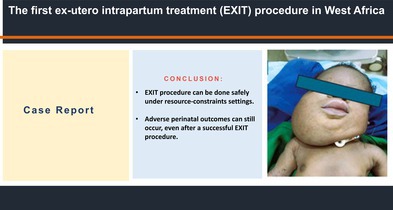 Figure 1
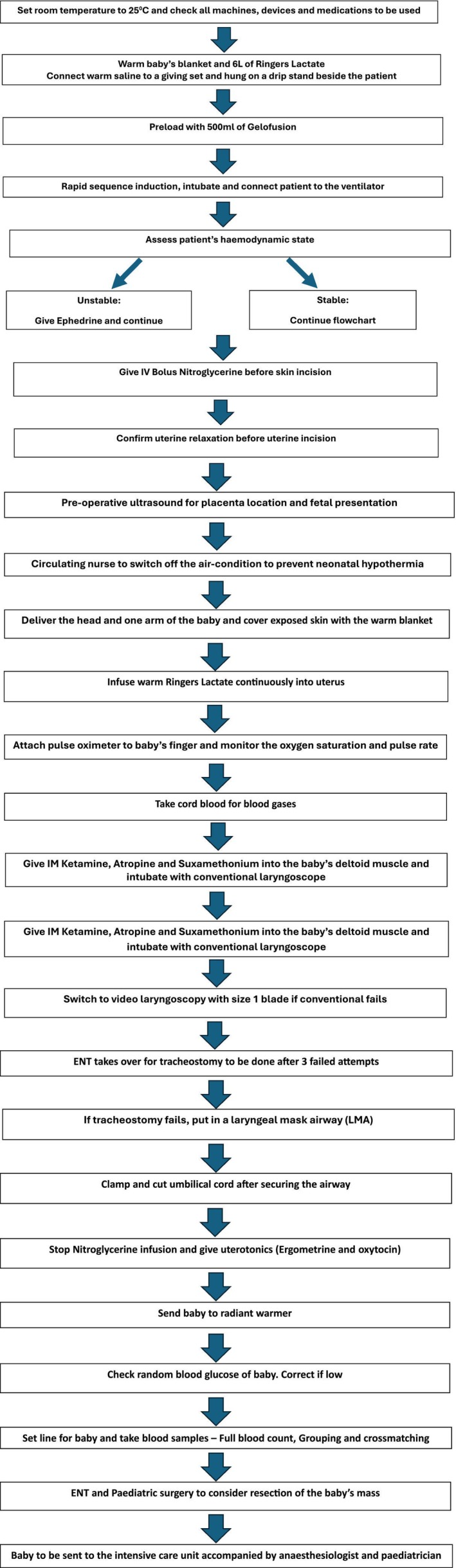 Figure 2
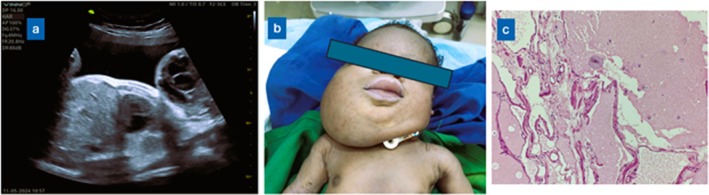 Figure 3
Peer Reviews
No public reviews on file for this paper yet. If you reviewed it on a platform where reviews are public (OpenReview, ICLR, NeurIPS, ICML), you can paste yours below so the community can read it here.
Videos
No videos yet. Explain this paper in a talk, walkthrough, or lecture? Add one.
Taxonomy
TopicsTeratomas and Epidermoid Cysts · Congenital Diaphragmatic Hernia Studies · Fetal and Pediatric Neurological Disorders